NVIDIA Developer Blog
AI news source. Articles are auto-selected and adapted by Hamidun News editors.
Latest publications

NVIDIA unveils ReplaySSM: a way to speed up decoding in hybrid Mamba and GDN models
NVIDIA explains how to store SSM-layer state when decoding hybrid LLMs. The topic covers Nemotron 3, Qwen3.5–3.8, Kimi-K3 and GLM-5.3-Flash.

NVIDIA Scales Bit-for-Bit Determinism in Megatron Core to 2,432 GPUs with 2% Overhead
NVIDIA has achieved bit-for-bit determinism while training a trillion-parameter Nemotron model on 2,432 GPUs with just 2% overhead, enabling reliable reproduction of critical bugs, debugging of loss spikes, and resumptio

NVIDIA Outlines 5 Steps for Preparing SimReady Assets for Robots Using AI Agents
NVIDIA has shown a workflow for converting CAD models into OpenUSD assets for robots. Frontier models like GPT-6 Astra automate the preparation process: conversion, physical property configuration, and validation through

NVIDIA KGMON Takes 2nd Place at KDD Cup 2026 by Slimming Down Its Agent Harness
NVIDIA's KGMON team placed second in the KDD Cup 2026 Data Agents track, where an agent answered questions over six data types, from databases to video. Its bet: a compact harness.

NVIDIA CCCL Runtime: Modern C++ Abstractions for Safer CUDA Development
NVIDIA has added a new Runtime toolset to its CCCL libraries: modern C++ abstractions that make GPU development safer and cut down on typical boilerplate code.

NVIDIA Scores 100% on ARC-AGI-3, and the Hero Is the Harness, Not the Model
NVIDIA's AVO architecture posted a perfect score on the interactive ARC-AGI-3 benchmark. The key takeaway: the model isn't what solves it. The harness is, the system that manages its context, tools and error recovery.

NVIDIA Exemplar Cloud: Why Identical AI Clusters Lose Up to 12% of Performance
NVIDIA has documented a systematic 8–12% gap in training throughput between identical H100 and GB200 NVL72 clusters. The cause is configuration, not hardware.

NVIDIA Accelerates Presto Analytics Queries on GB200 NVL72 GPU Platform
NVIDIA showed GPU acceleration of the open SQL engine Presto on the GB200 NVL72 platform for low-latency analytics on very large datasets.

NVIDIA Showcases LangChain Deep Agents Profile for Nemotron 3 Ultra Model
NVIDIA released guidance on configuring a LangChain Deep Agents harness profile under its open Nemotron 3 Ultra model — proper configuration should bring accuracy closer to proprietary frontier models at lower cost.

NVIDIA described nonuniform tensor parallelism for LLM training on GPUs
NVIDIA published in Developer Blog an analysis of the nonuniform tensor parallelism technique that increases goodput when training large language models on clusters of thousands of GPUs.

NVIDIA showed NuRec pipeline optimization via Nsight Developer Tools
NVIDIA explained how engineers accelerate neural network 3D reconstruction in Omniverse NuRec using Nsight Developer Tools profilers.

NVIDIA Developer Blog Explains AI Agent Reinforcement Learning Techniques
NVIDIA Developer Blog published a breakdown of reinforcement learning techniques for AI agents—from classic RLHF to new feedback-based model training approaches.

NVIDIA Describes GQE — Platform for GPU-Accelerated Query Processing Engines
NVIDIA published technical material on GQE — a platform for designing GPU-accelerated query processing engines limited by memory bandwidth.

NVIDIA XR AI: How the Company Helps Developers Build AI Agents for AR Glasses
NVIDIA described the infrastructure gap in developing AI agents for AR glasses and XR devices: the hardware is ready, but integrating live AI services remains complex.

NVIDIA Explains How to Build a Transaction Foundation Model for Financial Analytics
NVIDIA described an approach to creating a proprietary foundation model based on bank transaction data for fraud detection and more accurate analysis of customers' financial behavior.

NVIDIA DSX OS: open operating system for AI factories of any scale
NVIDIA released a modular OS for managing mega data centers with AI accelerators, solving market fragmentation problem.

NVIDIA Vera CPU: New Standard for Agentic AI Tasks in Factories
The Vera processor is specially optimized for running agentic workloads in the era of scalable AI inference.

NVIDIA Cosmos 3: models for reasoning and actions in robots' physical world
NVIDIA presented Cosmos 3 — a set of foundational models for physical AI, including world models, reasoning models, and action models for robots and autonomous systems.

NVIDIA DGX Spark: Local AI Agents on Accelerated Models with Clustering
NVIDIA introduced support for local AI agents on DGX Spark with faster models and multi-node clustering capabilities for scalable workloads.

NVIDIA Alpamayo: Closed-Loop Model Training for Autonomous Vehicles
NVIDIA introduced Alpamayo—a platform for post-training autonomous vehicle models using a closed-loop cycle of simulation and real-world data.

NVIDIA DOCA: embedded security for AI agent infrastructure
NVIDIA presented DOCA — a platform embedded in network chips that provides built-in security guarantees for "AI factories" processing data in neural network computing.

NVIDIA NeMo generates synthetic financial data for AI
NVIDIA introduced a method for synthetic generation of financial data for LLM training, addressing the imbalance of rare events in real news.

NVIDIA BioNeMo Agent Toolkit: accelerating protein structure prediction
NVIDIA has introduced the BioNeMo Agent Toolkit to orchestrate AI agents that automate the full protein structure prediction and co-folding pipeline, accelerating pharmaceutical development.

LLMs and hardware: NVIDIA on balancing accuracy, throughput, and responsiveness
NVIDIA has published recommendations for LLM design that require simultaneous optimization of three parameters: accuracy, throughput, and response speed for the user.
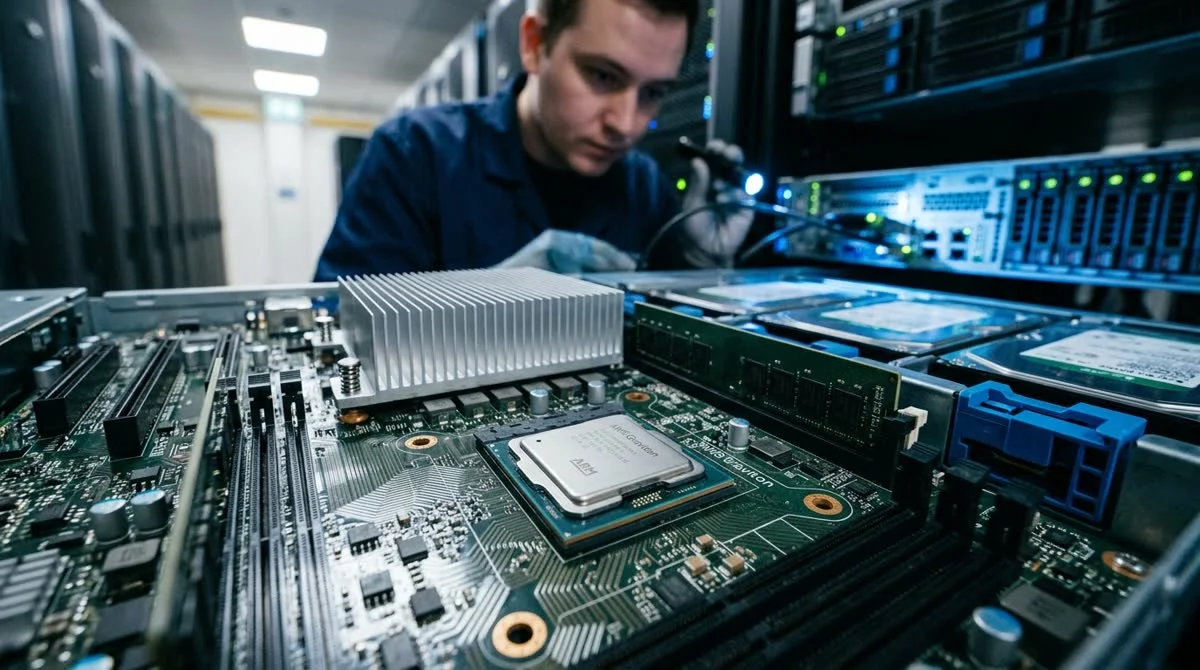
NVIDIA Vera CPU Boosts Throughput of AI Factories for Agentic Workloads
NVIDIA explained how the Vera CPU processor removes delays between GPU inference steps and accelerates agentic multi-step pipelines in industrial AI factories.
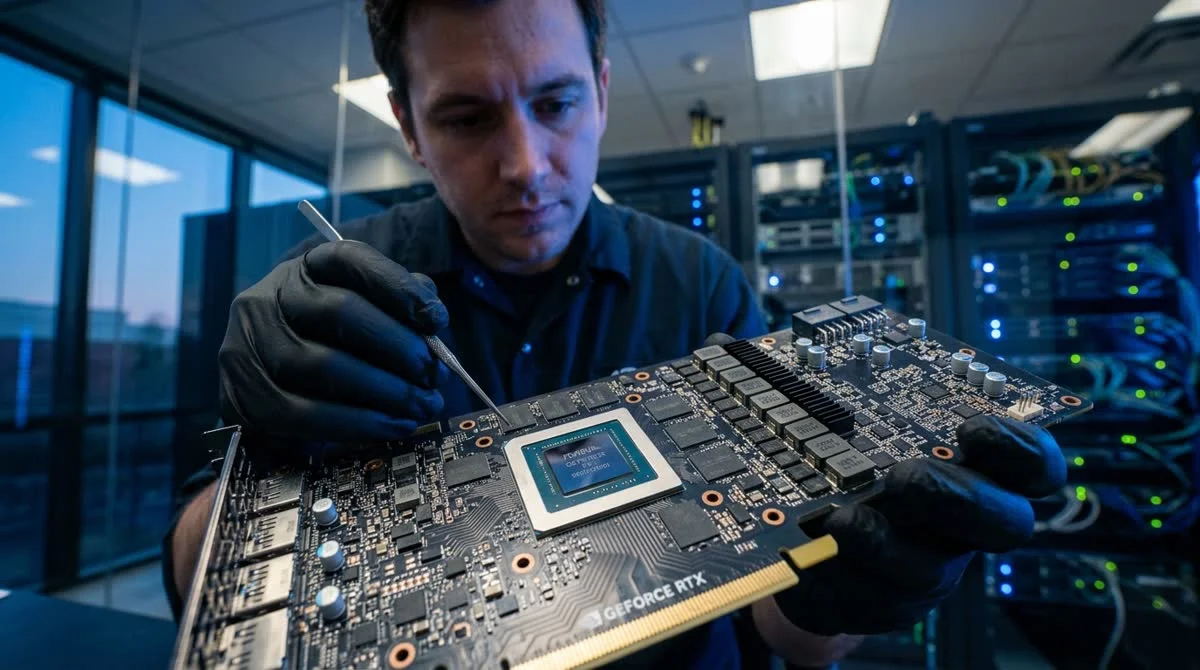
NVIDIA Confidential Computing: protecting data during AI inference without sacrificing speed
NVIDIA explained how Confidential Computing protects enterprise data directly during GPU computation, without sacrificing performance.
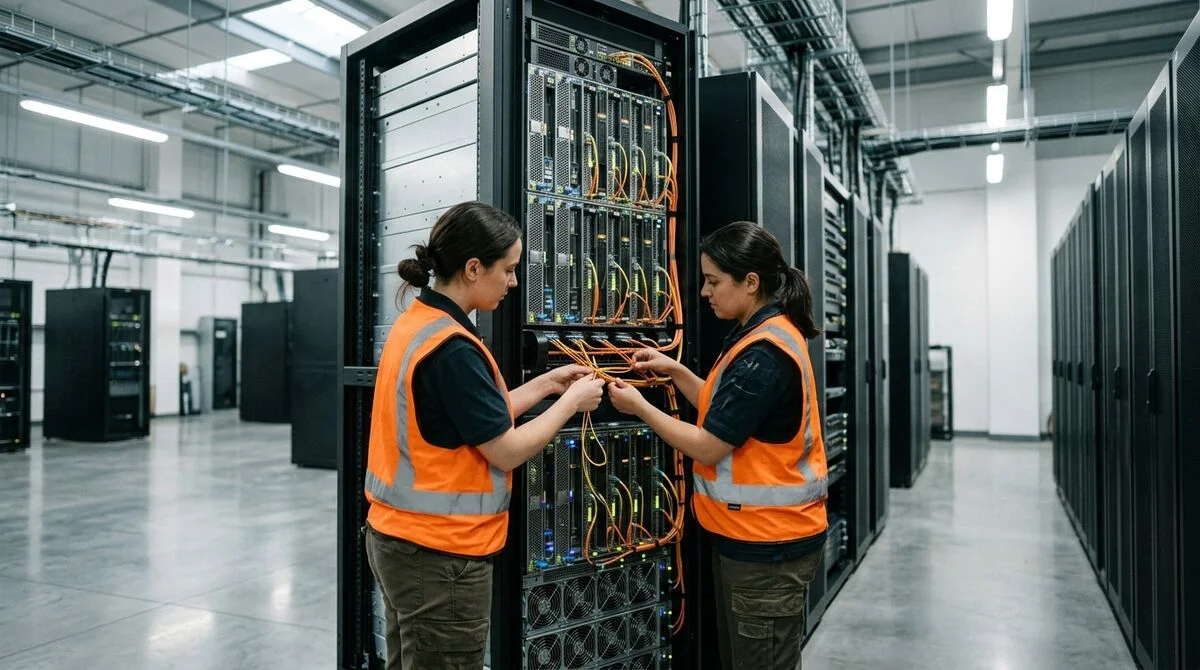
NVIDIA TensorRT now scales generative AI inference across multiple GPUs
NVIDIA has added native multi-GPU support to TensorRT — media generation models can now scale in production without losing the engine’s key optimizations.

KRAFTON integrated Ally, a voice AI teammate based on NVIDIA ACE, into PUBG
PUBG Ally is an AI teammate in PUBG: BATTLEGROUNDS that hears voice commands, makes tactical decisions, and responds with a synthesized voice based on NVIDIA ACE.

NVIDIA optimized BEV pooling on GPU for autonomous vehicles, robots, and spatial AI
NVIDIA published a guide to accelerating BEV pooling on GPU — a key operation for spatial perception in autonomous vehicles, robots, and spatial AI systems.

NVIDIA releases guide to deploying AI-Q Blueprint on Oracle Cloud Infrastructure
NVIDIA has made production deployment of long-running AI agents possible: AI-Q Blueprint is now ready to run on Oracle Cloud with enterprise-grade security.