Habr AI
AI news source. Articles are auto-selected and adapted by Hamidun News editors.
Latest publications

Open-Source Agent vs. 1C Napar: Hybrid RAG on DeepSeek Wins in Practice
Habr tested a self-built LangGraph agent with hybrid RAG search against the commercial 1C Napar assistant. On three real developer tasks using deepseek-v4-flash, gpt-6.1-sol, and glm-5.3-flash, the open-source agent went

Where an NLI Model Helps in a Meeting Assistant: Three Fittings, Two Rejections
Developer Charoite tested an NLI model in five scenarios. Only phrase deduplication in the live feed worked (2% error rate). It failed on meeting minutes, core revision, and question filtering: 55.6% accuracy and massive

8 AI Tools for Reels and Shorts: What Actually Works in 2026
We tested 8 AI tools for cutting vertical video. Editing time dropped from hours to minutes. Here's which ones support Russian and how to pick the right one for your task.

Hebbian Learning Without Backprop Collapsed Into k-means and Lost on Every Front
A Habr author trained a hidden layer using only local Hebbian rules. The rule collapsed into k-means and beat backprop on accuracy, on few-label performance and on forgetting in none of the tests.

I Wrote 61 Tests for My AI Mentor. Then I Found Out You Can't Trust the Tests Either
A developer built 61 tests to check an AI mentor on a coding education platform. But the test bench itself had bugs: it marked cut-off answers as passing and let finished solutions slip through. DeepSeek V4 Flash scored

When Small LLMs Beat the Swarm: How Splitting Data Into Sections Gave a Weak Model a 4x Boost
A heating-systems engineer ran an experiment with six weak models (qwen2.5-coder-1.5b, llama-3.2-1b, internvl3-2b, and others), borrowing the structure of a design bureau. Splitting the data into blocks of 6 records prod

Servers 2027: Rubin Ultra, MI500, and Open Interconnects Break the Monopolies
2027 promises to crack NVIDIA's grip on GPU interconnects: AMD will launch the MI500 with a thousandfold performance jump, Intel returns to the fray with Diamond Rapids, and a consortium is rolling out the open UALink st

Long Nardy Through AI's Eyes: 170,000 Moves and Human Mistakes
An analysis of 170,000 moves from 6,383 long nardy games shows how a neural engine picks the best move and where humans go wrong. The rules of long nardy turned out to be far trickier for an algorithm than they first app

Three Neural Networks Drew Web References in Five Styles: From Fintech to Web 1.0
Three neural networks (Grok Image 2, Flux 2 Pro, Nano Banana Pro) created web assets for esports, fintech, Web 1.0, ecology and AI in a series of 14 examples. The result: Grok and Nano delivered near-perfect output, whil

GigaChat by SMS: How to Talk to AI Without the Internet
A Habr user built a gateway for chatting with GigaChat over plain SMS: an old Android phone, a SIM with unlimited texts for 49 rubles a month, and a VPS for 400 rubles. It all runs on Python and FastAPI, uses Sber's free

GPTunneL Connects Its AI Bot Builder to VKontakte and MAX: Nine Steps, No Code
GPTunneL's builder is no longer tied to Telegram: one bot now runs in three channels with a shared instruction, model and limits. Setup takes nine steps and no code.

I Ran Qwen on a $50 FPGA: How a Homemade AI Accelerator Works
An engineer ran the Qwen LLM on a Xilinx Kintex-7 FPGA with 4GB of memory — no GPU required — using openTPU. Qwen3-0.6B hits 31 tokens per second. Instead of NVIDIA, it's an open architecture, designed with help from AI

Developer Spent a Month Watching Agents in His Codebase: A File Tree Costs More Than JSON
A Habr author connected agents to his project via an MCP server and watched them for a month: a text tree cost more than JSON, and a build folder can't be filtered by name alone.

LLM Development in 2026: RAG, Agents, and Choosing Models
A senior engineer at Finam shares the practice of LLM development: the main direction is integration through RAG and agents. In 90% of cases, small models are enough instead of expensive OpenAI and Anthropic offerings. T

Habr: How to Measure Template-Like AI Text with Shingles and MinHash
A Habr article explains why neural network texts converge on one template and proposes measuring it with shingles, MinHash and structure metrics instead of judging by eye.

Agentgateway Brings LLM, MCP and A2A Traffic Into a Single Open-Source Proxy
The open-source Rust proxy Agentgateway handles three streams of AI traffic in one place: LLM requests, MCP calls and A2A agent communication, all under a single access policy.

Developer Support Moves From Chatbots to Three Roles for AI Agents
Instead of one bot with buttons, developer support is building a chain of three agent groups: log diagnosis, context preparation, and a Pull Request with a fix on a human's command.

What to show off when an agent writes your code in five minutes
In 2026, code written by an agent no longer demonstrates a developer's skill. Instead of a codebase, you need to share solutions, errors caught while verifying AI's work, and how you steer the agent. The author of worklo

Dwarf Models: How Companies Cut AI Costs by Fine-Tuning Tiny LLMs
A fine-tuned 8-billion-parameter LLM can cost 5 times less than GPT-4 and run 100 times faster. Checkr saved $7,000 a month, PayPal hit 100% valid JSON. Instead of cloud APIs, companies are taking Gemma 4, Phi-4, Qwen3 a

Solo Developer's 'Kubysh' App: AI Agent Limits of 5 Hours and a Week Replaced the Team Lead
Kirill Popov, developer of the Kubysh personal finance app for iPhone, replaced his team lead with AI agent usage limits. The 5-hour cap forces lunch breaks, the weekly cap forces a day off. After testing Codex and Claud

Anthropic Banned Being Cruel to Claude, So I Built a Profanity Filter for My Prompts
Anthropic's new rules forbid insulting its models. One developer built Angry Switcher — a Claude Code plugin that intercepts profanity in prompts and cleans them up before they're sent, using Sonnet or DeepSeek. Research

A Non-Programmer Used Claude Code to Rebuild an English-Learning App With a Server and Offline Mode
An author with no development background used Claude Code to recreate a broken vocabulary app, with a server, offline mode and SEO. The result surprised even him.

LLMs Generate Working Kubernetes Manifests With Holes in Them: How to Catch Them Before Deploy
An AI-generated manifest passes validation and runs in the cluster, yet it pulls in deprecated APIs and insecure settings. Here is how to catch these problems before production.

Infrastructure as the Main Barrier: Why AI in Russia Keeps Hitting the GPU and Data Center Wall
Infrastructure, not models, has become AI's bottleneck. In the West, 16+ companies cooperate to build it out. Russia needs GPU data centers to create a sovereign ChatGPT and break free from technological dependence.
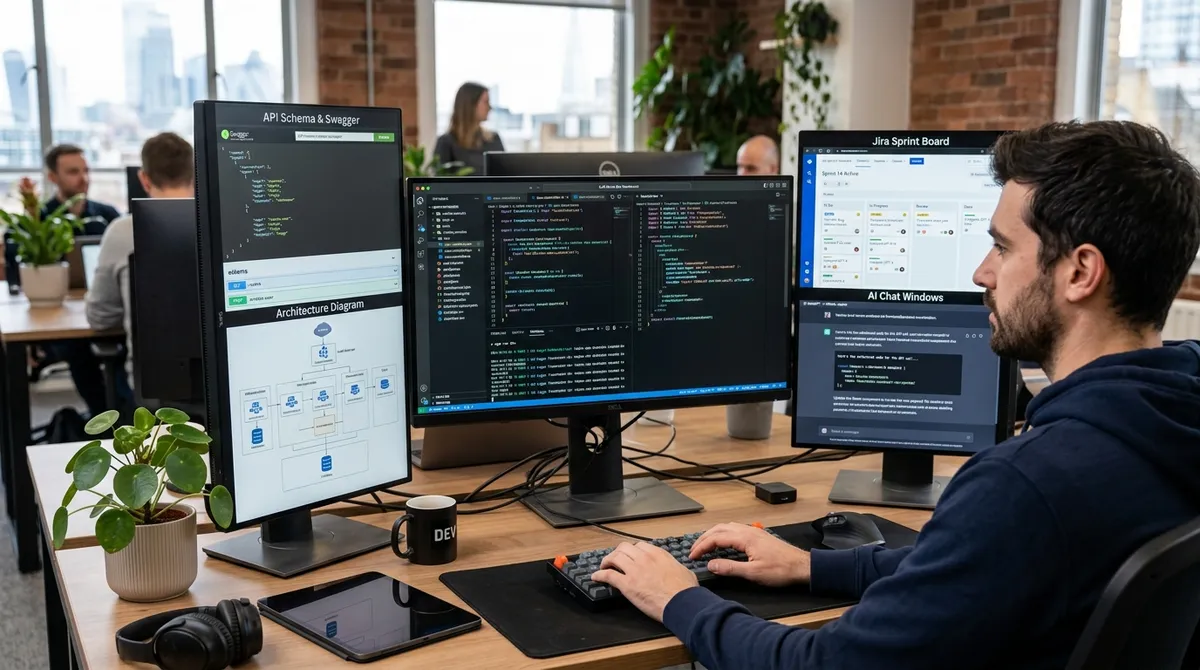
Spec Kit on a real full-stack project: how 17 sprints took a habit tracker to production
A Spec-Driven Development case study shows how the methodology held up across 17 full-stack sprints, two repositories, 328 tests and the production release of a B2C habit tracker.

Sam Altman Signs Pentagon Deal as QuitGPT Boycott Hits 4 Million Participants
OpenAI signed a contract with the US Department of Defense. In a single day, ChatGPT uninstalls jumped 295%, and the QuitGPT boycott has already drawn 4 million participants.
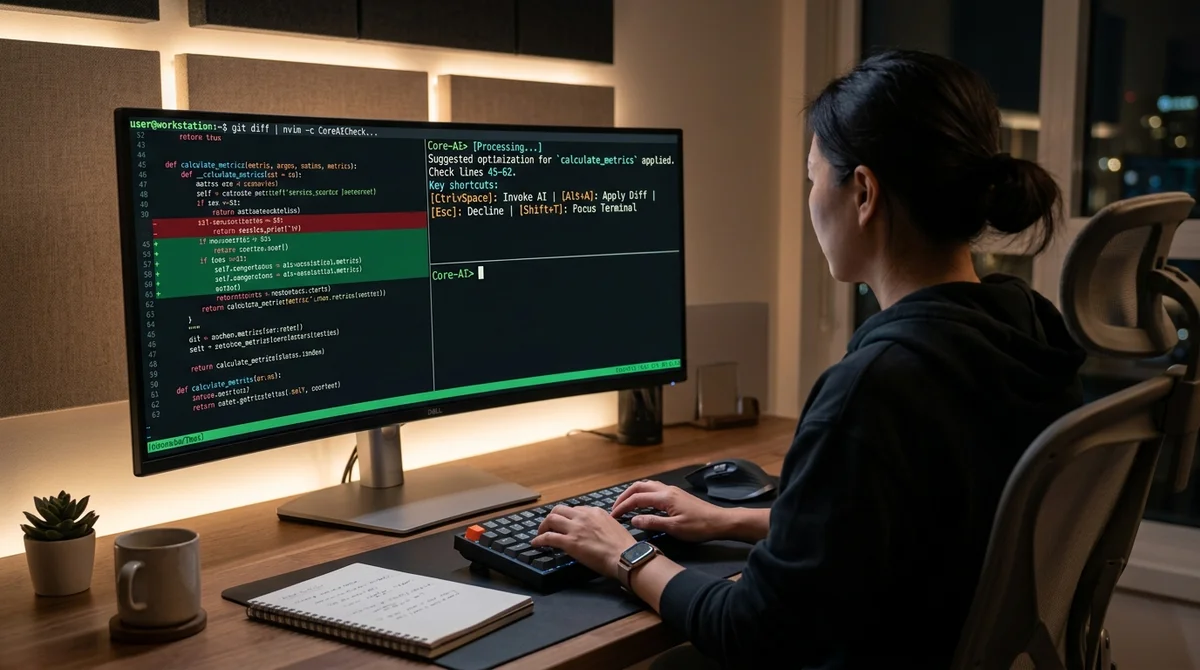
Claude Code: which keyboard shortcuts speed up your work and where they can get in the way
Claude Code hides useful terminal shortcuts: quick rollback of changes, background tasks, mode switching, and tips for avoiding conflicts with tmux.
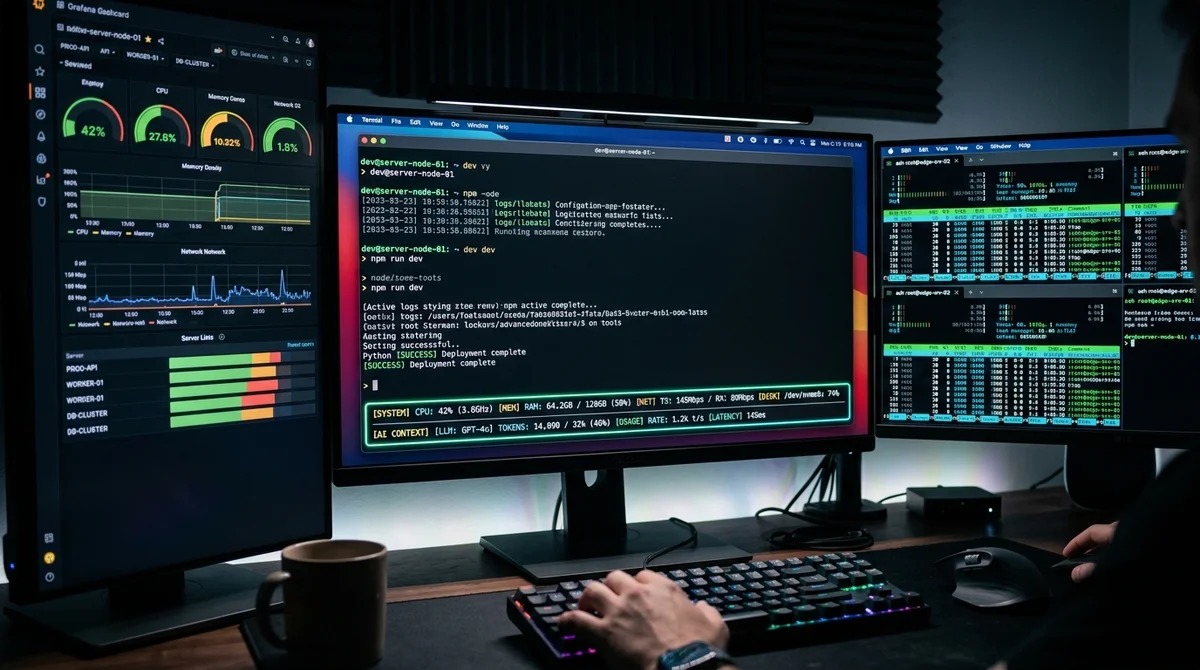
Developer builds a Claude Code statusline with VPS monitoring in a single session
Tired of guessing context usage and server load during long Claude Code sessions, a developer wrote a custom statusline inside claude.ai in one session.

A new tool syncs OpenAI Codex sessions between a desktop and a laptop
OpenAI Codex has no built-in cross-device sync, so a CLI tool called codexSync now moves sessions, context, and history between a desktop and a laptop.

Sam Altman and the Pentagon: How Military Contracts Could Become OpenAI's Insurance Policy
A column on OpenAI and the Pentagon argues that military contracts give Sam Altman's company not just money and data, but also protection from market pressure.