Habr AI
AI news source. Articles are auto-selected and adapted by Hamidun News editors.
Latest publications

Neural networks are still weak at multiplication: why AI writes code but gets arithmetic wrong
Even advanced language models do not calculate like a calculator: they guess patterns, memorize answers, and fail easily where a schoolbook algorithm is enough for a human.

Habr AI warned: without protocols and iterations, AI adoption accelerates team burnout
Habr AI explained why AI adoption without new processes boosts metrics only in the short term: employees complete more tasks, but lose engagement, ownership, and energy faster.

A Habr author compiled a 110,000-token prompt to make LLMs stop praising bad code
The author created a 110,000-token instruction so the model would stop agreeing with everything, challenge bad architectural decisions, and honestly acknowledge the limits of its expertise.
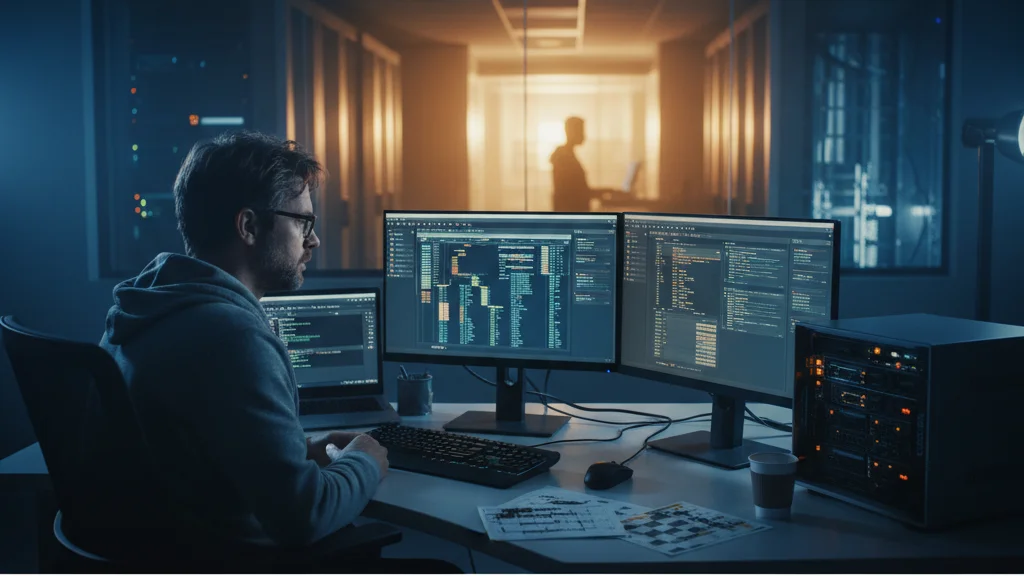
LanChess showed the path from vibe coding to production: 100,000 lines of code in three months
The creator of LanChess explained how, in three months, he used AI to take a chess service from POC to production, ship 100,000 lines of code, and run into real legal and infrastructure requirements.

Habr AI lists six local neural networks for autonomous offline work in 2026
Habr AI has published a review of six local neural networks that can work offline after installation and give users a backup AI tool in case of connectivity outages, travel, and privacy requirements.

WACV 2026 in Tucson showed Computer Vision's shift toward multimodality and synthetic data
A report from WACV 2026 in Tucson captured the main shifts in Computer Vision: multimodal models, synthetic data, more efficient compute, and notable posters from AIRI.

In the US, investment is shifting from offices to data centers amid tech giants’ demand for AI
The US commercial real estate market is changing priorities: amid the AI and cloud boom, capital is increasingly flowing from office construction into data centers.

Yandex Practicum identifies 10 vibe coding anti-patterns that can derail an early career
In a Habr column, an ML developer from Yandex Practicum broke down 10 common vibe coding mistakes — from blindly copying code to ignoring Git, tests, and security.

Google and AI companies are eroding the internet: small sites are losing traffic, models are losing quality
New data show how Google's AI summaries slash click-throughs to websites, while the flood of machine-generated content is simultaneously impoverishing the web and degrading future training data for models.

Spetslab: the accuracy of face identification systems cannot be measured by a single number
Spetslab explained that face identification systems do not have a single "accuracy": the result depends on the angle, the use case, the match threshold, and the quality of the database.

Habr published a brief guide to attention: self-attention, cross-attention, and multi-head
Habr has published a compact breakdown of the attention mechanism in transformers: the author explains the math of self-attention, shows an example with tokens, and separately examines cross-attention and multi-head atte

The dispute over chardet showed how AI is changing the rules of open source and code licensing
The chardet library case has become a stress test for open source: can AI be used to rewrite a project from scratch, change its license, and treat the result as new code?

Habr AI: why code written by AI turns into dangerous debt for teams
Code generated by AI helps teams close tasks quickly, but after a few months it can turn into an opaque and risky layer of the system that is hard to maintain and change.

15 AI tools for studying in 2026: what really helps college and school students
A selection of 15 AI services by task: explaining topics, editing, solving problems, synthesizing sources, and study notes. Plus the main warning: AI makes mistakes, so verify.

Target Encoding Without Data Leakage: LOO and K-Fold vs. the Illusion of Quality
Naive target encoding quietly leaks the target into the features and inflates metrics — a breakdown of exactly where leakage occurs and how to eliminate it with LOO and K-Fold.

MWS AI and SberAI Propose DRAGOn — a Dynamic Benchmark for Evaluating RAG Systems
Researchers from MWS AI, SberAI, and universities described DRAGOn — an approach to dynamic RAG evaluation where the corpus is regularly updated and questions and leaderboard are built automatically.

WebAsk launched an MCP server for surveys and found that AI reads more than it creates
WebAsk gave Claude and Cursor direct access to its survey builder via MCP, but the main use case unexpectedly turned out not to be questionnaire generation, but reading and analyzing hundreds of responses.

Habr AI explains how coding agents use memory, tools, and repository context
Habr AI's piece shows why the quality of a coding assistant depends not only on the model, but also on the harness, memory, tools, and access to the actual repository context.

Russian organizations showed six real AI use cases for project management
Russian organizations use AI in project management not universally, but in six clear scenarios: from knowledge bases and forecasts to automated meeting minutes and plan checks.

OpenClaw gets a Go reimplementation: one 35 MB binary instead of 800 MB of dependencies
The popular OpenClaw now has an independent Go version: it runs as a single 35 MB file, requires 3–5 times less memory, and simplifies deployment on low-end VPS and Raspberry Pi.

GitClear: AI speeds up code releases, but grows 'understanding debt' and hidden risks
GitClear analyzed 211 million lines of code and showed that AI speeds up releases, but at the same time increases churn, duplication, and code the team does not have time to understand.

ACE-Step 1.5 from ACE Studio outperforms Suno v5 and runs music generation locally
The open-source model ACE-Step 1.5 generates music locally with 4 GB of VRAM, produces a full track in seconds, and scores higher than Suno v5 on SongEval.
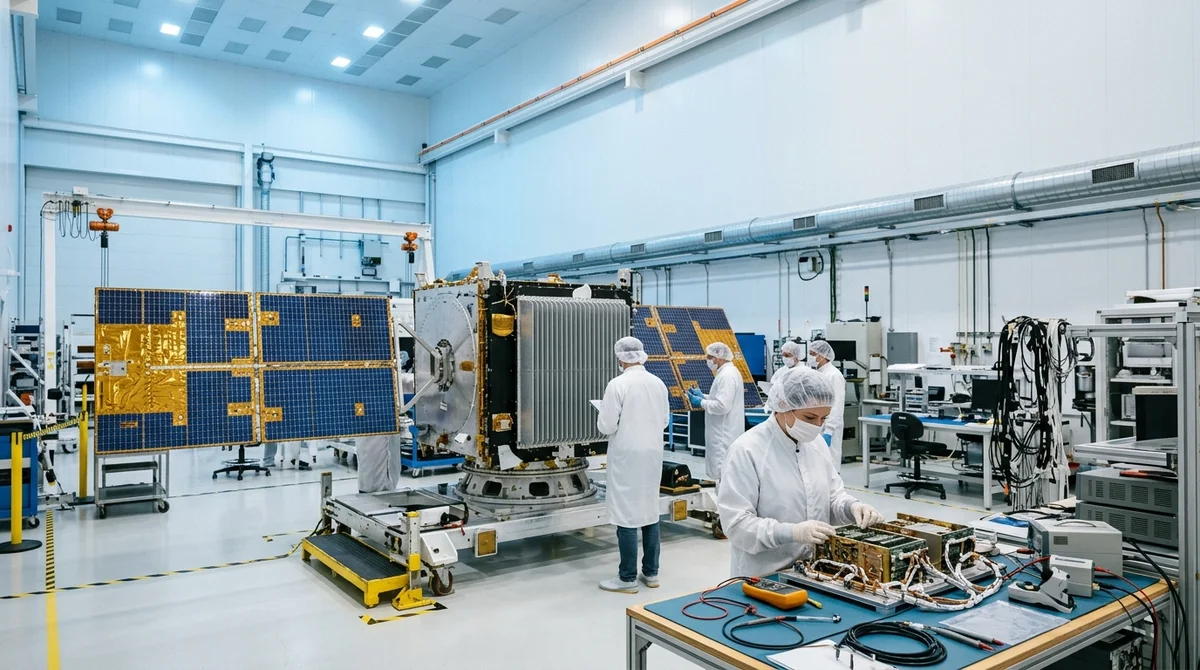
SpaceX, Blue Origin and Starcloud target orbital data centers for AI
SpaceX, Starcloud and Blue Origin want to move AI computing into orbit: near-continuous solar power generation could make space a new home for data centers.
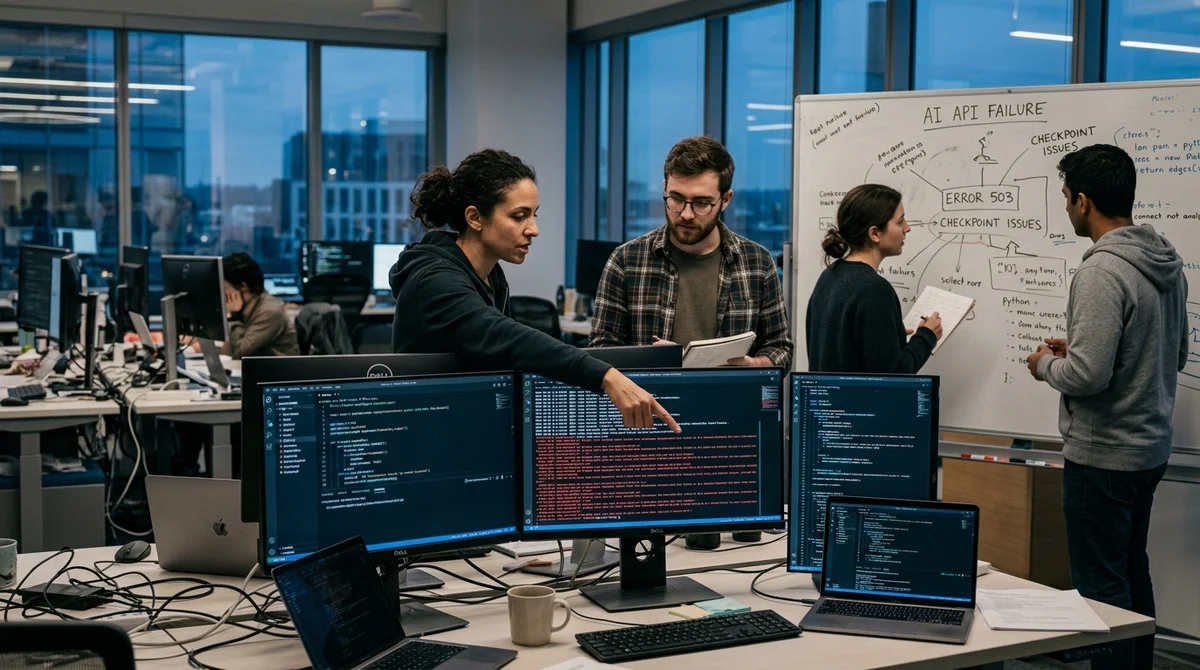
Anthropic and Amazon show how AI at work erodes skills
New cases from software development and medicine show that constant reliance on generative AI speeds up individual tasks but gradually worsens understanding, debugging, and critical thinking.

TAPe raised classification accuracy to 77% and compared the results with YOLO on a small COCO dataset
The TAPe authors showed how object-boundary segmentation, abandoning the learning rate, and refining classification boosted performance on COCO, and why YOLO barely converges on a small dataset.

OTUS explained on Habr how AI agents for software development work: from tokens to tools
Habr published a detailed breakdown of the architecture of AI agents for software development: what building blocks they consist of, why the cost of each step is rising, and how tools with reasoning affect answer quality

A Habr author tested whether ChatGPT can reconstruct articles from short prompts
An experiment on Habr showed that ChatGPT can almost completely reconstruct an article from a short prompt if the text contains no unique facts gathered manually.

Telegram has become the main environment for AI agents: environment matters more than model quality
Telegram is becoming the main environment for AI agents: it already has users, communication, and context — everything an agent needs for real results.

LangChain in production: Habr AI explained why multi-agent systems are moving to plain Python
Habr AI published an analysis of a production multi-agent system without LangChain: the author shows why model switching, RAG, tool calling, and fallback require explicit logic rather than a 'magical' abstraction.

VK presented three student projects from EMS — from a multimodal benchmark to text analysis
VK presented three projects by EMS students: a multimodal benchmark for Russian, a lower-cost attention mechanism, and a system for analyzing emotions and states from text.