Chinese AI models overtook U.S. ones in token consumption — OpenRouter data
For the second week in a row, OpenRouter is tracking a historic shift: Chinese AI models are surpassing U.S. ones in real-world token consumption — 4.69 trillion versus 3.29 trillion. The rankings now include the mysterious Hunter Alpha, whose creator is not publicly known. The main reason is the agentic era: a single pipeline generates hundreds of times more tokens than a chat request, and low cost has become the decisive factor in model choice.
AI-processed from Habr AI; edited by Hamidun News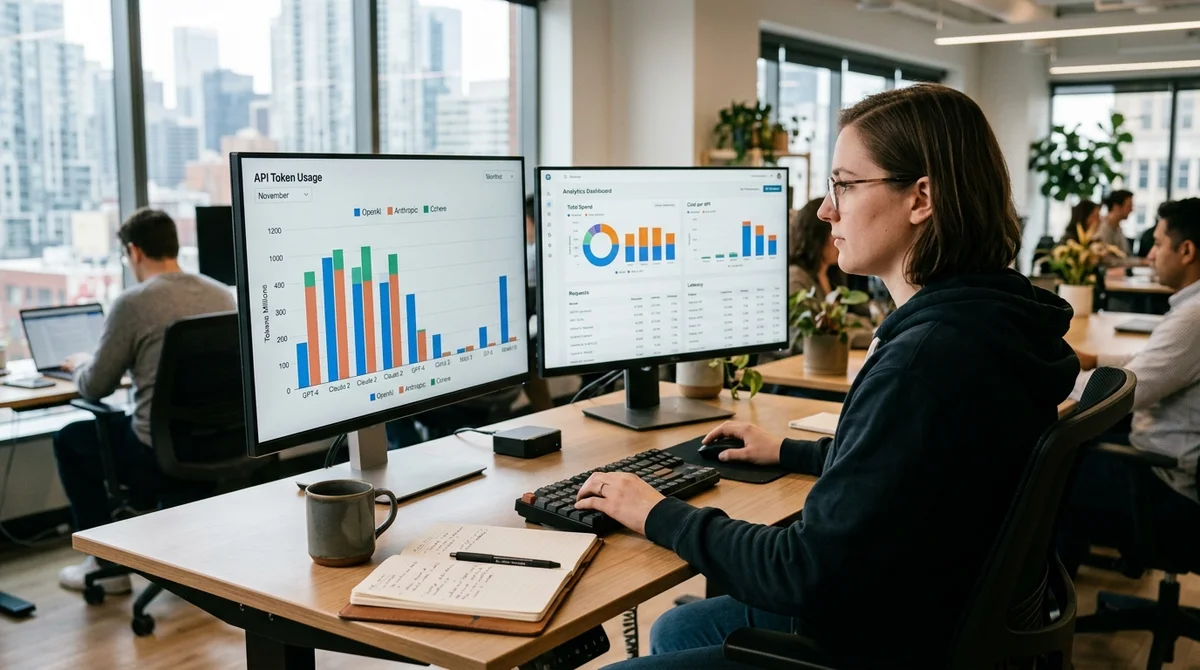
Chinese AI models have surpassed American models for a second consecutive week in real token consumption, according to OpenRouter data: 4.69 trillion tokens versus 3.29 trillion. Simultaneously, a mysterious Hunter Alpha has appeared in the top rankings, whose creator remains unknown to anyone.
Figures That Don't Lie
Over the past week, Chinese models generated 4.69 trillion tokens through OpenRouter, while American models generated 3.29 trillion. The gap is approximately 43%. Importantly, these are not marketing claims or synthetic benchmarks — this is real infrastructure load on the world's largest API aggregator, through which thousands of development teams work globally. A week earlier, the picture was identical. Two weeks in a row is no longer a random spike, but a sustained trend. For an industry where, just six months ago, GPT-4 was considered the only viable choice for production systems, this is a significant signal.
Who is Hunter Alpha
A model named Hunter Alpha has appeared in the consumption rankings. No known provider has publicly announced its release: it simply appeared on OpenRouter and began generating significant traffic. Its origin is unknown, its authorship unrevealed. This is not the first case of "phantom" models. In 2024, Mystery Model in the LMSYS rankings turned out to be Claude 3 Opus. But Hunter Alpha is a different scenario: it actively consumes tokens from real users. This is a full launch, not hidden testing.
Why Agents Changed the Economics
The main driver of this shift is not model quality per se, but a change in usage patterns. In the era of agents, a single task may require dozens or hundreds of LLM calls. An agentic pipeline generates 10–100x more tokens than a single chat query. At this scale, price per million tokens becomes the primary selection factor. Chinese models have aggressively cut prices over the past six months. The gap with American competitors for high-volume workloads is enormous:
- Qwen3-72B: $0.07–0.30 per 1M tokens (depending on provider)
- DeepSeek V3: $0.07–0.14 per 1M tokens
- GPT-4o: $2.50–5.00 per 1M tokens
- Claude Sonnet 4.5: $3.00–15.00 per 1M tokens
For agentic tasks with thousands of calls per day, a 10x difference in price directly impacts product margin.
What to Check Right Now
If you're building AI features for production, run through this checklist:
- Count tokens per task — not per prompt, but for the entire agentic cycle. Multiply by monthly volume.
- Compare cost — at a 10x price difference, product economics change drastically.
- Check context window — Qwen3 and DeepSeek support up to 128K tokens, sufficient for most pipelines.
- Measure TTFT — for real-time interfaces, latency matters more than price; test with your region in mind.
- Assess compliance risks — routing data through Chinese APIs raises GDPR and corporate security questions.
"You can no longer choose a model based on how it responds in chat —
you need to calculate the cost of the task as a whole."
What This Means
A shift in the leader by real token consumption is not cause for panic, but a clear signal. Developers vote with traffic: Chinese models are cheaper for agentic workloads, and the market reflects this. For product teams, this is reason to audit your stack — not because "Chinese is better," but because "cheap and sufficiently good quality" is now a different product economics.
Need AI working inside your business — not just in your newsfeed?
I build production AI for companies — custom CRM, internal tools, autonomous agents, workflow automation. Owned by you, shaped to your process, no per-seat tax. Built by Zhemal Khamidun, CPO of AlpinaGPT (AI platform, 6,000+ users).
The AI world, distilled — once a week
Seven stories that actually mattered, hand-picked. No noise, no reposts, no press releases.
Done! Check your inbox for a confirmation.