AI Guards Nature: How Neural Networks Are Helping Ecology
Justin Kay, a researcher at MIT, is developing AI-based systems for monitoring ecosystems. Computer vision analyzes data to help detect changes and support biodiversity. It is an important step toward protecting nature with technology.
AI-processed from MIT News; edited by Hamidun News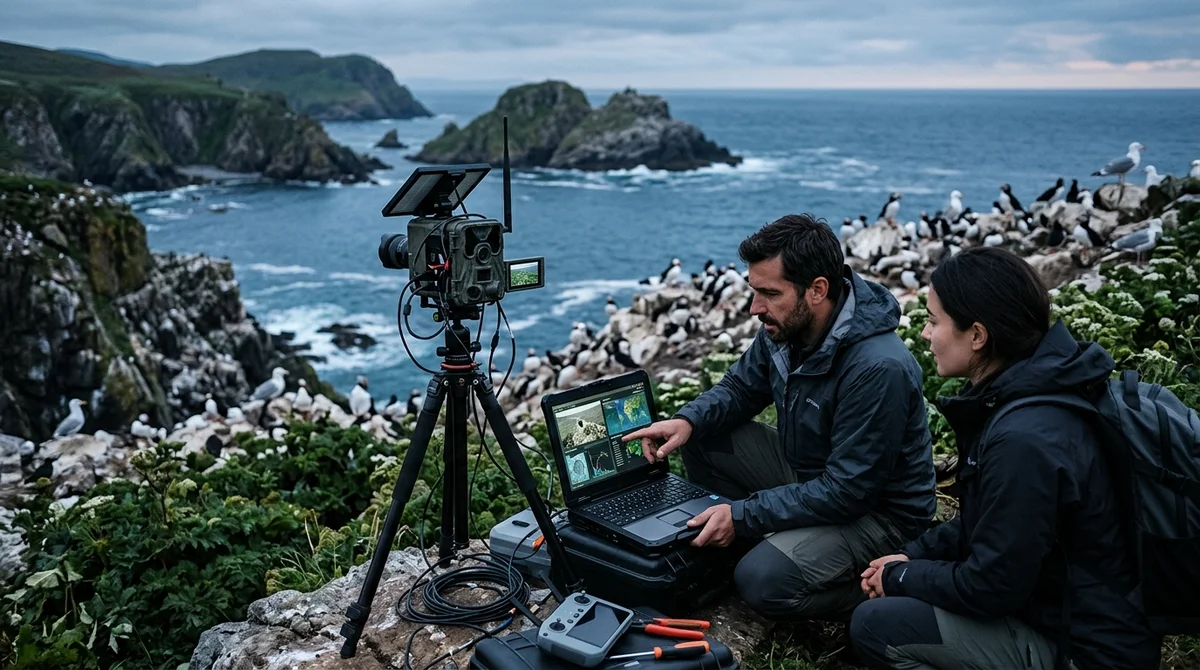
Preserving biodiversity and keeping ecosystems healthy is one of the most important challenges of our time. With global climate change and human impact on the environment, monitoring and protecting vulnerable natural areas is becoming critical. Justin Kay, a PhD student and researcher at MIT CSAIL, proposes an innovative approach to the problem that combines artificial intelligence and computer vision.
Traditional ecosystem monitoring methods are often labor-intensive and expensive, and they cannot deliver data in real time. They require many specialists, regular field surveys and analysis of collected samples. AI and computer vision can automate this process, make it significantly more efficient and cut costs.
The core of Kay's approach is building systems that can analyze images and video captured by drones, satellites and cameras installed in natural areas. Computer vision algorithms recognize different species of plants and animals, assess the condition of vegetation, and detect signs of pollution and other changes in the ecosystem. The resulting data is used to build detailed maps and models, which let scientists and conservation organizations track how conditions change over time and make informed decisions.
Applying AI to ecosystem monitoring opens new ways to identify threats and take timely action to prevent them. For example, AI-based systems can detect signs of poaching, illegal logging or water pollution. They can also be used to monitor populations of rare and endangered species, evaluate the effectiveness of conservation measures and forecast the consequences of climate change.
Building and deploying such systems requires close collaboration among scientists, engineers, ecologists and conservation organizations. Specialized algorithms must be developed and adapted to specific types of ecosystems and monitoring tasks. It is also important to make data and tools accessible to a wide range of users so they can rely on them to make informed decisions about protecting nature.
AI in environmental monitoring holds enormous potential for preserving biodiversity and keeping our planet healthy. The work of Kay and his colleagues shows how modern technology can be used to tackle the most pressing environmental problems. It is an important step toward a sustainable future in which nature and technology coexist in harmony.
In conclusion, Kay's work shows that AI is not just a tool for automating routine tasks but a powerful resource for solving global problems such as ecosystem conservation. In the future, we can expect even wider use of AI in ecology, which will let us protect our planet more effectively.
- Nov 2, 2026Researchers release AVID dataset: 68.1% of targets have a bounding box side of just 8–16 pixels
- Nov 2, 2026Karpathy Built HackerTube, a Catalog of 6,454 Videos, in Two Hours with Claude Code
- Nov 2, 2026Cosmos generated training video for drones: detector mAP@50–95 up 10.3%
- Nov 2, 2026Karpathy builds a YouTube clone with 6454 videos from Hacker News recommendations in two hours
Test Frontier LLMs & Autonomous Agents in One Workspace
Run Claude Opus 5.5, GPT-6, Gemini 3.1, and DeepSeek side-by-side in Nomad AI (nomadnet.ai) — unified model routing, deep research, and multimodal workflows under one subscription.
The AI world, distilled — once a week
Seven stories that actually mattered, hand-picked. No noise, no reposts, no press releases.
Done! Check your inbox for a confirmation.