Google releases SpeciesNet, an open AI model for wildlife conservation
Google has made SpeciesNet publicly available: an AI model that automatically identifies animal species in camera-trap images. It helps ecologists and conservation organizations around the world process millions of images faster, track populations and spot threats to biodiversity. SpeciesNet is open source, so researchers can adapt it to local ecosystems without depending on commercial solutions.
AI-processed from Google AI Blog; edited by Hamidun News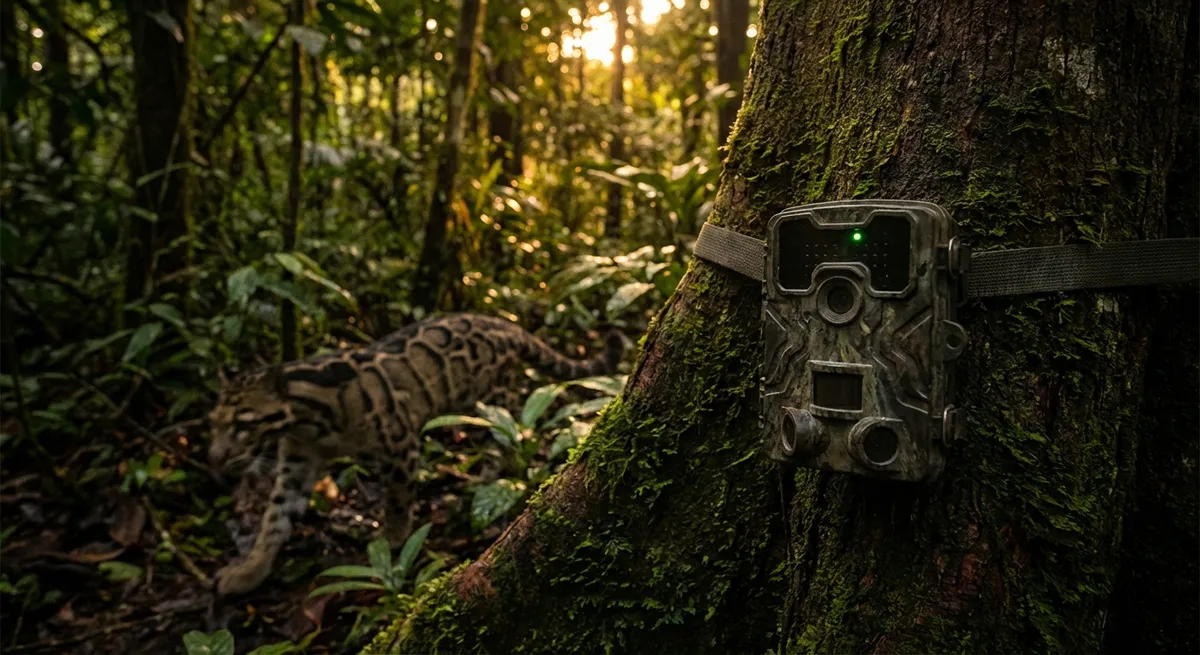
Every day, thousands of camera traps placed in the world's forests, savannas and mountains take millions of photos. Most show nothing: empty frames, swaying grass, a stray shadow. But hidden in that stream of data are frames that can decide the fate of entire species: a rare snow leopard on a mountain pass, the last Sumatran rhinos, a previously unknown population of forest elephants. The problem is that ecologists physically lack the hands to review it all manually. That is the task SpeciesNet takes on. It is an artificial intelligence model from Google, which the company has released publicly.
SpeciesNet is a computer vision system trained to recognize animal species in camera-trap images. That sounds simple, but a great deal of engineering sits behind the description. Camera traps shoot in infrared, in poor light and at arbitrary angles. An animal may be partly hidden by vegetation, in motion, or at the very edge of the frame. Classic image classification algorithms handle such conditions poorly. According to Google, SpeciesNet was trained on a huge set of labeled images from ecosystems around the world, which lets it work not only in ideal lab conditions but also in real field settings, from the rainforests of Borneo to the tundra of Alaska.
The context in which the model appeared matters. The biodiversity crisis stopped being an abstract threat long ago. According to the Intergovernmental Science-Policy Platform on Biodiversity and Ecosystem Services (IPBES), around one million animal and plant species are threatened with extinction. Population monitoring is the first and necessary step toward protecting them, but it requires resources that most conservation organizations simply do not have. A single research project can generate tens of millions of images a year. Sorting that volume by hand takes entire teams of volunteers months. AI models like SpeciesNet compress the process to hours, freeing scientists' time for analysis and decision-making.
Google's decision to make the model open is not just a goodwill gesture but a strategically important step. Ecosystems on different continents differ radically, and a universal model will inevitably make mistakes in specific regions. Open source code lets local research groups fine-tune SpeciesNet on their own data, for example to recognize endemic species of Madagascar or rare predators of Central Asia. This differs fundamentally from relying on a closed commercial API, access to which can be restricted or cut off at any moment. For field stations in remote areas where internet connections are unstable or absent, being able to run the model locally is not an advantage but a necessity.
SpeciesNet is far from the first attempt to apply machine learning to ecology. Wildlife Insights, a project also backed by Google, has offered a cloud platform for camera-trap data analysis for several years. Microsoft, with its AI for Earth program, funds dozens of projects at the intersection of AI and nature conservation. The startup Conservation Metrics uses acoustic analysis to monitor birds and marine mammals. But it is the openness of SpeciesNet that may become a catalyst to unite these scattered efforts. When a community shares a common base model, it becomes easier to exchange data, compare results and build on top of it, from early-warning systems for poaching to automatic mapping of migration routes.
There are, however, questions without clear answers yet. How accurate is the model on species poorly represented in the training set? How does it cope with low-resolution night images, which make up a significant share of camera-trap data? Could reliance on AI classification create a false sense of data completeness, if the algorithm systematically misses rare species? These questions do not diminish the project's value, but they are a reminder that the technology is a tool, not a replacement for expertise.
In a broader view, SpeciesNet is an example of how large technology companies can create real public value through open AI projects. Not every use of artificial intelligence has to boil down to optimizing ad impressions or generating content. Sometimes a neural network that tells a clouded leopard from a leopard cat in a grainy night photo means more to the world than yet another chatbot. And the fact that Google chose not to monetize this model and instead gave it to the scientific community deserves attention, whatever corporate motives lay behind the decision.
- Nov 2, 2026NVIDIA releases Nemotron 3.5 Bolt E4B: 4 GB and 133 tokens per second on an RTX 5070
- Nov 2, 2026TJ Digital: 23% of AI-cited pages open with a direct answer, versus 14% of uncited ones
- Nov 2, 2026Karpathy builds a YouTube clone with 6454 videos from Hacker News recommendations in two hours
- Nov 2, 2026Karpathy used Claude to build HackerTube from 6,454 videos recommended on Hacker News
Test Frontier LLMs & Autonomous Agents in One Workspace
Run Claude Opus 5.5, GPT-6, Gemini 3.1, and DeepSeek side-by-side in Nomad AI (nomadnet.ai) — unified model routing, deep research, and multimodal workflows under one subscription.
The AI world, distilled — once a week
Seven stories that actually mattered, hand-picked. No noise, no reposts, no press releases.
Done! Check your inbox for a confirmation.