Pony.ai posts its first quarterly profit and plans robotaxi launches in more than 20 cities
Pony.ai closed a quarter in the black for the first time, but investment income, not rides, did the heavy lifting. The robotaxi business is accelerating too: segment revenue rose 160% year over year, the company reached breakeven on unit economics in Shenzhen and Guangzhou, and it aims to grow its fleet to 3,000+ vehicles and expand to more than 20 cities by the end of 2026. The profit is a milestone, but not proof that robotaxis have become a consistently profitable mass-market service.
AI-processed from Bloomberg Tech; edited by Hamidun News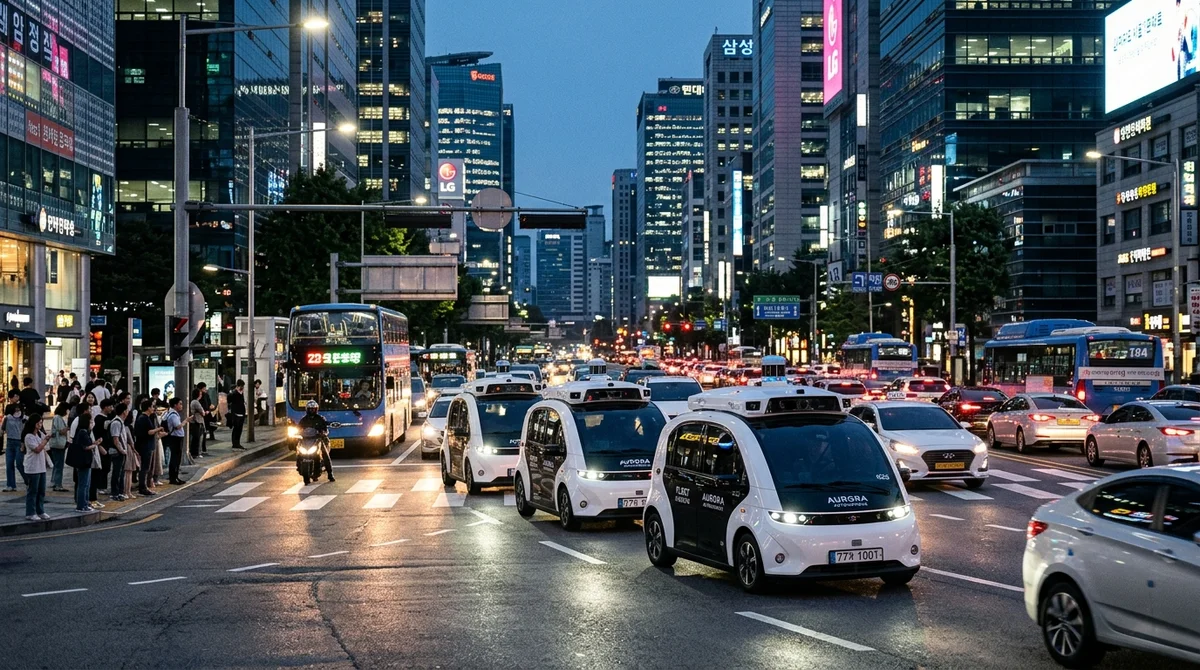
Pony.ai posted its first quarterly profit, but it did not earn it from robotaxi rides. The money came from income on an early investment. At the same time, the company is sharply raising its targets for 2026: it wants to launch the service in more than 20 cities and grow its fleet to more than 3,000 vehicles.
Where the profit came from
In the fourth quarter of 2025, Pony.ai recorded a GAAP net profit of $75.5 million. It is the first such quarter in the company's history. At first glance, the news looks like the long-awaited turning point for the autonomous driving sector, which has lived for years on investment and promises of future scalability. The details are more cautious: the main contribution to the bottom line came not from the robotaxi service but from investment income and revaluation of securities.
Pony.ai's annual revenue grew 20% to $90 million, and its net loss for all of 2025 narrowed by 72% to $76.8 million. The business still runs an operating loss, meaning its core operations continue to require significant spending. In other words, this is an important financial milestone, but not proof that robotaxis have already become a consistently profitable mass-market service.
"We are making forward-looking investments to accelerate commercialization,"
Pony.ai CFO Leo Wang said in the company's report.
The 20-city plan
Pony.ai's main bet right now is not a polished quarterly report but scale. The company said that as of March 25, 2026, it had produced 1,446 robotaxis and intends to grow the fleet to more than 3,000 vehicles by the end of the year. Its operating footprint is also expanding quickly: the goal is a presence in more than 20 cities worldwide, with almost half of them outside China.
- 1,446 robotaxis already produced as of the end of March 2026
- 2026 target: a fleet of more than 3,000 vehicles
- 1,000 Toyota bZ4X units already secured for joint deployment in 2026
- New markets include Hangzhou, Changsha, Zagreb, Doha and Singapore
- In Dubai, the company is awaiting formal approval for fully driverless operations
Pony.ai wants to drive this growth through joint deployment with automakers and local partners. The company specifically highlights its alliance with Toyota, as well as its cooperation with BAIC and GAC. The logic is clear: if it can rely on existing manufacturing, service networks and local operators, scaling should go faster and require less capital than building everything alone. That matters especially in an industry where hardware costs and fleet maintenance typically eat into the economics of growth.
Ride economics
Despite the importance of investment income, Pony.ai does show signs of progress in its core business. Robotaxi revenue in the fourth quarter rose 160% year over year to $6.7 million. Revenue from paid rides alone, according to the company, grew more than 500% over the quarter. For full-year 2025, robotaxi revenue reached $16.6 million, up 128.6% from a year earlier.
Even more important is the claim of breakeven on unit economics in Guangzhou and Shenzhen just four months after launching seventh-generation robotaxis. This does not mean the whole company is profitable. But it does mean that in certain cities, and at the level of an individual vehicle, the economics are starting to add up: ride revenue covers direct operating costs noticeably better than before. For the market, this is one of the few practical signals that the model can scale without sharply growing losses on each new vehicle.
Pony.ai backs this up with specific metrics. On its peak day in Shenzhen, March 22, 2026, net daily revenue per vehicle reached 394 yuan, with 25 orders per vehicle. By the end of March, its user base in China approached 1 million people. The company also says the number of paid orders in Shenzhen from January to mid-February 2026 already exceeded the level of all of 2025, which looks like a sign of fast-growing demand.
What it means
Pony.ai has not yet proven that it can make money from robotaxis at the scale of the whole company, but it has shown that individual cities and vehicles can reach economic balance. If the plan for 20+ cities and a fleet of 3,000+ vehicles works, the market will start valuing the company not on one-off investment income but on recurring revenue from autonomous rides.
- Nov 1, 2026Local models lose to Opus and Codex: 0.21 on a MacBook versus 1.00 for Codex
- Nov 1, 2026Adobe's EditAgent judge picks a usable edit 81.3% of the time, versus 74.8% for EditScore
- Nov 1, 202616 models tested on 7 search tools: Exa averaged 10.5 out of 14, SearXNG about 3
- Nov 1, 2026Google's StreamVibe video agent beats other models by 10.7% on response timing and quality
Key Questions Answered
Where the profit came from?
In the fourth quarter of 2025, Pony.ai recorded a GAAP net profit of $75.5 million. It is the first such quarter in the company's history. At first glance, the news looks like the long-awaited turning point for the autonomous driving sector, which has lived for years on investment and promises of future scalability. The details are more cautious: the main contribution to the bottom line came not from the robotaxi service but from investment income and revaluation of securities. Pony.ai's annual revenue grew 20% to $90 million, and its net loss for all of 2025 narrowed by 72
What are the key details on The 20-city plan?
Pony.ai's main bet right now is not a polished quarterly report but scale. The company said that as of March 25, 2026, it had produced 1,446 robotaxis and intends to grow the fleet to more than 3,000 vehicles by the end of the year. Its operating footprint is also expanding quickly: the goal is a presence in more than 20 cities worldwide, with almost half of them outside China. 1,446 robotaxis already produced as of the end of March 2026 2026 target: a fleet of more than 3,000 vehicles 1,000 Toyota bZ4X units already secured for joint deployment in 2026 New markets include
What are the key details on Ride economics?
Despite the importance of investment income, Pony.ai does show signs of progress in its core business. Robotaxi revenue in the fourth quarter rose 160% year over year to $6.7 million. Revenue from paid rides alone, according to the company, grew more than 500% over the quarter. For full-year 2025, robotaxi revenue reached $16.6 million, up 128.6% from a year earlier. Even more important is the claim of breakeven on unit economics in Guangzhou and Shenzhen just four months after launching seventh-generation robotaxis. This does not mean the whole company is profitable. But i
Test Frontier LLMs & Autonomous Agents in One Workspace
Run Claude Opus 5.5, GPT-6, Gemini 3.1, and DeepSeek side-by-side in Nomad AI (nomadnet.ai) — unified model routing, deep research, and multimodal workflows under one subscription.
The AI world, distilled — once a week
Seven stories that actually mattered, hand-picked. No noise, no reposts, no press releases.
Done! Check your inbox for a confirmation.