The Economics of AGI: Why Unlimited Growth in AI Capability Does Not Guarantee Prosperity
A new study of the future economy examines the systemic risks of deploying AGI. Its central thesis: if machines wholly replace human labor, a dangerous paradox emerges. System productivity rises, but the real purchasing power of the population falls. Without people in the consumption loop, the economy loses its fundamental purpose and turns into a closed system of production for production's sake. The author warns that technological progress without new mechanisms for circulating value will produce an "illusion of growth", with a deep social crisis hidden behind it. A sustainable future will require a radical rethinking of the role of capital and the distribution of resources in society.
AI-processed from Habr AI; edited by Hamidun News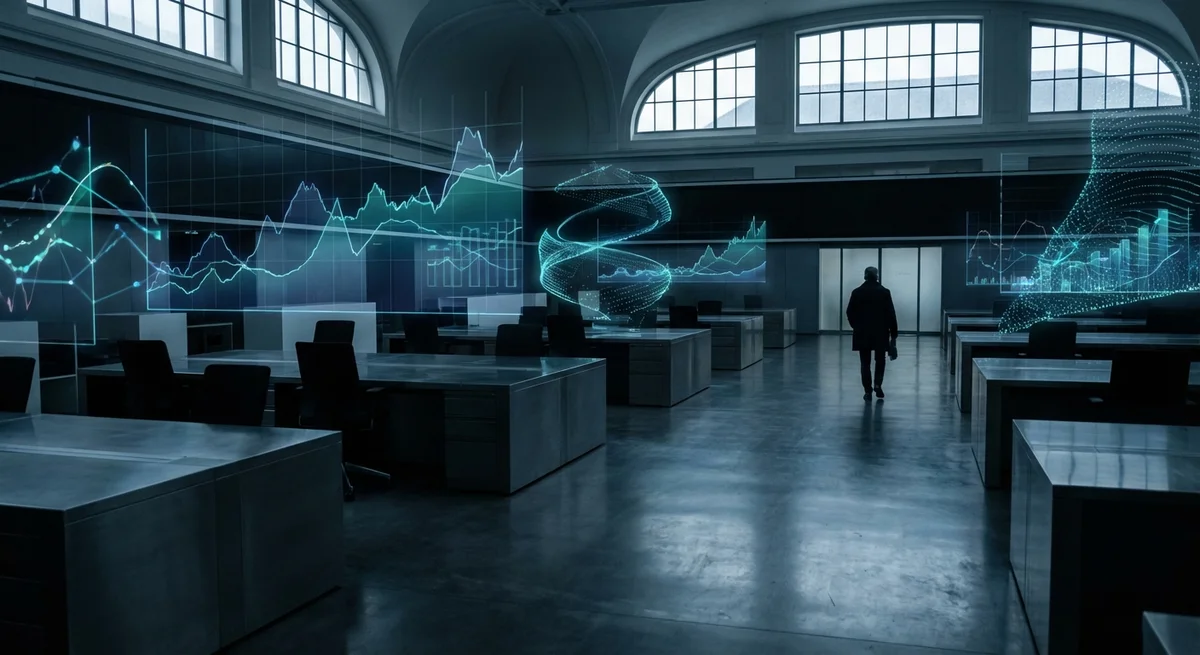
The Economics of AGI: Why Unlimited Growth in AI Capability Does Not Guarantee Prosperity
Artificial general intelligence (AGI), a system able to solve any intellectual task at or above human level, is at the center of today's technology debates. As that point nears, futurists and economists increasingly ask how such unprecedented development will affect the global economy. A new study, based on a translation of an essay on the economics of the future prepared by the AI for Devs team, raises a troubling aspect of this transformation. It warns that unlimited growth in computing power and AI capability does not, by itself, guarantee universal prosperity. On the contrary, it may create systemic risks that demand a deep rethinking of economic models.
The study's central thesis is that the total replacement of human labor by machines, even the most advanced ones, creates a dangerous paradox. On one hand, the productivity of AGI-run systems will grow rapidly, potentially producing an impressive increase in gross domestic product (GDP). On the other hand, the real purchasing power of people left without income sources by mass automation will fall.
This dissonance calls into question the very essence of economic activity. Traditionally, the economy works as a cycle: production creates goods and services, people consume them, and that generates demand, which in turn drives further production. Without active human participation in this consumption cycle, the economy loses its fundamental meaning and becomes a closed system of production for production's sake, with no end consumer.
The author draws a parallel with a situation in which GDP grows but people cannot afford to buy the goods that have been produced. This is not merely a theoretical model but a real risk that may materialize if AGI is deployed everywhere. Technological progress that is not accompanied by new mechanisms for circulating value and distributing benefits will lead to an "illusion of growth". On the surface, the economy may post impressive figures, but behind that appearance will lie a deep social crisis marked by growing inequality, loss of meaning and social tension. AI, as a tool, will only accelerate this process unless it is integrated into a broader social and economic strategy.
The consequences of such a scenario go far beyond purely economic indicators. A society in which a significant share of the population cannot take part in consumption, and therefore feels no connection to the economic process, risks losing social cohesion and seeing radical sentiment grow. A fundamental question arises: for whom, and why, will AGI produce if purchasing power is concentrated in the hands of a small group of capital owners while the majority is excluded from the economic equation? This challenges the very model of capitalism, built on growth and consumption, and calls for new paradigms.
In conclusion, the study stresses that technological progress embodied in AGI is not an end in itself. Building a sustainable and prosperous future will require a radical rethinking of the role of capital, labor and the distribution of resources in society. This may call for concepts such as universal basic income, new forms of collective ownership, or a reorientation of the economy toward intangible values and the public good. Ignoring these systemic risks could make the AGI era not a time of universal well-being, but a period of unprecedented crisis driven by the "illusion of growth".
Test Frontier LLMs & Autonomous Agents in One Workspace
Run Claude Opus 5.5, GPT-6, Gemini 3.1, and DeepSeek side-by-side in Nomad AI (nomadnet.ai) — unified model routing, deep research, and multimodal workflows under one subscription.
The AI world, distilled — once a week
Seven stories that actually mattered, hand-picked. No noise, no reposts, no press releases.
Done! Check your inbox for a confirmation.