Bezos: AI won't destroy jobs, it will bring humanity a "golden age"
Jeff Bezos has dismissed fears of AI-driven unemployment. The Amazon founder is convinced that artificial intelligence will not take people's jobs but will usher in a "golden age" for all of humanity. Bezos is one of several American billionaires investing in both space and AI development at the same time, and he believes there is nothing to fear.
AI-processed from 3DNews AI; edited by Hamidun News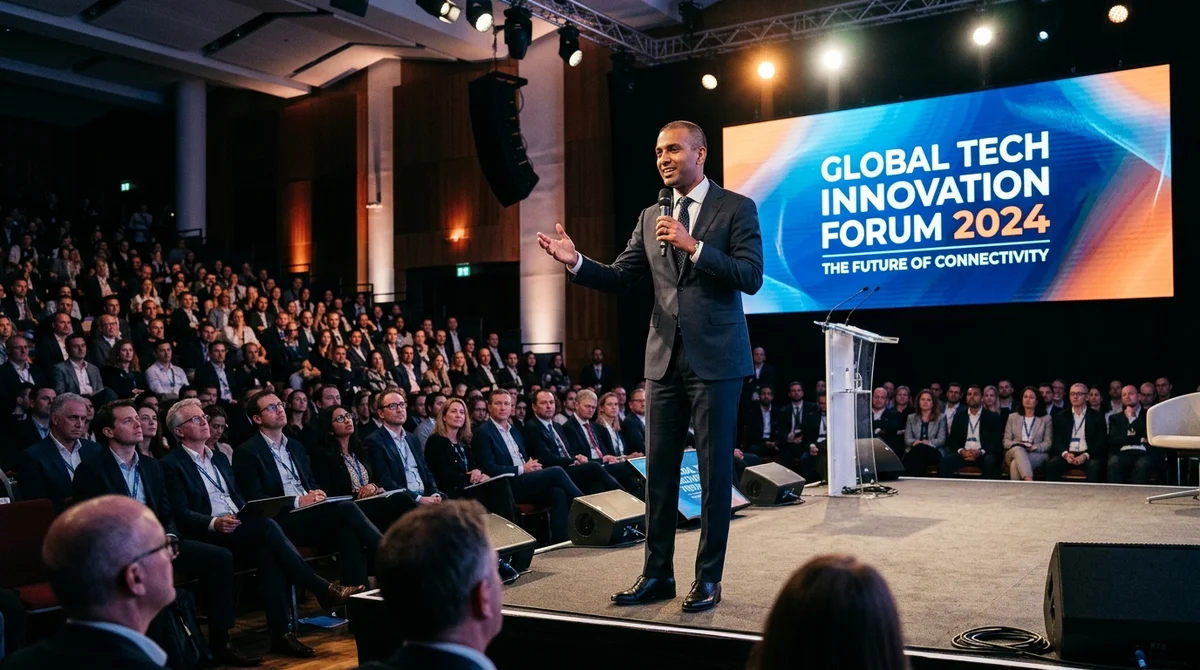
Amazon founder Jeff Bezos has said that concerns about mass unemployment caused by AI are nothing more than a myth. In his words, the development of artificial intelligence will open a "golden age" for humanity: a period of unprecedented prosperity and fundamentally new opportunities.
Bezos's position
Bezos is convinced that fears of technological unemployment are baseless. In his logic, AI is not a threat to employment but a catalyst that will change the nature of work for the better. He has voiced this view repeatedly, and it fits the broader rhetoric of tech leaders who are pouring money into AI.
Notably, Bezos is one of the American billionaires who are exploring space and investing in artificial intelligence at the same time. His rocket company Blue Origin uses machine learning in its engineering processes, and his venture fund Bezos Expeditions finances several AI startups. For an entrepreneur of this scale, optimism about AI is also a matter of personal business interest: the more people trust the technology, the easier it is to roll out.
"Fears of mass unemployment are baseless.
AI will bring about a golden age for humanity," — Bezos.
A chorus of optimists
Other major players in the tech industry share Bezos's views. OpenAI CEO Sam Altman consistently calls AI a tool that "amplifies" people rather than replaces them. NVIDIA CEO Jensen Huang argues that new professions will appear faster than old ones disappear. Bill Gates believes automation will free up people's time for more creative and meaningful work.
The shared logic of these statements goes back to a historical precedent: the Industrial Revolution of the 18th and 19th centuries also frightened people at the time, with weavers fearing spinning machines and coachmen fearing automobiles. In the end, mechanization did not destroy employment but transformed it, creating billions of jobs in industries that had not existed before. But AI is a special case: unlike the steam engine, it can automate not only physical but also intellectual labor, which means the question of employment is more acute than in previous technological revolutions.
What the data says
Independent researchers take a more cautious view:
- The IMF estimates that AI will affect about 40% of jobs in advanced economies in the coming years
- McKinsey forecasts that by 2030, tasks equivalent to 300 million full-time jobs worldwide will be subject to automation
- Routine professions are the most vulnerable: call-center operators, accountants, legal assistants, data-entry specialists
- Moving into new professions requires retraining, which takes years
The optimists are right that new jobs will appear. The problem is speed: people who lose their jobs today do not have time to retrain before the economy adapts to the new reality. This gap is the main source of social tension.
What this means
Bezos's statements about a "golden age" reflect the view from the top of the tech pyramid. For an entrepreneur whose own companies are actively deploying AI, optimism is a natural position. For millions of workers in sectors that AI is transforming right now, the picture looks different.
A real "golden age" will require not only technological progress but also well-designed retraining policies, adequate social safeguards, and active government involvement. Without them, the gold will go to a few.
- Nov 1, 2026Local models lose to Opus and Codex: 0.21 on a MacBook versus 1.00 for Codex
- Nov 1, 2026Kimi scores 96.2% on a 1C database analytics test and emerges as a fallback if Claude access is blocked
- Nov 1, 2026OpenAI Rewrites GPT Behavior Rules: Five Values and a Chain of Command
- Nov 1, 2026Google admits AI Mode cuts search revenue, shares fall 15%
Key Questions Answered
What are the key details on Bezos's position?
Bezos is convinced that fears of technological unemployment are baseless. In his logic, AI is not a threat to employment but a catalyst that will change the nature of work for the better. He has voiced this view repeatedly, and it fits the broader rhetoric of tech leaders who are pouring money into AI. Notably, Bezos is one of the American billionaires who are exploring space and investing in artificial intelligence at the same time. His rocket company Blue Origin uses machine learning in its engineering processes, and his venture fund Bezos Expeditions finances several AI
What are the key details on A chorus of optimists?
Other major players in the tech industry share Bezos's views. OpenAI CEO Sam Altman consistently calls AI a tool that "amplifies" people rather than replaces them. NVIDIA CEO Jensen Huang argues that new professions will appear faster than old ones disappear. Bill Gates believes automation will free up people's time for more creative and meaningful work. The shared logic of these statements goes back to a historical precedent: the Industrial Revolution of the 18th and 19th centuries also frightened people at the time, with weavers fearing spinning machines and coachmen fear
What the data says?
Independent researchers take a more cautious view: The IMF estimates that AI will affect about 40% of jobs in advanced economies in the coming years McKinsey forecasts that by 2030, tasks equivalent to 300 million full-time jobs worldwide will be subject to automation Routine professions are the most vulnerable: call-center operators, accountants, legal assistants, data-entry specialists Moving into new professions requires retraining, which takes years The optimists are right that new jobs will appear. The problem is speed: people who lose their jobs today do not have time
Test Frontier LLMs & Autonomous Agents in One Workspace
Run Claude Opus 5.5, GPT-6, Gemini 3.1, and DeepSeek side-by-side in Nomad AI (nomadnet.ai) — unified model routing, deep research, and multimodal workflows under one subscription.
The AI world, distilled — once a week
Seven stories that actually mattered, hand-picked. No noise, no reposts, no press releases.
Done! Check your inbox for a confirmation.