Zhejiang Builds an AI Vertical: Why China Wants a Supercomputer Province
The Chinese province of Zhejiang has published a development plan under the "15th Five-Year Plan." Its central idea is a "chip-model bundle" concept. Rather than simply buying hardware, the authorities plan to coordinate all of the region's computing resources and build a multi-tier hierarchy of services. This is not just bureaucracy. It is an attempt to build a closed ecosystem in which software is tightly optimized for local hardware. If the plan works, Zhejiang could become a global hub for vertical models, turning its manufacturing capacity into a single intelligent organism.
AI-processed from 36Kr (36氪); edited by Hamidun News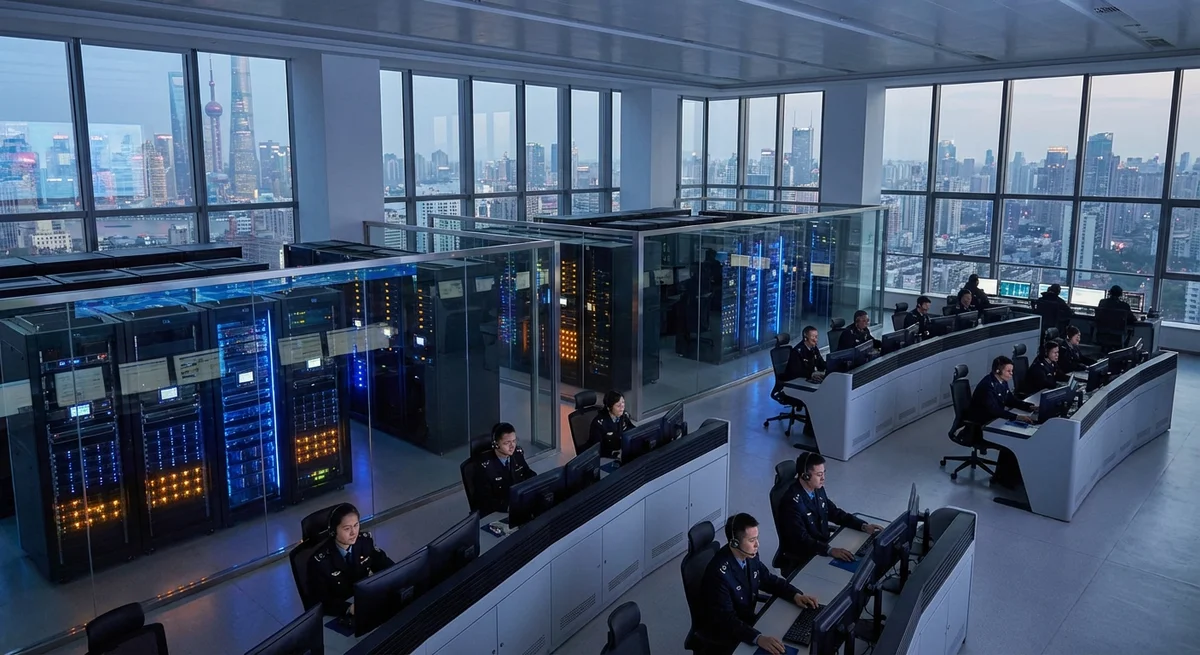
While we watch Sam Altman's latest tweet or argue over whether the generative AI bubble will burst, China is quietly drafting plans that will shape the industry for the next decade. Zhejiang province, which happens to be the home of Alibaba and a whole constellation of tech giants, has published a draft of its strategy for the "15th Five-Year Plan." And this is not a set of dull bureaucratic slogans about progress. It is a detailed engineering blueprint for turning an entire region into one giant, smoothly running computer. If you thought cloud computing was just server rental, Zhejiang intends to prove that it is a matter of national security and deep industrial integration.
The central idea of the document is total coordination of computing resources. The provincial authorities are clearly unhappy that every startup or factory tries to build its own small and often inefficient data center. Instead, they propose a multi-tier system of services in which capacity is distributed as logically as electricity in a city grid. This directly extends China's ambitious "computing from east to west" policy, but now applied at the micro level of a single, if very wealthy, province. Zhejiang has always been a testing ground for economic experiments, and now it is becoming one for AI centralization.
The most interesting and arguably most important element for understanding the situation is the term "chip-model bundle." With access to top Western accelerators such as the H100 restricted by sanctions, the Chinese are betting on deep synergy. This means that designing the architecture of new chips and training neural networks will go hand in hand. If you do not have the fastest processor in the world, you have to write software that squeezes the maximum out of the hardware you do have. It is a forced but highly effective shift from extensive growth to fine-grained optimization, which in the long run may give China an advantage in the cost of computing.
Another important item in the plan is a system of "foundation and vertical" models. While Silicon Valley chases a universal superintelligence that can write poetry and code at the same time, Zhejiang is pragmatically looking toward industrial use. Foundation models (LLMs) will be only the base on which hundreds of narrowly specialized solutions for the real economy will grow: from optimizing machine tools in factories to logistics chains in the port of Ningbo. This is a living embodiment of the "AI+" strategy, which aims to embed algorithms in every link of the production chain rather than leave them to entertain users in chatbots.
But technology does not exist in a vacuum, and the Chinese leadership understands this well. The plan stresses the importance of an "open ecosystem" and of national experimental zones for working with data. In the modern world data is oil, and high-quality labeled training data is high-octane gasoline. Zhejiang intends to build the best "filling station" in the world, where legal and technical barriers to data exchange between the state and private business will be reduced to a minimum. That is an ambitious challenge given the traditional secrecy of corporate data, but within a "five-year plan" such questions are usually settled by decree.
Why does all this matter globally? Officially, it serves "common prosperity," the mantra of the current Chinese leadership. In reality, it is a large-scale attempt to achieve full technological sovereignty and to prove that a planned economy can effectively manage a field as chaotic and fast-growing as artificial intelligence. While Western companies compete with one another in a free market, Zhejiang is trying to make every element of the system, from silicon to cloud services and end applications, work as a single, finely tuned mechanism.
Bottom line: China is finally shifting from buying computing power to managing it comprehensively at the state level and optimizing it down to the hardware. If the "chip-model bundle" strategy works under hardware scarcity, we will see a new type of AI economy in which software efficiency and integration density matter more than the number of teraflops. Only time will tell whether bureaucracy can avoid strangling innovation in the course of this rigid "coordination," but the scale of the ambition is impressive.
- Nov 2, 2026Meta's Muse assistant keeps dossiers on loved ones and gets root on Ubuntu by default
- Nov 1, 2026Local models lose to Opus and Codex: 0.21 on a MacBook versus 1.00 for Codex
- Nov 1, 2026Kimi scores 96.2% on a 1C database analytics test and emerges as a fallback if Claude access is blocked
- Nov 1, 2026OpenAI Rewrites GPT Behavior Rules: Five Values and a Chain of Command
Test Frontier LLMs & Autonomous Agents in One Workspace
Run Claude Opus 5.5, GPT-6, Gemini 3.1, and DeepSeek side-by-side in Nomad AI (nomadnet.ai) — unified model routing, deep research, and multimodal workflows under one subscription.
The AI world, distilled — once a week
Seven stories that actually mattered, hand-picked. No noise, no reposts, no press releases.
Done! Check your inbox for a confirmation.