OpenAI pledges to pay for its own power and save water
OpenAI has unveiled a strategy to reduce the strain on public infrastructure. The company commits to funding, on its own, the grid upgrades needed for its data centers, including the large Stargate project, in order to avoid higher utility rates for residents. It has also announced measures to significantly cut the water used to cool servers. The initiative is meant to ease growing criticism of the AI industry, whose huge appetite for resources worries environmentalists and local communities. OpenAI is considering investing in local grids or building its own sources of power.
AI-processed from The Verge; edited by Hamidun News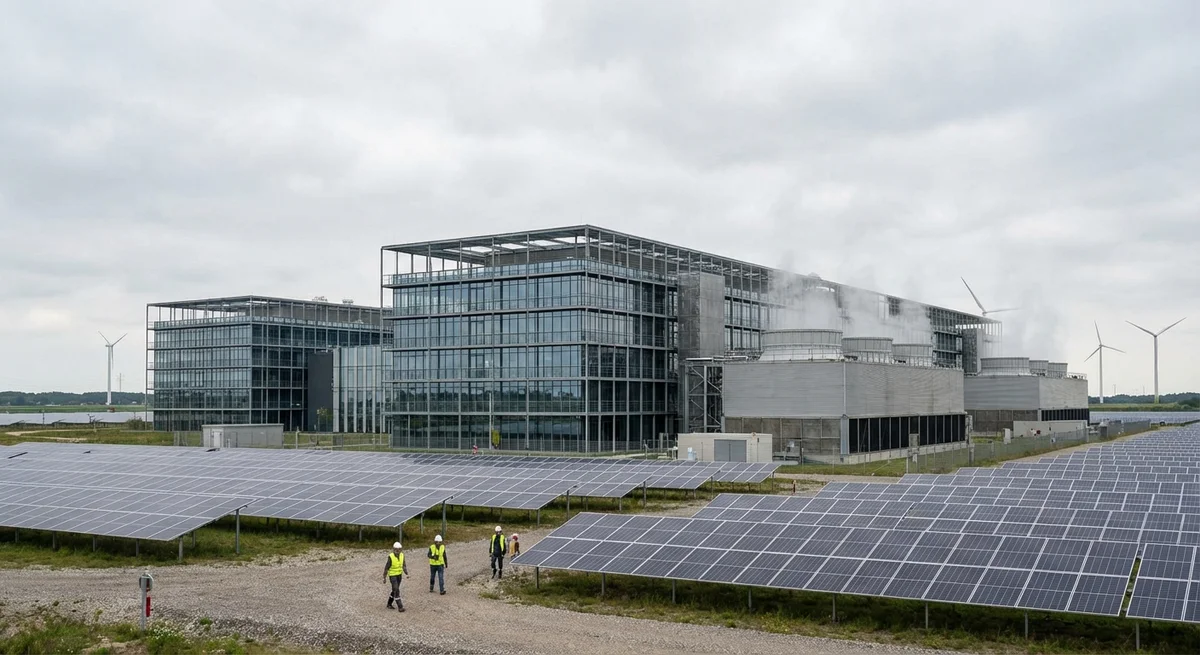
OpenAI pledges to pay for its own power and save water
As the resources needed to develop artificial intelligence keep growing, OpenAI has announced plans to reduce the burden on public infrastructure. Under the strategy, the company commits to independently funding the modernization of the power grids required to run its data centers, including the ambitious project codenamed Stargate. The measure is meant to prevent higher electricity rates for residents caused by rising demand from the AI industry. At the same time, OpenAI announced measures to substantially reduce the water used to cool servers, which is another of the acute environmental problems associated with large-scale computing centers.
The initiative comes against a backdrop of growing criticism of the artificial intelligence industry. The huge appetite for energy and water needed to train and run complex AI models raises serious concerns among environmentalists, local communities and regulators around the world. In particular, construction of new data centers often meets resistance because of the potential extra load on existing power grids and water resources, which can raise utility bills for residents and harm the environment. OpenAI, aware of the problem, is trying to show it is responsible and to present itself as a "good neighbor" by minimizing the negative impact of its operations.
OpenAI said it intends to "pay its own way" when it comes to energy consumption. That means the company is ready to bear the costs of increasing capacity and upgrading local power grids to ensure stable, reliable power for its data centers, without passing those costs on to end consumers. Specific plans may include direct investment in upgrading existing infrastructure as well as finding its own energy sources, for example through long-term contracts for renewable energy supply or even developing its own energy projects. On water use, the company promises to adopt advanced technologies to cut it significantly, although the specifics of those technologies have not yet been disclosed.
The consequences of such a policy could be considerable. First, it could set a precedent for other major AI players, prompting them to also take responsibility for infrastructure costs and their environmental footprint. Second, it could support more balanced development of the AI industry, in which growth in computing capacity comes with adequate investment in infrastructure and environmental protection. Third, it could improve public perception of AI by easing tension between tech giants and local communities worried about the potential negative effects of their operations. Stargate, as one of the largest planned data centers, becomes a litmus test for these intentions.
In conclusion, OpenAI's statement that it is ready to pay infrastructure costs for energy and to cut water use is an important step toward more sustainable development of artificial intelligence. While the details of how these promises will be carried out remain unclear, the company's willingness to acknowledge and address these problems deserves attention. It reflects an understanding that technological progress should not come at the expense of society and the environment, and that leading companies are responsible for minimizing their impact, becoming truly integrated and responsible members of the communities in which they operate.
- Nov 2, 2026NC State's AICG Framework Cuts MAE by 50.3% on Math Answer Grading
- Nov 2, 2026We Audited 929 Automations at Alpina: What Corporate AI Training Should Look Like in 2026
- Nov 2, 2026I Interrogated 6 AI Models About Myself Through a Procurement Manager's Eyes: Amazon, Esoterica, 'Telo Hudelo' and 5 Holes We Closed in a Day
- Nov 2, 2026TJ Digital: 23% of AI-cited pages open with a direct answer, versus 14% of uncited ones
Test Frontier LLMs & Autonomous Agents in One Workspace
Run Claude Opus 5.5, GPT-6, Gemini 3.1, and DeepSeek side-by-side in Nomad AI (nomadnet.ai) — unified model routing, deep research, and multimodal workflows under one subscription.
The AI world, distilled — once a week
Seven stories that actually mattered, hand-picked. No noise, no reposts, no press releases.
Done! Check your inbox for a confirmation.