China launches the world's first underwater data center powered by wind
China has opened the world's first underwater data center powered by wind energy. It has a capacity of 24 MW and is cooled by seawater. The design cuts electricity costs and fits Beijing's plans for a green transformation of IT infrastructure. The facility sits on the seabed and relies on two advantages: offshore wind power and natural cooling by seawater.
AI-processed from Wired; edited by Hamidun News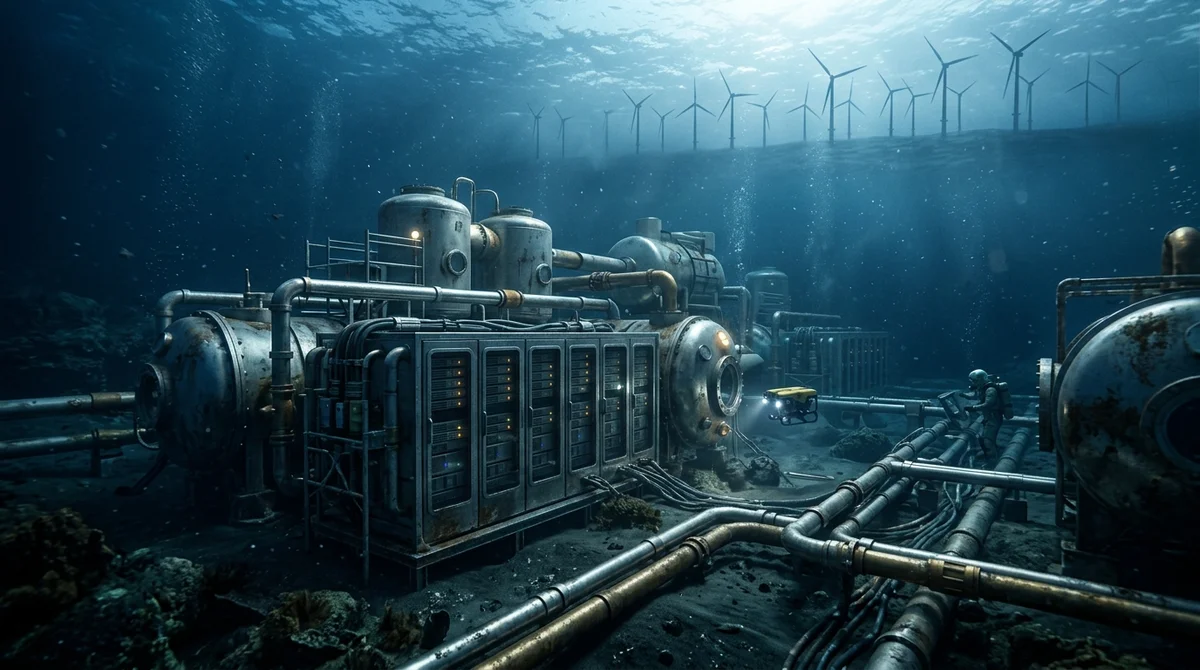
China has opened the world's first data center located underwater and powered by wind energy. With an initial capacity of 24 MW, the facility shows a new approach to cutting the energy costs of giant server farms, using seawater as its main cooling tool.
How it works
The underwater center sits on the seabed and relies on two key advantages: wind power and natural cooling by seawater. Water absorbs heat from servers far more efficiently than air, which reduces the electricity spent on cooling — typically 30-40% of a data center's total energy budget.
The infrastructure consists of sealed modules that resist corrosion and high pressure. Wind turbines stand on the surface or on offshore platforms and send power to the underwater units through dedicated cables. The technology makes it possible to run a full renewable-energy cycle on site.
A climate solution
The project fits China's ambition to reach carbon neutrality by 2060. Renewable sources, especially offshore wind, are critical for the IT sector, where electricity demand is growing exponentially. Data centers now consume 1-2% of the world's electricity, and that share keeps rising.
- Energy consumption cut by 30-40% thanks to natural cooling
- Zero CO₂ emissions during operation
- Less pressure on coastal power grids
- Scalability — many offshore wind farms are ready to connect
- Savings on building new power plants
Challenges and the future
Underwater infrastructure requires specialized equipment that can withstand corrosion and the extreme pressure of seawater. Maintenance and repair are harder than on land: every service call requires expensive operations with divers or underwater robots. In addition, regulatory frameworks for such facilities are still taking shape in many countries.
Still, the Chinese project's success may inspire European and American cloud operators. The North Sea, the Atlantic coast and Pacific zones could copy this model within the next 5-10 years.
What this means
Underwater data centers are not science fiction but a practical path to sustainable IT infrastructure. Demand for computing keeps growing, while land can no longer supply enough water and electricity for cooling, so combining wind power with seawater cooling becomes a logical solution. China has made the first move; the others will probably follow.
Key Questions Answered
How it works?
The underwater center sits on the seabed and relies on two key advantages: wind power and natural cooling by seawater. Water absorbs heat from servers far more efficiently than air, which reduces the electricity spent on cooling — typically 30-40% of a data center's total energy budget. The infrastructure consists of sealed modules that resist corrosion and high pressure. Wind turbines stand on the surface or on offshore platforms and send power to the underwater units through dedicated cables. The technology makes it possible to run a full renewable-energy cycle on site.
What are the key details on A climate solution?
The project fits China's ambition to reach carbon neutrality by 2060. Renewable sources, especially offshore wind, are critical for the IT sector, where electricity demand is growing exponentially. Data centers now consume 1-2% of the world's electricity, and that share keeps rising. Energy consumption cut by 30-40% thanks to natural cooling Zero CO₂ emissions during operation Less pressure on coastal power grids Scalability — many offshore wind farms are ready to connect Savings on building new power plants
What are the key details on Challenges and the future?
Underwater infrastructure requires specialized equipment that can withstand corrosion and the extreme pressure of seawater. Maintenance and repair are harder than on land: every service call requires expensive operations with divers or underwater robots. In addition, regulatory frameworks for such facilities are still taking shape in many countries. Still, the Chinese project's success may inspire European and American cloud operators. The North Sea, the Atlantic coast and Pacific zones could copy this model within the next 5-10 years.
Test Frontier LLMs & Autonomous Agents in One Workspace
Run Claude Opus 5.5, GPT-6, Gemini 3.1, and DeepSeek side-by-side in Nomad AI (nomadnet.ai) — unified model routing, deep research, and multimodal workflows under one subscription.
The AI world, distilled — once a week
Seven stories that actually mattered, hand-picked. No noise, no reposts, no press releases.
Done! Check your inbox for a confirmation.