AI data centers as a ticking time bomb: benefits versus climate costs
AI data centers consume vast amounts of energy and water, emit heat, and put pressure on the climate, housing, and household budgets. In The Guardian, economist Nicky Hutley asks who truly benefits from this boom — beyond a handful of tech shareholders. As the costs fall on local communities while profits flow to global corporations, the question inevitably becomes political.
AI-processed from Guardian; edited by Hamidun News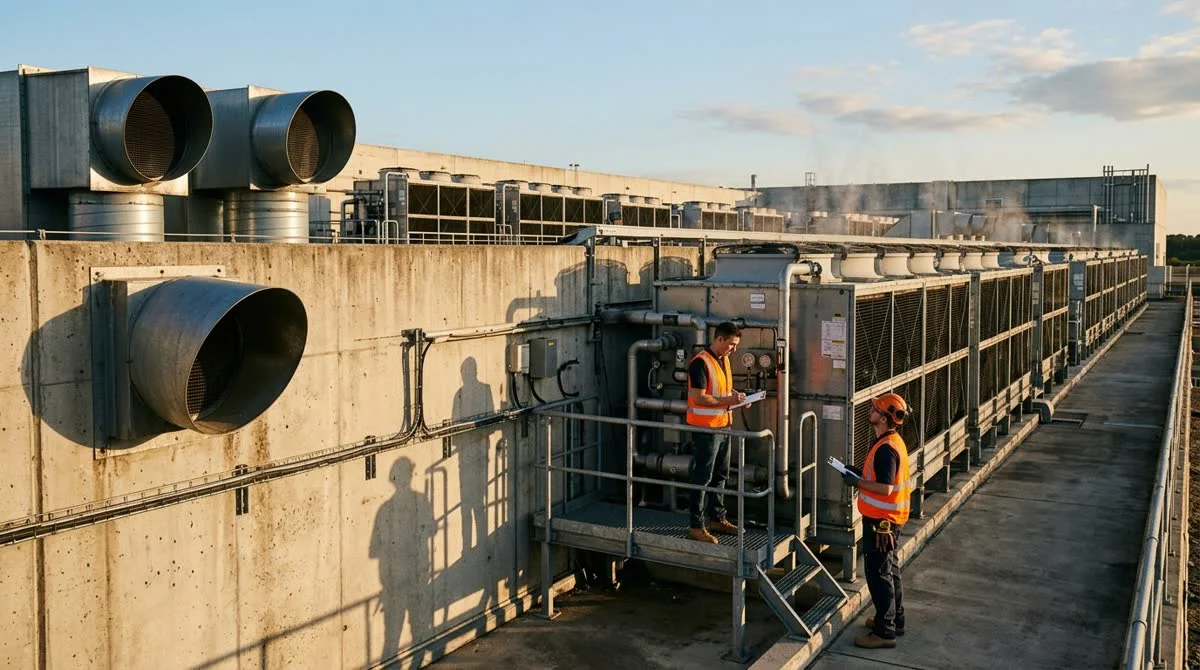
Data centers powering artificial intelligence systems consume record volumes of electricity and freshwater, turning surrounding areas into zones of excessive heat generation. Economist Niki Hatley, in a Guardian column from July 9, 2026, poses a direct and uncomfortable question: does the promised benefit from the AI infrastructure boom actually outweigh the real cost to climate, society, and the wallets of ordinary citizens?
Two Global Crises at One Point?
Hatley describes what's happening as a head-on collision of two critical threats of our era: the climate crisis and the rapid spread of artificial intelligence. Data centers are the physical embodiment of this contradiction. They are built everywhere—in Australia and around the world—and each new facility simultaneously pressures several pain points: the energy grid, water supply, local housing markets, and employment.
AI infrastructure consumes enormous amounts of electricity—not just for computation, but for cooling servers. Cooling systems, in turn, draw millions of liters of water, which becomes increasingly scarce amid mounting droughts. Thermal emissions raise the temperature baseline in nearby neighborhoods and strain urban power grids. All this happens simultaneously as governments worldwide adopt climate commitments and promise to cut emissions by mid-century.
Society's relationship with data centers is polarized. Some view them with reverence: the AI revolution promises productivity gains, breakthroughs in medicine, education, and science. Others view them with anxiety and irritation: electricity bills are rising, rent near server farms is climbing, the environment is under pressure. Hatley is convinced that these disputes must be resolved not with rhetoric, but with real data.
Who Benefits from the AI Boom?
The column's key question is not technical, but distributive: who exactly receives dividends from the giant investments in AI infrastructure? Hatley directly names the chief beneficiaries—"tech bros"—a narrow circle of shareholders and top executives of technology companies—and questions whether the promised benefits for "humanity" actually reach ordinary citizens.
Data centers require a relatively small number of local employees but consume resources on a regional scale, while profits flow to global corporations. This is a typical asymmetry: costs are local and immediate (rising electricity and water rates, strain on utility infrastructure, pressure on housing markets in areas of presence), benefits are delayed and concentrated elsewhere.
"You can hardly avoid hearing about them today—either with reverent
awe about the promised benefits for humanity, or with fear and anger about the consequences for climate, inflation, employment, and housing affordability," Hatley writes.
The question of who really wins inevitably moves into the political arena. In a number of countries, local authorities are already considering restrictions on data center construction in residential areas, demanding compensation from operators or requiring a mandatory share of renewable energy in their energy balance.
What This Means
The discussion about data centers has long transcended the technology agenda—it is a question of political economy: who bears the costs of the AI revolution and who reaps its fruits. Hatley does not call for halting construction; she insists that the question "is it worth it?" must be posed publicly, with real data on costs, not just marketing promises from the industry. As long as the answer remains asymmetrical, regulatory and public pressure on the AI industry will only grow.
Need AI working inside your business — not just in your newsfeed?
I build production AI for companies — custom CRM, internal tools, autonomous agents, workflow automation. Owned by you, shaped to your process, no per-seat tax. Built by Zhemal Khamidun, CPO of AlpinaGPT (AI platform, 6,000+ users).
The AI world, distilled — once a week
Seven stories that actually mattered, hand-picked. No noise, no reposts, no press releases.
Done! Check your inbox for a confirmation.