China's Market Bets on Hardware: Why AI Infrastructure Is Lifting the Indices
Chinese exchanges turned green: the Shanghai Composite gained more than 1%, and the tech-heavy ChiNext jumped 1.8%. The driver was not abstract startups but the real economy: computing hardware and commercial space. More than 4700 companies finished in the black. It is a clear signal that investors believe in "computing power" as a national resource. Under sanctions, China is accelerating the build-out of its own AI base, and the market has finally come to believe the infrastructure foundation is ready for the load. When capital flows into hardware, it is always a long-term play.
AI-processed from 36Kr (36氪); edited by Hamidun News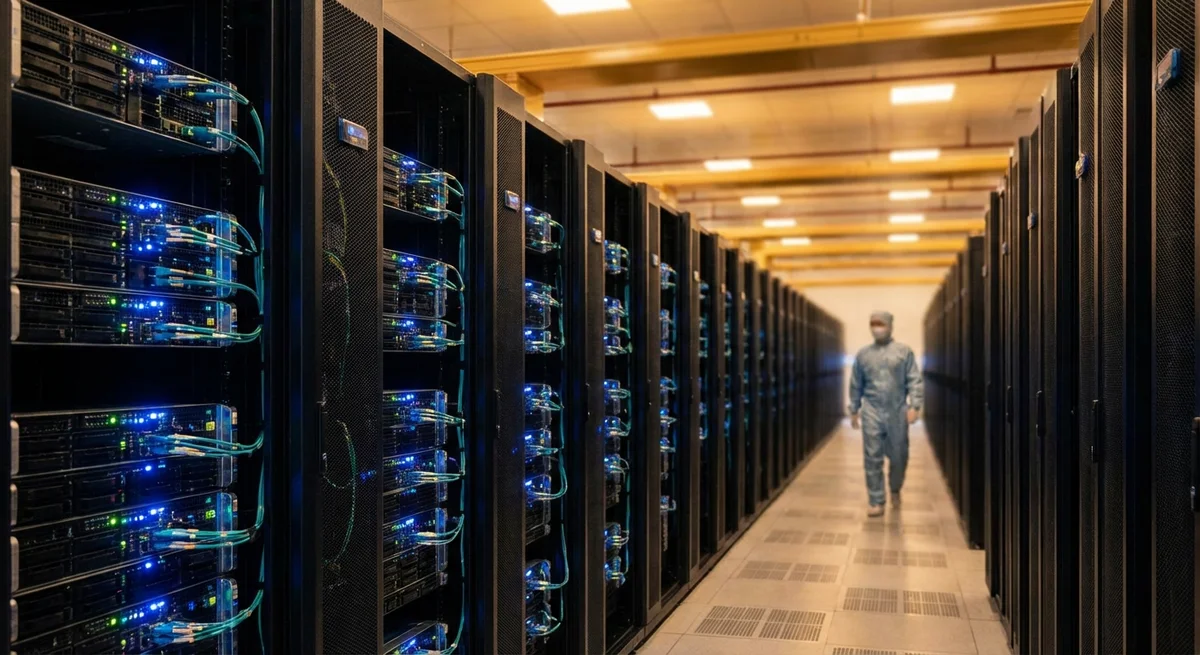
Markets often get their forecasts wrong, but they rarely ignore real money flowing into the foundation of an industry. Today's surge in Chinese indices is not just a technical bounce after a long lull. When the Shanghai Composite adds 1% and ChiNext, the index of high-tech companies, climbs 1.8%, it is worth looking at who is pulling this train.
The leaders today were computing hardware and commercial space. That suggests investors in China have decisively shifted their focus from software giants to those building the physical basis for digital dominance.
Let's be honest: for the past couple of years, China's tech sector has been in a holding pattern. Chip export sanctions and internal regulatory storms made many doubt Beijing's ability to keep pace in the AI race. But today's gain of more than 4700 stocks across all three key exchanges, Shanghai, Shenzhen and Beijing, hints that skepticism is giving way to pragmatic optimism.
The main interest centers on the concept of "computing power." In China the phrase has become almost sacred. It is not just the number of teraflops in a server rack but a national strategy for shifting capacity from the east of the country to the west. Investors are backing companies that make servers, cooling systems and specialized hardware that can replace unavailable NVIDIA solutions.
Interestingly, commercial space and space-based photovoltaics are moving in tandem with AI hardware. At first glance these are different worlds, but in the logic of the modern tech sector they are inseparable. Global AI requires global connectivity. Satellite constellations are not only about internet in the mountains; they carry the enormous volumes of data needed to train models and control autonomous systems in real time. China is actively building its own alternative to Starlink, and the market understands that without its own "space internet," ambitions in driverless transport and remote control of manufacturing will remain just PowerPoint presentations.
Why does this matter right now? We are watching the transformation of China's economy that the authorities call "new quality productive forces." Instead of inflating real estate bubbles, capital is going into infrastructure that cannot simply be "switched off" from outside. The growth of the computing hardware sector answers the question of what Chinese analogues of GPT-5 will train on a year from now. If you have your own server factories and your own satellites for data transmission, you become a player that cannot be ignored, even if you have been cut off from Western clouds.
Of course, one day of gains does not mean final victory, but the breadth of the move is impressive. When almost five thousand companies finish in the black, it does not look like manipulation by big players. It looks like a collective realization that the bottom has been reached, and that real AI infrastructure is the safest harbor in the current geopolitical conditions. While Western analysts argue about AI ethics and chatbot hallucinations, the East is focused on making sure those bots have enough electricity and silicon to run.
The bottom line: China has definitively bet on self-sufficiency in hardware. Will the domestic equipment market be able to make up for the lack of advanced Western process technologies over the long term?
- Nov 2, 2026DeepSeek open-sources Super-agent prototype: p95 task completion time of 15.7 minutes vs. 29.5
- Nov 2, 2026Bun creator uses Claude Code to port 750K lines from Zig to Rust in 11 days
- Nov 2, 2026Microsoft releases 4B model Mage-VL-Cowork, which solves 66.0% of OSWorld-Verified tasks
- Nov 2, 2026Meta's Muse assistant keeps dossiers on loved ones and gets root on Ubuntu by default
Ship AI Faster with Founders, Engineers & Weekly Architecture Reviews
Inside Vibe Club (hamidun.com/club) — weekly live masterminds with Zhemal Khamidun, Tech Radar, full LMS access, and 370+ production Claude Code skills.
The AI world, distilled — once a week
Seven stories that actually mattered, hand-picked. No noise, no reposts, no press releases.
Done! Check your inbox for a confirmation.