1X unveils a world model for training humanoid robots
1X, the maker of humanoid robots, has unveiled a new world model that lets its robots learn on their own. The company presents it as an important step toward autonomous robots that can adapt to changing conditions and handle complex tasks without constant human supervision. The model is designed to train robots from visual information. According to 1X, its robots can analyze their surroundings and learn new tasks without prior programming or ongoing human intervention.
AI-processed from TechCrunch; edited by Hamidun News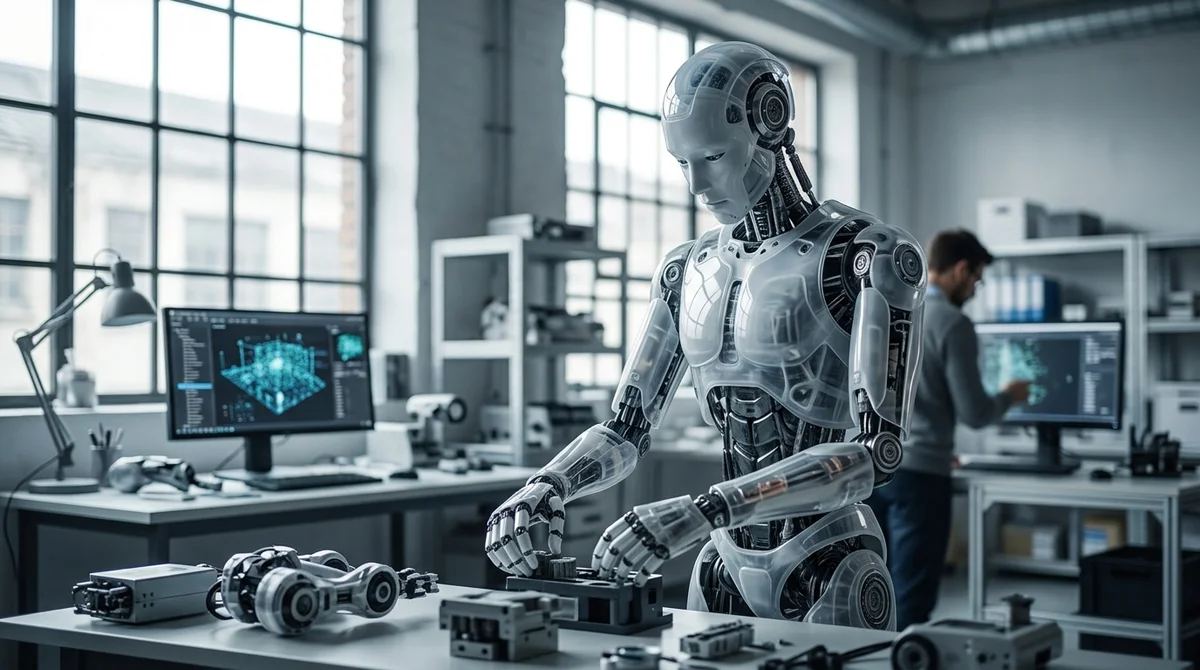
Norwegian company 1X, known for its work in humanoid robotics, has taken an important step toward truly autonomous robots. The company has unveiled a new world model designed to train robots from visual information. This means 1X robots should be able to analyze their surroundings and learn new tasks on their own, without prior programming or constant human intervention.
In robotics, world models are complex algorithms that let robots build an internal representation of the world around them. Instead of simply reacting to specific commands or predefined scenarios, a robot with a world model can grasp cause-and-effect relationships, predict the consequences of its actions and plan more efficiently. That opens the door to robots that can work in dynamic, unpredictable settings such as warehouses, factories or even homes.
Building an effective world model is hard. It demands large amounts of computing power and huge volumes of training data. 1X claims its new model represents significant progress in this area, helping its robots adapt to new tasks faster and more efficiently. The key advantage is that robots can be trained without hand-programming every action. A robot can simply watch a human or another robot perform a task and learn to do it on its own.
The technology has major potential across industries. In manufacturing, it could lead to more flexible, automated production lines where robots switch quickly between different tasks. In logistics, it could help automate warehouse operations and the delivery of goods. In services, it could let robots handle routine chores such as cleaning, cooking or caring for elderly people.
However, the development of autonomous robots also raises questions about ethics and safety. It is important to ensure that robots do not pose a threat to people and that their actions comply with generally accepted norms and values. Clear rules and standards are needed for developing and using autonomous robots to guarantee safe and responsible deployment.
In short, the new world model from 1X for humanoid robots is an important step toward truly autonomous machines. The technology could transform many industries and improve our lives, but it also calls for careful consideration of its ethical and social consequences. The future of robotics belongs to robots that can learn and adapt on their own, and the work at 1X brings us closer to that future.
- Nov 2, 2026DeepSeek Open-Sources Super-agent Prototype: p95 Task Time Drops from 29.5 to 15.7 Minutes
- Nov 2, 2026LLM Agent Built a Gearbox in KOMPAS-3D, but Scored Only 50 out of 100 on the Specification
- Nov 2, 2026Agents ignored the prompt to read memory in 7 of 7 sessions: an analysis of 13 thousand logs
- Nov 2, 2026Karpathy Built HackerTube, a Catalog of 6,454 Videos, in Two Hours with Claude Code
Test Frontier LLMs & Autonomous Agents in One Workspace
Run Claude Opus 5.5, GPT-6, Gemini 3.1, and DeepSeek side-by-side in Nomad AI (nomadnet.ai) — unified model routing, deep research, and multimodal workflows under one subscription.
The AI world, distilled — once a week
Seven stories that actually mattered, hand-picked. No noise, no reposts, no press releases.
Done! Check your inbox for a confirmation.