LG CNS: South Korea to Become the "HR Department" for Humanoid Robots
South Korean IT company LG CNS sees new opportunities in industrial automation. As global manufacturers deploy more humanoid robots, those machines need training and management, much like an HR department does for human staff. LG CNS intends to fill that niche by offering administration and integration of AI systems on the factory floor. The approach could make the company a key player in the smart-factory ecosystem, ensuring robots and production processes work together effectively.
AI-processed from Bloomberg Tech; edited by Hamidun News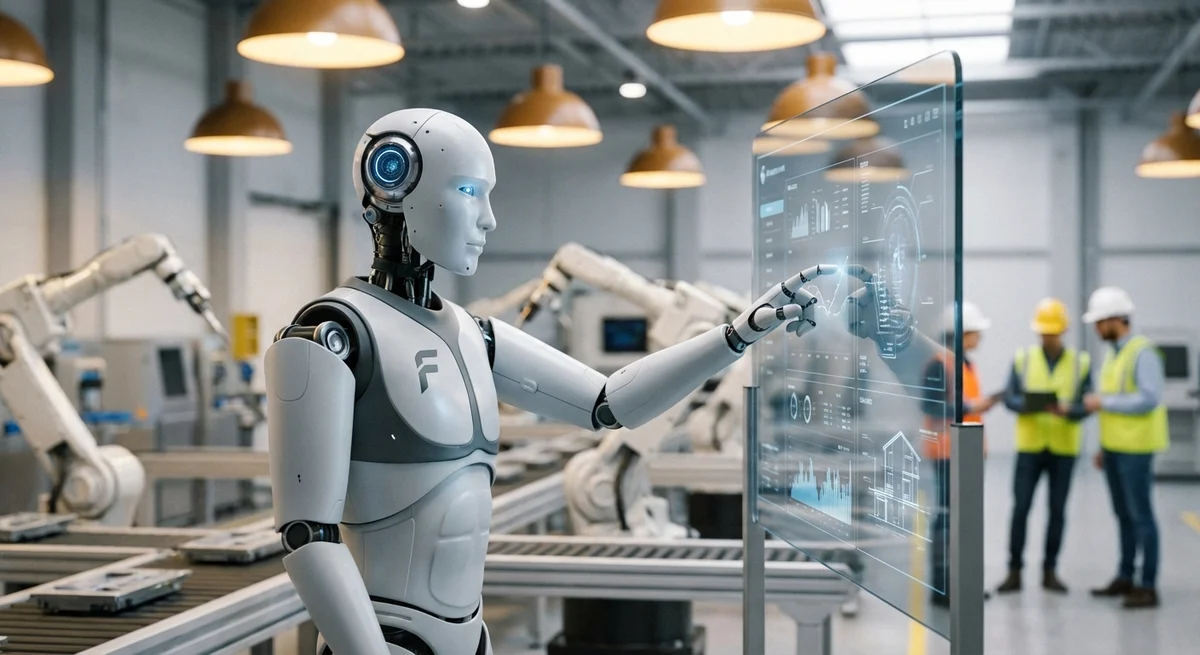
# LG CNS: South Korea to Become the "HR Department" for Humanoid Robots
When a new employee arrives on the production line, even a metal one that works 24 hours a day, it needs onboarding, training and management. That is the niche LG CNS, a South Korean IT company, sees for itself: a kind of personnel department for the humanoid robots of global manufacturers. While competitors race to build the robots themselves, LG CNS is looking further ahead, at the infrastructure that will make these machines work effectively in real industrial conditions.
The idea sounds unusual, but it is logical. Over the past few years the global humanoid robot market has begun to grow rapidly. Tesla Optimus, Boston Dynamics, Figure, Sanctuary AI and dozens of other companies are building robots capable of performing complex production tasks. But there is a paradox: even the most advanced robot is still a tool that has to be integrated into an existing production ecosystem, trained to perform specific operations and constantly adapted to changing conditions. LG CNS proposes to act as an intermediary between the robot maker and the buyer, taking on the full burden of the organizational work. In effect, it would create for robots what HR departments do for people.
The company's strategy rests on three pillars. First, training robots to perform the specific tasks of a particular plant. Second, administering their work, monitoring performance and handling maintenance. Third, integrating artificial intelligence into production processes so that robots and people can work in sync, without conflicts or downtime. This is where the analogy with a human HR department comes in: it looks after not only hiring but also staff development, onboarding and effectiveness within the team.
Why does this matter right now? Humanoid robot makers are focused on improving the machines themselves: their mobility, sensor sensitivity and data-processing speed. But they often pay too little attention to practical integration. Meanwhile, large manufacturers ready to invest in robotization need not just hardware but a complete solution. LG CNS sees this gap and is ready to fill it. For South Korea this is especially relevant: the country already leads in industrial robotics and is home to the headquarters of giants such as Samsung and Hyundai, which are actively adopting automation. LG CNS can work with large local manufacturers as well as global corporations.
This approach gives LG CNS access to a growing market without requiring it to compete directly with the robotics leaders. Instead, the company embeds itself in the ecosystem as an indispensable service provider, earning recurring revenue from managing and optimizing robots on the factory floor. This could prove a more stable and profitable business than building the robots themselves, which demands huge R&D investment and faces fierce competition.
The future of industry is not just robots but a coordinated system in which machines and technologies work as a cohesive team. LG CNS is offering itself as its manager. If the company can execute this strategy, it could claim a unique place in the new smart-factory ecosystem, becoming an invisible but critical link in the chain of global industrial transformation.
Test Frontier LLMs & Autonomous Agents in One Workspace
Run Claude Opus 5.5, GPT-6, Gemini 3.1, and DeepSeek side-by-side in Nomad AI (nomadnet.ai) — unified model routing, deep research, and multimodal workflows under one subscription.
The AI world, distilled — once a week
Seven stories that actually mattered, hand-picked. No noise, no reposts, no press releases.
Done! Check your inbox for a confirmation.