Humanoid to deploy humanoid robots at Schaeffler plants
UK-based Humanoid has signed a major contract with German industrial manufacturer Schaeffler to deploy 1,000–2,000 humanoid robots at its global production sites by 2032. The value of the deal has not been disclosed, but the first deployment is planned for the near term. It is one of the largest contracts for industrial use of humanoid robots and Physical AI in real-world manufacturing.
AI-processed from AI News; edited by Hamidun News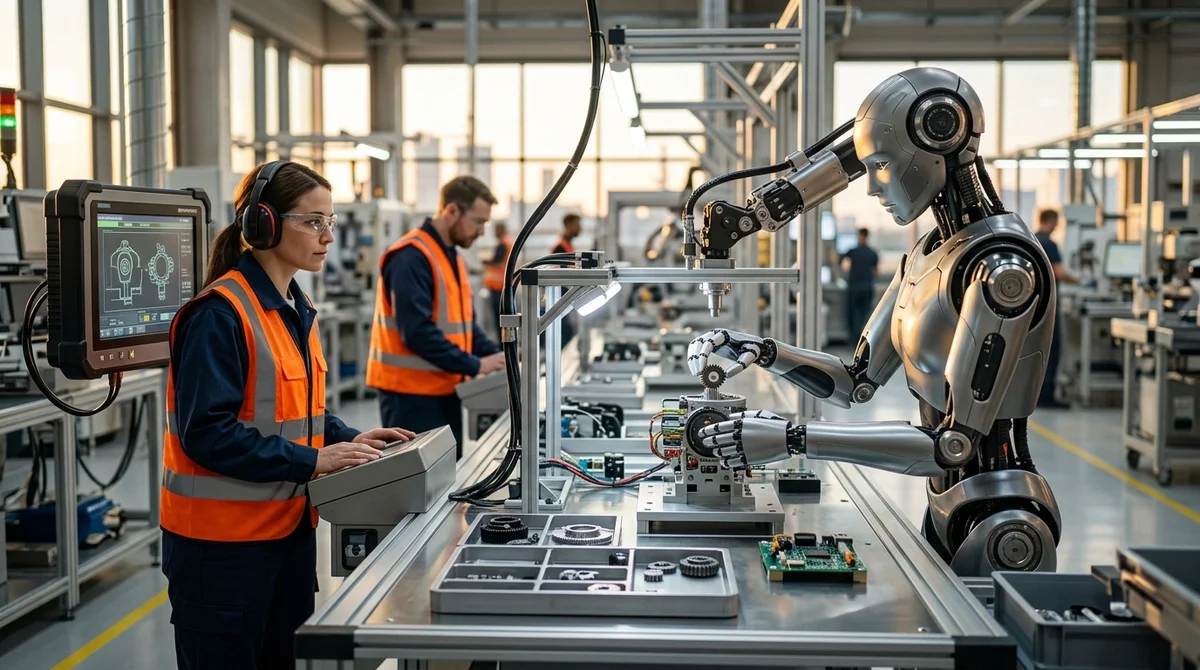
Humanoid has signed a major contract with German industrial group Schaeffler to deploy humanoid robots at its factories worldwide. Under the plan, 1,000 to 2,000 robots will be deployed across Schaeffler's global plants by 2032.
About the contract and the parties
Humanoid is a UK-based developer of humanoid robots that specializes in industrial applications. Its robots are designed to automate assembly, logistics and other physical work in factories.
Schaeffler is one of the world's largest suppliers of industrial components and systems, with dozens of plants around the globe. The company serves the automotive industry, mechanical engineering, energy and other critical sectors. With such a customer base, Schaeffler understands well the reliability and precision demands placed on production systems.
The new contract covers deploying Humanoid's robots at multiple Schaeffler production sites in different countries. Neither company has disclosed the value of the deal, but the scale, 1,000–2,000 units by 2032, points to an ambitious modernization program. It is one of the largest orders for humanoid robots in manufacturing in the industry's history. Until now, humanoid robots have been discussed in the context of experiments and pilot projects; now the talk is of industrial scaling.
How the rollout will work
The first deployment is planned for the coming months, likely in 2025–2026. Humanoid will start at one or several Schaeffler plants, where the robots will be tested in real conditions, performance data will be collected, and bottlenecks and problems identified. After a successful pilot, the two companies will increase the number of robots at different plants in stages, reaching the full volume of 1,000–2,000 machines by 2032.
The seven-year timeline points to a cautious, deliberate approach. The companies will not rush; they will:
- Learn from the first batches and record the lessons
- Optimize how robots are integrated with existing equipment
- Resolve technical problems before scaling up
- Adapt robot configurations to the specifics of each plant
- Train factory staff to work with humanoid systems
This approach minimizes the risk of large-scale failures and helps optimize the return on investment of each deployment.
A turning point for Physical AI
The Humanoid–Schaeffler contract is a turning point for the Physical AI industry (humanoid robots for physical labor). It shows that humanoid robots are moving out of labs and pilot projects into real mass production at the largest global players. For Humanoid, it validates the technology and demonstrates demand for its robots among industrial giants. For Schaeffler, it is a strategic opportunity to automate routine, monotonous and dangerous operations, such as component assembly, machining and material loading, at its plants worldwide.
The scale of the contract matters in particular. 1,000–2,000 units is not an experimental quantity. It signals to the market that humanoid robotics is no longer exotic and is becoming economically viable for large manufacturers. It is also a signal to other companies and investors: if Schaeffler, one of the world's industrial leaders, is ready to deploy humanoid robots at scale, others will soon follow. A wave of similar deals is expected in other sectors: energy, logistics, construction, resource extraction and agriculture. Every industrial sector with physical labor or monotonous or dangerous operations becomes a potential market for Humanoid and its competitors.
What this means for the future of manufacturing
The success of this project will shape the next decade of industrial automation. If humanoid robots prove successful, raising productivity, cutting costs, running reliably and proving easy to maintain, such technologies will spread rapidly around the world. That, in turn, will transform the global labor market, manufacturers' competitive advantage, international supply chains and the very model of the modern factory.
Key Questions Answered
What are the key details on About the contract and the parties?
Humanoid is a UK-based developer of humanoid robots that specializes in industrial applications. Its robots are designed to automate assembly, logistics and other physical work in factories. Schaeffler is one of the world's largest suppliers of industrial components and systems, with dozens of plants around the globe. The company serves the automotive industry, mechanical engineering, energy and other critical sectors. With such a customer base, Schaeffler understands well the reliability and precision demands placed on production systems. The new contract covers deploying
How the rollout will work?
The first deployment is planned for the coming months, likely in 2025–2026. Humanoid will start at one or several Schaeffler plants, where the robots will be tested in real conditions, performance data will be collected, and bottlenecks and problems identified. After a successful pilot, the two companies will increase the number of robots at different plants in stages, reaching the full volume of 1,000–2,000 machines by 2032. The seven-year timeline points to a cautious, deliberate approach. The companies will not rush; they will: Learn from the first batches and record the
What are the key details on A turning point for Physical AI?
The Humanoid–Schaeffler contract is a turning point for the Physical AI industry (humanoid robots for physical labor). It shows that humanoid robots are moving out of labs and pilot projects into real mass production at the largest global players. For Humanoid, it validates the technology and demonstrates demand for its robots among industrial giants. For Schaeffler, it is a strategic opportunity to automate routine, monotonous and dangerous operations, such as component assembly, machining and material loading, at its plants worldwide. The scale of the contract matters in
Test Frontier LLMs & Autonomous Agents in One Workspace
Run Claude Opus 5.5, GPT-6, Gemini 3.1, and DeepSeek side-by-side in Nomad AI (nomadnet.ai) — unified model routing, deep research, and multimodal workflows under one subscription.
The AI world, distilled — once a week
Seven stories that actually mattered, hand-picked. No noise, no reposts, no press releases.
Done! Check your inbox for a confirmation.