Machine Vision: How Neural Networks for Video Are Patented in Russia
Machine vision (MV) is one of the key applied areas of AI: MV systems already run on factory conveyors, in medical diagnostics and in self-driving cars. As the technology is commercialized, patent activity in the field is rising sharply. Patent agency OnlinePatent analyzed how MV developments are protected in Russia and worldwide, and how the Russian approach differs from the foreign one.
AI-processed from Habr AI; edited by Hamidun News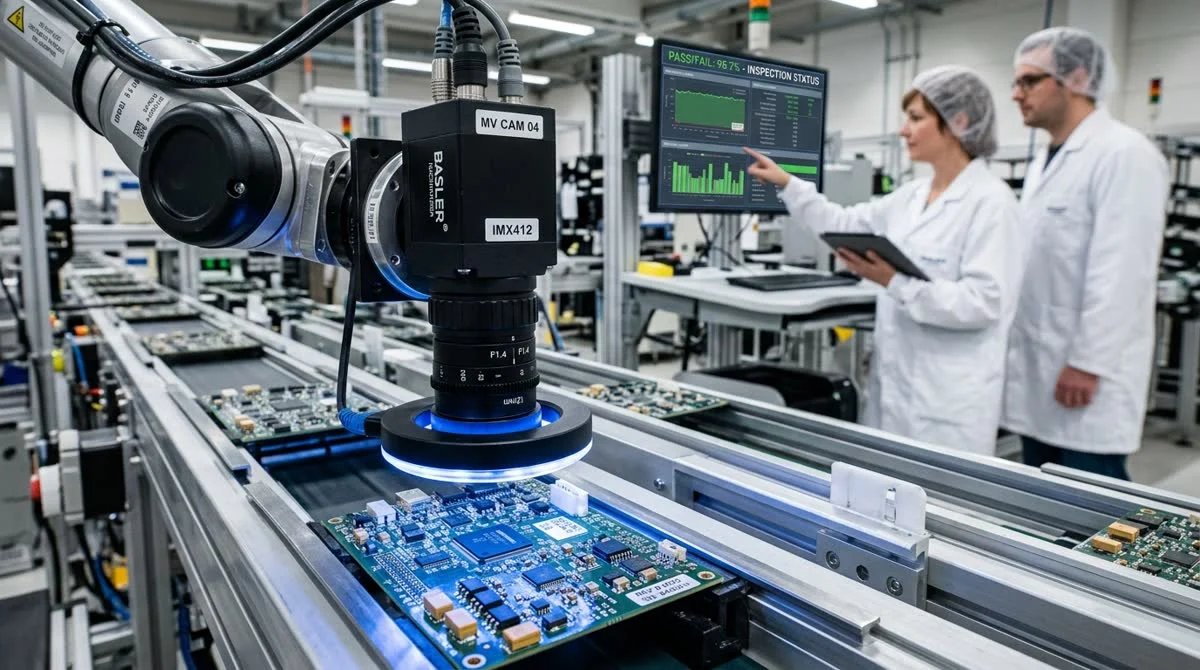
Patent agency OnlinePatent has published an analytical piece on Habr about protecting intellectual property in machine vision and neural networks for video, one of the key applied areas of modern AI.
What machine vision is
Machine vision (MV) is a branch of artificial intelligence and robotics that combines three sequential processes: capturing images through cameras and sensors, processing them in software, and using the resulting data to solve applied tasks automatically, without human involvement.
The key difference between MV and academic computer vision is its focus on a concrete, measurable result in real industrial conditions. A system must work reliably under variable lighting, vibration and dust, and it must also deliver the required speed: industrial applications often need to inspect hundreds of objects per minute.
The technology is used in a wide range of sectors:
- Industry — quality control and defect detection on production lines
- Medicine — automatic analysis of X-ray images, MRI and histological specimens
- Logistics — recognition and sorting of parcels, identification of goods
- Transport — environment perception and navigation in self-driving cars
- Security — video analytics and face recognition in surveillance systems
Over the past decade, the shift from classical image-processing algorithms to deep learning has sharply improved accuracy and widened the range of tasks MV can handle without special manual tuning.
Why patenting in MV is becoming strategically important
As AI technologies are commercialized, patent activity in MV keeps growing. Companies want to protect their competitive advantages: object detection and classification algorithms, neural network architectures, methods for training models on labeled data, camera calibration systems and real-time video stream processing methods.
In Russia, such developments are protected through two main mechanisms. An invention patent requires a clear statement of the technical result and compliance with the criteria of novelty, inventive step and industrial applicability. A certificate of state registration of a computer program from Rospatent is issued considerably faster, although it provides a different scope of legal protection.
Abroad, the situation is fundamentally different. The US, China, the European Union and Japan have built developed patent ecosystems, each with its own rules on patentable subject matter and its own examination timelines. The largest technology corporations run aggressive patent campaigns, and their MV portfolios include thousands of protection documents. For Russian developers targeting the international market, knowing this landscape becomes a competitive advantage.
What this means
A review of the MV patent landscape serves several audiences at once: AI product developers identify protected solutions and open niches, legal teams build an IP strategy that accounts for Russian and foreign specifics, and investors assess the quality of tech companies' patent portfolios. OnlinePatent specializes in patent analytics and support for registering intellectual property in technology sectors.
What is machine vision?
Machine vision (MV) is a branch of artificial intelligence and robotics that combines capturing images through cameras and sensors, processing them in software, and using the resulting data to automate processes.
- Nov 1, 2026Pika Labs releases open video model H3 Flex: 6 steps instead of 50
- Nov 1, 2026Google's StreamVibe video agent beats other models by 10.7% on response timing and quality
- Oct 31, 2026AI cartoon series: a 24-second episode built ten ways, the best cost 162 credits
- Oct 31, 2026Anthropic: Fold Subagents Back Into a Single Loop — One Customer's Tasks Ran Twice as Fast
Key Questions Answered
What is machine vision?
Machine vision (MV) is a branch of artificial intelligence and robotics that combines capturing images through cameras and sensors, processing them in software, and using the resulting data to automate processes.
What machine vision is?
Machine vision (MV) is a branch of artificial intelligence and robotics that combines three sequential processes: capturing images through cameras and sensors, processing them in software, and using the resulting data to solve applied tasks automatically, without human involvement. The key difference between MV and academic computer vision is its focus on a concrete, measurable result in real industrial conditions. A system must work reliably under variable lighting, vibration and dust, and it must also deliver the required speed: industrial applications often need to inspe
Why patenting in MV is becoming strategically important?
As AI technologies are commercialized, patent activity in MV keeps growing. Companies want to protect their competitive advantages: object detection and classification algorithms, neural network architectures, methods for training models on labeled data, camera calibration systems and real-time video stream processing methods. In Russia, such developments are protected through two main mechanisms. An invention patent requires a clear statement of the technical result and compliance with the criteria of novelty, inventive step and industrial applicability. A certificate of s
Test Frontier LLMs & Autonomous Agents in One Workspace
Run Claude Opus 5.5, GPT-6, Gemini 3.1, and DeepSeek side-by-side in Nomad AI (nomadnet.ai) — unified model routing, deep research, and multimodal workflows under one subscription.
The AI world, distilled — once a week
Seven stories that actually mattered, hand-picked. No noise, no reposts, no press releases.
Done! Check your inbox for a confirmation.