Samsung hands out record AI bonuses as Korea argues over fairness
Samsung has paid its employees record AI bonuses, triggering a debate in Korea over how profits should be shared fairly. The question is a pointed one: when a single development generates billions, is it fair for those billions to stay only with shareholders? The payouts run into the millions and have split opinion over how to divide the proceeds of the tech boom among the company, its shareholders and its staff. Unions and left-leaning politicians say the move shows corporations keeping most of the income while employees get crumbs.
AI-processed from Bloomberg Tech; edited by Hamidun News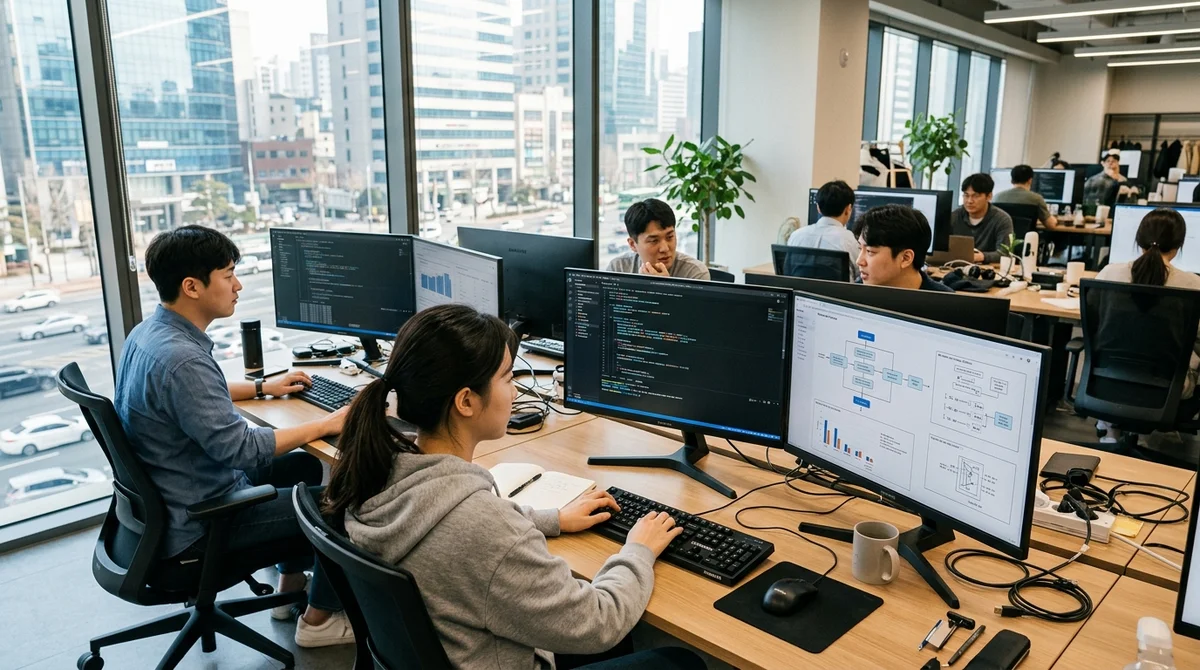
Samsung has paid record bonuses to its engineers for AI development. The payouts run into the millions and have set off a serious dispute in South Korea: how should the income from the tech boom be fairly divided among the company, its shareholders and its employees?
What happened at Samsung
Samsung announced significant bonuses for employees who worked on AI projects. The total has not been fully disclosed, but according to press reports it reaches hundreds of millions of dollars. The company presents the payouts as recognition of the team's contribution to breakthrough developments in artificial intelligence and next-generation semiconductors.
It is a rare step for South Korea's conservative corporate culture, where hierarchy and salary stability have traditionally been valued above spontaneous payouts. Samsung is trying to signal: we see your contribution and we value our best talent.
Why it sparked debate
But in Korea, the handout of large bonuses did not go over quietly. Sharp questions about fairness have emerged:
- Why only bonuses, and not a rise in base salary? Bonuses are variable income that can disappear.
- How were recipients chosen? Only top engineers, or the whole team that contributed?
- If AI work brings Samsung billions, is it fair to split profits equally, or should shareholders give up most of them?
- Does this suggest that base pay in the tech industry is structurally too low?
Unions and left-wing politicians in Korea argue this is a classic example of corporations taking the bulk of the income while employees get crumbs. Even if those crumbs amount to hundreds of thousands of dollars per engineer.
The global context
Samsung is not alone. Tech companies worldwide are handing out AI bonuses: OpenAI, Google and Meta pay better and give equity to those working on frontline AI. This has created tension: some engineers (in AI labs) receive bonuses, while others (in duller areas) go without.
Handing out bonuses is a way for companies to acknowledge value without changing the underlying pay structure, say critics in
Korean unions.
The question is becoming existential: how will the industry structure compensation now that contributions to AI have soared in value?
What this means
Samsung and other giants face a dilemma: the AI boom generates unprecedented profits, but the way money is divided among owners, management and employees remains conservative. Handing out bonuses is an attempt at balance, but not a long-term solution.
In Korea, where social inequality is a sensitive topic, this debate will shape future negotiations between companies and unions.
Meta has been designated an extremist organization and is banned in Russia.
- Nov 1, 2026OpenAI Rewrites GPT Behavior Rules: Five Values and a Chain of Command
- Nov 1, 2026Google admits AI Mode cuts search revenue, shares fall 15%
- Oct 31, 2026Author puts his script before an AI jury: the verdict cost 850 thousand tokens
- Oct 31, 2026Anthropic: Fold Subagents Back Into a Single Loop — One Customer's Tasks Ran Twice as Fast
Key Questions Answered
What happened at Samsung?
Samsung announced significant bonuses for employees who worked on AI projects. The total has not been fully disclosed, but according to press reports it reaches hundreds of millions of dollars. The company presents the payouts as recognition of the team's contribution to breakthrough developments in artificial intelligence and next-generation semiconductors. It is a rare step for South Korea's conservative corporate culture, where hierarchy and salary stability have traditionally been valued above spontaneous payouts. Samsung is trying to signal: we see your contribution an
Why it sparked debate?
But in Korea, the handout of large bonuses did not go over quietly. Sharp questions about fairness have emerged: Why only bonuses, and not a rise in base salary? Bonuses are variable income that can disappear. How were recipients chosen? Only top engineers, or the whole team that contributed? If AI work brings Samsung billions, is it fair to split profits equally, or should shareholders give up most of them? Does this suggest that base pay in the tech industry is structurally too low? Unions and left-wing politicians in Korea argue this is a classic example of corporations
What are the key details on The global context?
Samsung is not alone. Tech companies worldwide are handing out AI bonuses: OpenAI, Google and Meta pay better and give equity to those working on frontline AI. This has created tension: some engineers (in AI labs) receive bonuses, while others (in duller areas) go without. Handing out bonuses is a way for companies to acknowledge value without changing the underlying pay structure, say critics in Korean unions. The question is becoming existential: how will the industry structure compensation now that contributions to AI have soared in value?
Ship AI Faster with Founders, Engineers & Weekly Architecture Reviews
Inside Vibe Club (hamidun.com/club) — weekly live masterminds with Zhemal Khamidun, Tech Radar, full LMS access, and 370+ production Claude Code skills.
The AI world, distilled — once a week
Seven stories that actually mattered, hand-picked. No noise, no reposts, no press releases.
Done! Check your inbox for a confirmation.