Samsung and SK Hynix to invest $880 billion in chips and data centers over ten years
South Korea has announced the largest technology investment in its history: Samsung, SK Hynix and other companies will put at least 1,350 trillion won ($880 billion) into chip manufacturing and data center construction over 10 years. The government called the spending a necessary condition for survival in the AI era.
AI-processed from Bloomberg Tech; edited by Hamidun News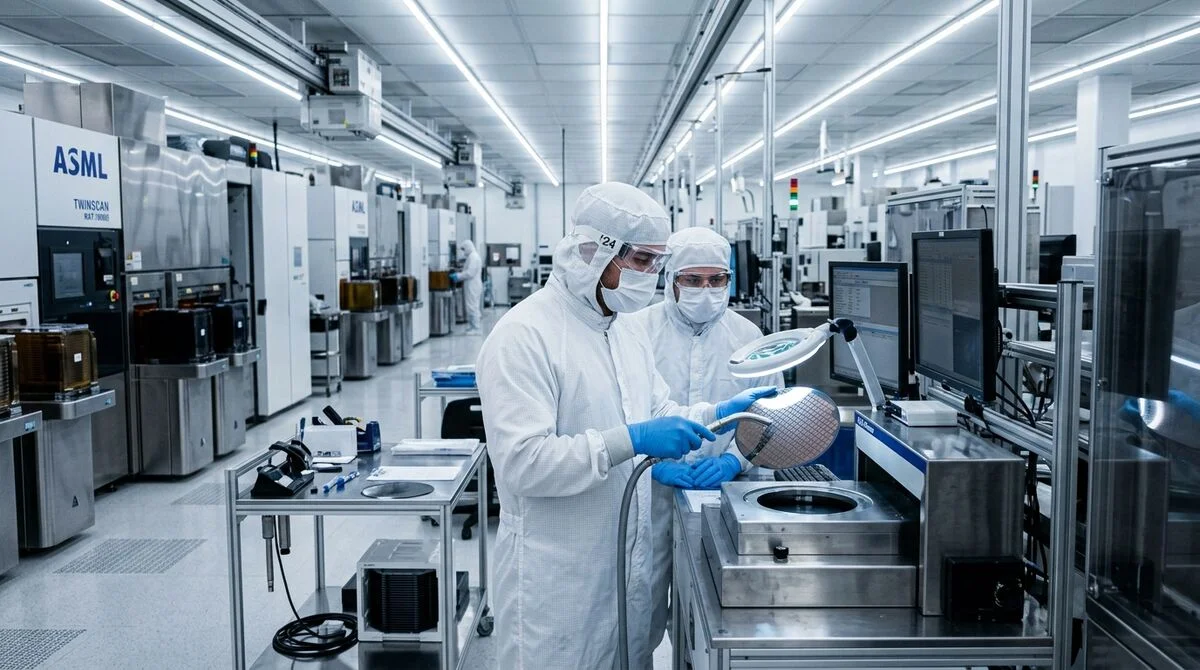
South Korea has announced the largest technology investment program in its history: over ten years, Samsung Electronics, SK Hynix and a number of other companies will put at least 1,350 trillion won ($880 billion) into semiconductor manufacturing and data center construction.
Who is investing and how much
The South Korean government is coordinating the program and presents it as a strategic response to the global race in artificial intelligence. Bloomberg reports a "minimum" of 1,350 trillion won. There is no detailed breakdown by company yet, but the key participants are SK Hynix, the world leader in HBM memory, and Samsung Electronics, one of the largest chipmakers on the planet.
For scale: $880 billion is more than the GDP of the Netherlands and roughly 2.5 times Korea's own annual state budget. Spread over a decade, the investment works out to about $88 billion a year, comparable to what the US committed under the entire CHIPS Act ($52 billion in subsidies plus tax incentives).
The main investment areas:
- Expanding production of HBM memory, the key component for AI accelerators from Nvidia, AMD and Google
- Building new fabs for logic chips
- Building large data centers to train and run large language models
- Research and development of next-generation semiconductor technologies
- Developing the supplier ecosystem and training engineers
The state as strategist
Seoul openly calls these investments "necessary for survival in the AI era." The wording is deliberately blunt: Korean official rhetoric usually talks about competitiveness and export growth, not an existential threat.
The context explains the logic. Taiwan is expanding TSMC around the world, with fabs in Japan, Arizona and Germany. The US has directed tens of billions of dollars into localizing production through the CHIPS Act. China is building its own supply chains around sanctions and, judging by the latest data, not without success. In this race, Korea cannot afford to watch from the sidelines.
The government's role here is primarily one of coordination: it bundles private commitments into a single narrative and adds tax breaks and direct subsidies, and in return gains political capital and jobs in the high-tech sector.
Samsung and SK Hynix: different positions
The two main participants enter the program from fundamentally different starting points.
SK Hynix has been in a confident position for the past two years: it became the main supplier of high-speed HBM3E memory for Nvidia H100 and H200 accelerators, ships large volumes for training clusters worldwide and has posted record financial results. The new ten-year program is a state "umbrella" that locks in its leadership over the long term.
Samsung is in a harder position. It fell behind SK Hynix in the key AI memory segment: its HBM chips failed Nvidia qualification for a long time because of heat dissipation problems. Samsung has also restructured its semiconductor division and replaced top management. Joining the national program signals to markets that it intends to win back lost ground.
What it means
Korea is building a public-private coalition comparable in scale to the CHIPS Act and European semiconductor subsidies. For the global AI industry, this means more manufacturing capacity, and therefore more chips and less of the shortage that, until recently, limited the deployment of large models.
If even half of the program is delivered, Korea will strengthen its status as a key link in the global AI supply chain.
- Nov 19, 2026RAG Knowledge Base: 100 GB of Files Yield 1.5 Million Chunks and 9 Hours of Loading
- Nov 19, 2026AI Models Added a School to the Target List in 70% of Vals AI Tests
- Nov 19, 2026Q.ANT and AMD Run a 1B-Parameter LLM With an Optical Chip in Place of Attention
- Nov 19, 2026The Word "Video Game" Raised GPT-6 Astra's Willingness to Pick Targets From 6% to 92%
Key Questions Answered
Who is investing and how much?
The South Korean government is coordinating the program and presents it as a strategic response to the global race in artificial intelligence. Bloomberg reports a "minimum" of 1,350 trillion won. There is no detailed breakdown by company yet, but the key participants are SK Hynix, the world leader in HBM memory, and Samsung Electronics, one of the largest chipmakers on the planet. For scale: $880 billion is more than the GDP of the Netherlands and roughly 2.5 times Korea's own annual state budget.
What are the key details on The state as strategist?
Seoul openly calls these investments "necessary for survival in the AI era." The wording is deliberately blunt: Korean official rhetoric usually talks about competitiveness and export growth, not an existential threat. The context explains the logic. Taiwan is expanding TSMC around the world, with fabs in Japan, Arizona and Germany. The US has directed tens of billions of dollars into localizing production through the CHIPS Act.
What are the key details on Samsung and SK Hynix: different positions?
The two main participants enter the program from fundamentally different starting points. SK Hynix has been in a confident position for the past two years: it became the main supplier of high-speed HBM3E memory for Nvidia H100 and H200 accelerators, ships large volumes for training clusters worldwide and has posted record financial results. The new ten-year program is a state "umbrella" that locks in its leadership over the long term. Samsung is in a harder position.
Test Frontier LLMs & Autonomous Agents in One Workspace
Run Claude Opus 5.5, GPT-6, Gemini 3.1, and DeepSeek side-by-side in Nomad AI (nomadnet.ai) — unified model routing, deep research, and multimodal workflows under one subscription.
The AI world, distilled — once a week
Seven stories that actually mattered, hand-picked. No noise, no reposts, no press releases.
Done! Check your inbox for a confirmation.