Bank of Korea warns AI-driven chip bonuses could fuel inflation
The Bank of Korea (BOK) is sounding the alarm: the AI boom in semiconductors has handed employees at big tech companies record bonuses, and that is setting off a chain reaction across the economy. Rising incomes at chipmakers put pressure on wage expectations in other industries, boost consumer demand and threaten to reignite inflation, which the regulator is struggling to keep in check. The central bank says the risk is not the bonuses themselves but their ripple effect on the wider labor market.
AI-processed from Bloomberg Tech; edited by Hamidun News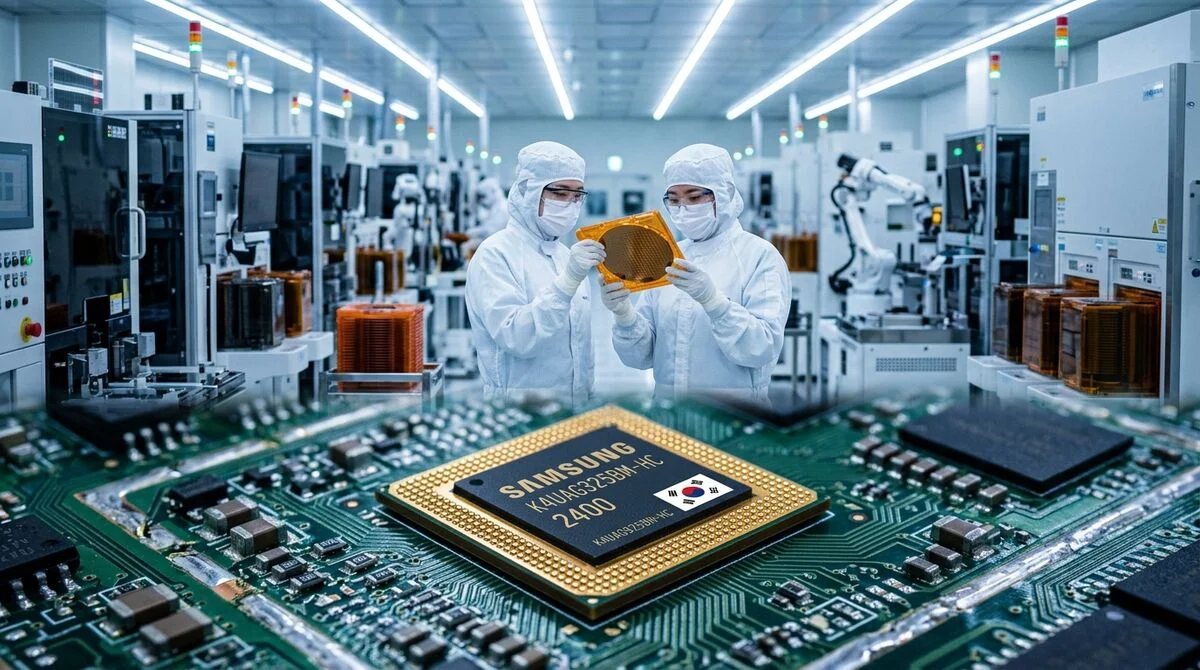
South Korea's central bank (BOK) has warned that the AI boom in the semiconductor industry could unexpectedly complicate the fight against inflation: record bonuses at large tech companies risk dragging up wages across the economy and heating up consumer demand.
Where the record bonuses come from
South Korea is the world's largest producer of memory chips. Samsung Electronics and SK Hynix sit at the center of the global AI race: data centers run by Microsoft, Google, Amazon and Meta are buying up high-speed HBM memory faster than manufacturers can produce it. Tight supply and record demand have predictably driven a sharp rise in margins and revenue.
Part of those results is traditionally paid out through bonuses, and in the latest cycle, according to industry sources, payouts in a number of divisions exceeded several months of employees' base salary. We are talking about tens of thousands of highly paid engineers and managers, people with a high level of consumption and little inclination to save unexpected income.
The domino effect on the labor market
The problem the BOK highlights is not the IT bonuses themselves but their ripple effect on the broader labor market. Employers in other sectors, from manufacturing to retail and construction, face pressure from employees who see their colleagues' incomes rising and revise their own expectations.
According to the central bank's assessment, the chain looks like this:
- Record bonuses at semiconductor companies raise the average level of income in the economy
- Workers in other sectors revise their wage expectations upward
- Employers are forced to raise their payroll budgets to retain staff
- Rising real household incomes boost consumer spending
- Price pressure intensifies across a broad basket of goods and services
Economists call this mechanism a "wage-price spiral", which central banks try to prevent after a period of high inflation.
A dilemma for the regulator
The BOK has landed in a classic trap. The export boom in semiconductors is an obvious plus for GDP and the trade balance. But if domestic inflation starts accelerating again because of an overheated labor market, the bank will have to tighten monetary policy.
Raising rates is painful in the current situation: Korean households carry one of the heaviest debt burdens among developed economies, mostly in the form of floating-rate mortgages. Higher rates sharply increase the monthly payments of millions of families and cool domestic demand just when the economy needs balance.
That is why the BOK's warning is not just a technical comment in a financial report but a signal of real tension inside the regulator.
What this means
The AI boom is increasingly spilling beyond the tech sector and starting to reshape the macroeconomic picture. Central banks, and not only in Korea, will have to factor AI-driven income into their inflation models. It is a new class of risk that simply did not exist in standard economic scenarios a few years ago.
*Meta has been designated an extremist organization and is banned in Russia.
- Nov 1, 2026Google's StreamVibe video agent beats other models by 10.7% on response timing and quality
- Nov 1, 2026OpenAI Rewrites GPT Behavior Rules: Five Values and a Chain of Command
- Nov 1, 2026Voice bots built on LLMs turn to Jev, a fast classifier, for decisions in 200–500 ms
- Nov 1, 2026Google admits AI Mode cuts search revenue, shares fall 15%
Key Questions Answered
Where the record bonuses come from?
South Korea is the world's largest producer of memory chips. Samsung Electronics and SK Hynix sit at the center of the global AI race: data centers run by Microsoft, Google, Amazon and Meta are buying up high-speed HBM memory faster than manufacturers can produce it. Tight supply and record demand have predictably driven a sharp rise in margins and revenue. Part of those results is traditionally paid out through bonuses, and in the latest cycle, according to industry sources, payouts in a number of divisions exceeded several months of employees' base salary. We are talking
What are the key details on The domino effect on the labor market?
The problem the BOK highlights is not the IT bonuses themselves but their ripple effect on the broader labor market. Employers in other sectors, from manufacturing to retail and construction, face pressure from employees who see their colleagues' incomes rising and revise their own expectations. According to the central bank's assessment, the chain looks like this: Record bonuses at semiconductor companies raise the average level of income in the economy Workers in other sectors revise their wage expectations upward Employers are forced to raise their payroll budgets to ret
What are the key details on A dilemma for the regulator?
The BOK has landed in a classic trap. The export boom in semiconductors is an obvious plus for GDP and the trade balance. But if domestic inflation starts accelerating again because of an overheated labor market, the bank will have to tighten monetary policy. Raising rates is painful in the current situation: Korean households carry one of the heaviest debt burdens among developed economies, mostly in the form of floating-rate mortgages. Higher rates sharply increase the monthly payments of millions of families and cool domestic demand just when the economy needs balance. T
Test Frontier LLMs & Autonomous Agents in One Workspace
Run Claude Opus 5.5, GPT-6, Gemini 3.1, and DeepSeek side-by-side in Nomad AI (nomadnet.ai) — unified model routing, deep research, and multimodal workflows under one subscription.
The AI world, distilled — once a week
Seven stories that actually mattered, hand-picked. No noise, no reposts, no press releases.
Done! Check your inbox for a confirmation.