Local LLMs
Local LLMs are language models that run directly on your own hardware — a laptop, a PC with a GPU or a home server — with no cloud, no subscriptions and no data leaving your machine. Ollama, llama.cpp and LM Studio, plus quantized GGUF builds of Llama, Qwen and Gemma, make it possible even on a decade-old graphics card. Here is all our coverage of running AI locally: guides, hardware tests, quantization and privacy.





How a Habr Author Turned Seven n8n Scenarios into an Autonomous AI News System
In one and a half months, the author transformed a fragile set of seven n8n scenarios into a unified Python pipeline with 11 workers, 5 AI agents, a local LLM, and…
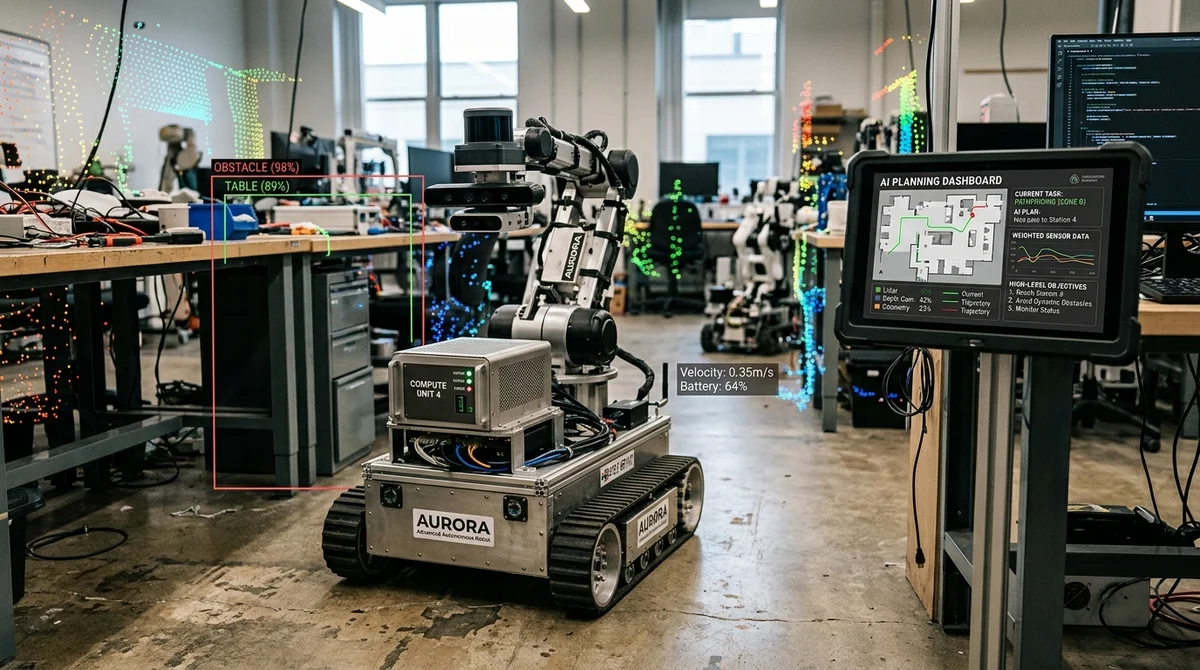
OpenGrall Presented an Architecture for AI Robots Where a Language Model Handles Strategy
The OpenGrall framework proposes dividing cognition and control: a language model handles strategy, while TinyML handles execution and safety, reducing latency even…

MarkTechPost broke down the complete training cycle of large language models: from data to deployment
MarkTechPost released a detailed breakdown of how LLMs are built today: from pretraining on massive corpora to SFT, RLHF, reasoning optimization, and production…


Habr AI releases guide to ChatGPT, Claude, and mcp for newcomers

PrismML Bonsai: How to Run a 1-Bit Model on CUDA with GGUF, JSON and RAG

Habr AI Explained How Data-Driven Solution Search Changes Client-Server Architecture

DeepSeek Slashes Prices on New AI Flagship, Intensifying Price War in China

Qualcomm shares rise on reports of possible OpenAI smartphone collaboration
Qualcomm shares rose following reports of possible collaboration with OpenAI on a smartphone, and the market saw this as a bet on a new phase of AI devices and…

OpenMOSS releases MOSS-Audio — an open audio model that outperforms larger alternatives
OpenMOSS introduced MOSS-Audio — an open model that understands speech, music, and ambient sounds in a single architecture and outperforms significantly larger…


Apple's Mac mini shortage drives up eBay prices amid local AI demand

Microsoft Phi-4-Mini: implementing quantization, RAG, and LoRA in a single Jupyter notebook

How YOLO and OpenCV Learned to Parse Transport Waybills — and Why That Isn’t Enough

Multiverse Computing launched a public API with compressed OpenAI, Meta and DeepSeek models



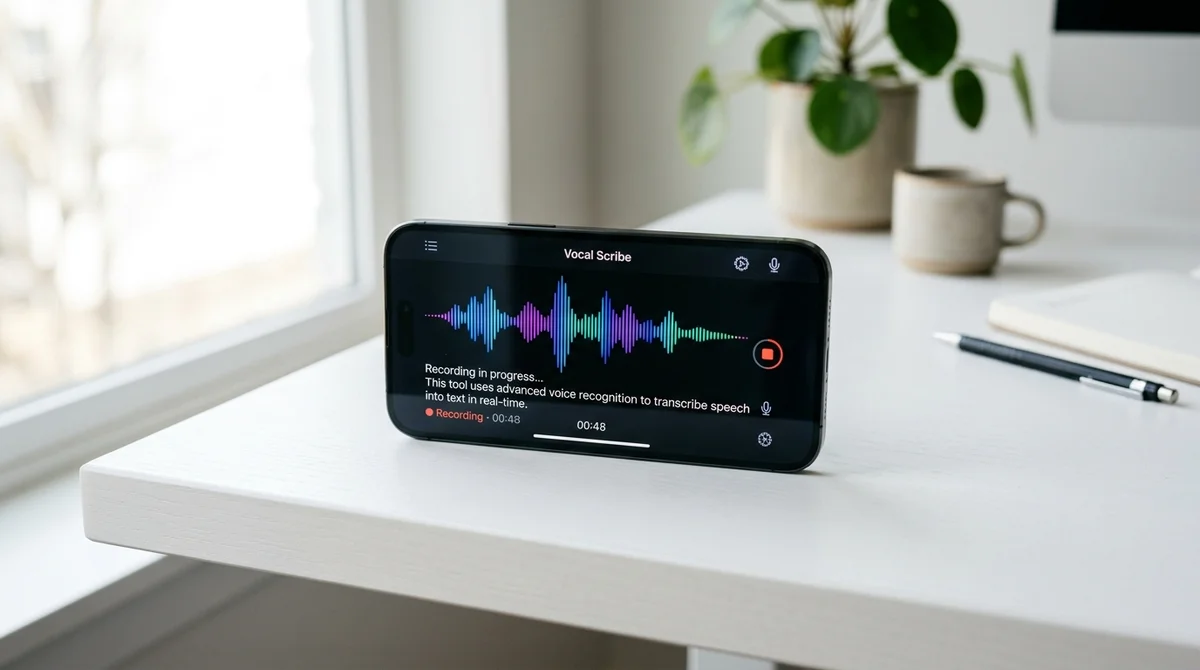

Google quietly launched AI dictation for iOS that works without internet
Google released a voice dictation app based on Gemma models that works completely offline on iPhone — a direct competitor to the popular Wispr Flow.

AI Agents Now Write GPU Code: RightNow AI Releases the AutoKernel Framework
Writing fast GPU code is notoriously hard. RightNow AI wants to automate it entirely with AutoKernel, a new open-source framework built on AI agents.