Habr AI
AI news source. Articles are auto-selected and adapted by Hamidun News editors.
Latest publications

How a Habr author swapped prompts for reference images in ChatGPT and created a series of AI prints
Habr published a case study on how text prompts gave way to reference images: the author started showing the model photos of the subject, the uniform, and the scene, and assembled a collection of hockey-themed AI prints.

Electric bus operators can recoup the cost of face recognition cameras in 14–23 months
The project's author outlined a face recognition camera setup for electric buses: 120° field of view, accuracy above 99.5%, data storage for up to 90 days, and a 14–23 month payback period.
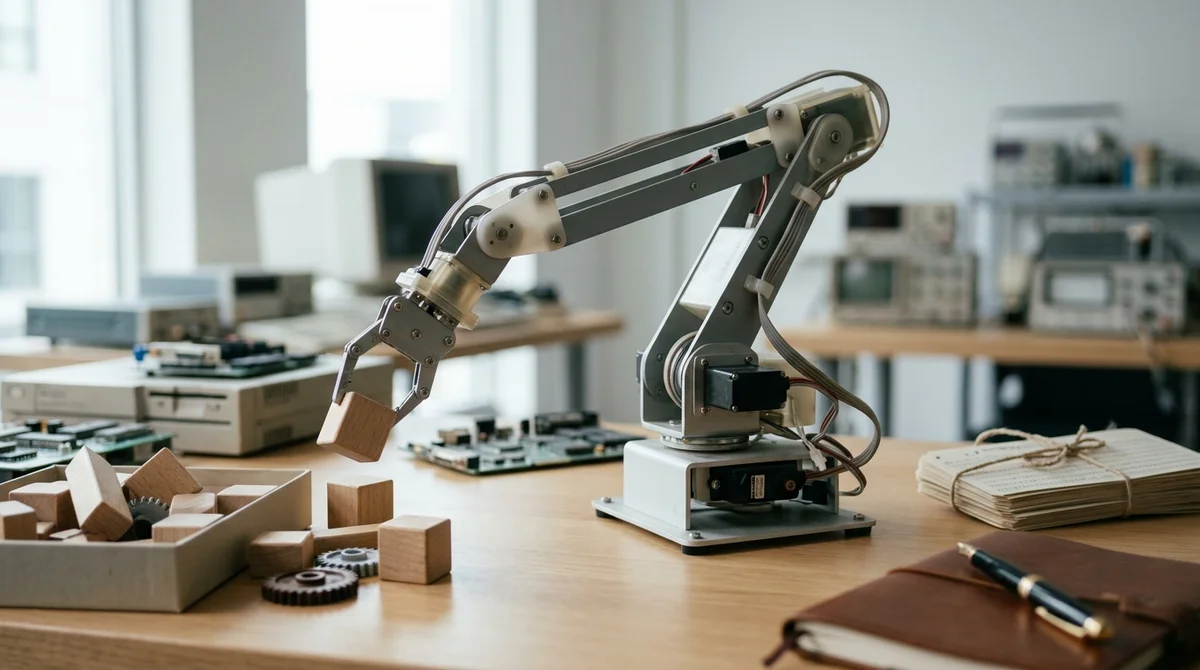
How the University of Edinburgh’s Freddy robot became a symbol of the first AI winter
Freddy II, a robot from the University of Edinburgh, could assemble toys, but its slow and overly honest demonstration became one of the triggers of the first «AI winter».

Habr AI breaks down RAG architecture: how search across corporate PDFs and Excel files works
Habr AI showed how a RAG system semantically finds the right fragments in corporate PDFs, spreadsheets, and presentations, then compiles an answer from sources with almost no hallucinations.
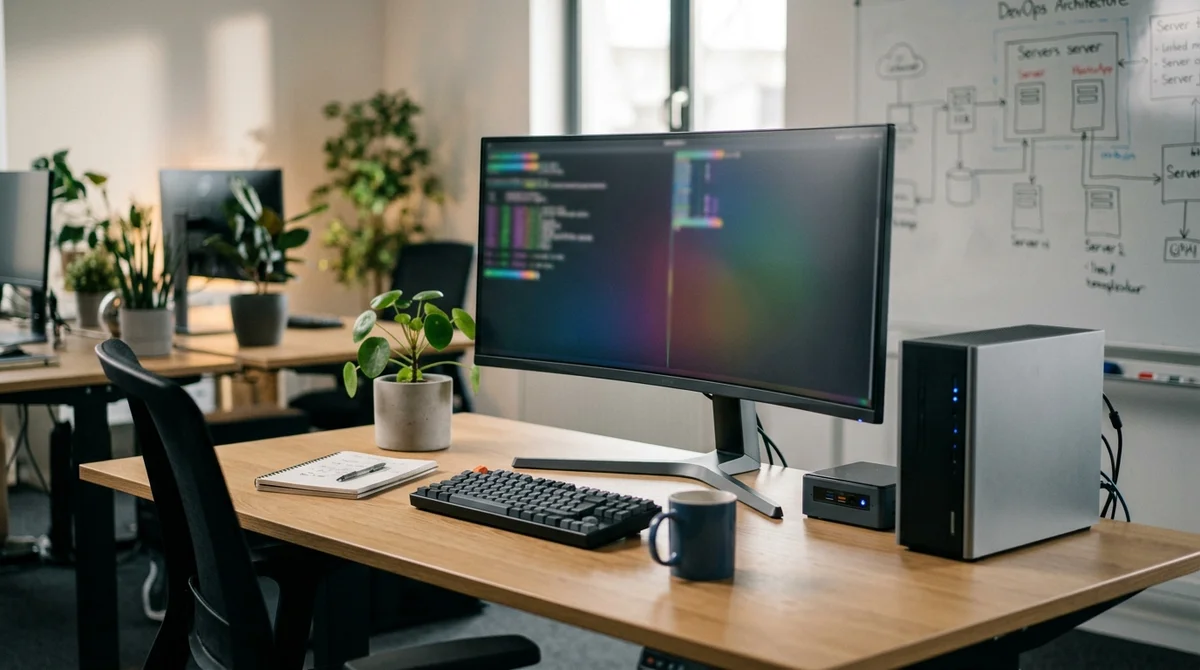
Warp tested on real DevOps tasks: handles routine, but makes you think less
A Habr author checked how Warp behaves in real DevOps scenarios: the terminal built a Flask service, configured the server and deployment without errors, but turned out to be slow and overly relaxing.

Cursor hid Composer 2's base model, but the API exposed Kimi K2.5 and sparked a transparency dispute
Cursor's Composer 2 launch turned into a scandal: the API accidentally revealed traces of Kimi K2.5, forcing Moonshot, Fireworks, and Cursor itself to respond.

OpenClaw has moved beyond the hype: what businesses and DevOps teams can already put to work
OpenClaw has evolved from a toy for enthusiasts into the center of a new AI agent race: companies are building multi-agent pipelines, while the market is urgently tackling security and scaling issues.

Tokentap and MitM Proxies for LLMs: How to Monitor Tokens, Costs, and Data Leaks
Tools like Tokentap make it possible to place a MitM proxy between an LLM CLI and a cloud model to track token usage in real time and reduce the risk of sensitive data leaks.

PrimeCode adds a full graphical interface to OpenCode CLI right inside VS Code
The PrimeCode extension turns OpenCode CLI into a full interface inside VS Code: it shows tool calls, file changes, context, and lets users resume previous sessions.

Whisper for Teams: developer built a utility for translating speech live during meetings
Habr featured a utility that captures the system audio stream, splits speech into phrases, transcribes it with Whisper, and translates meetings into the target language.
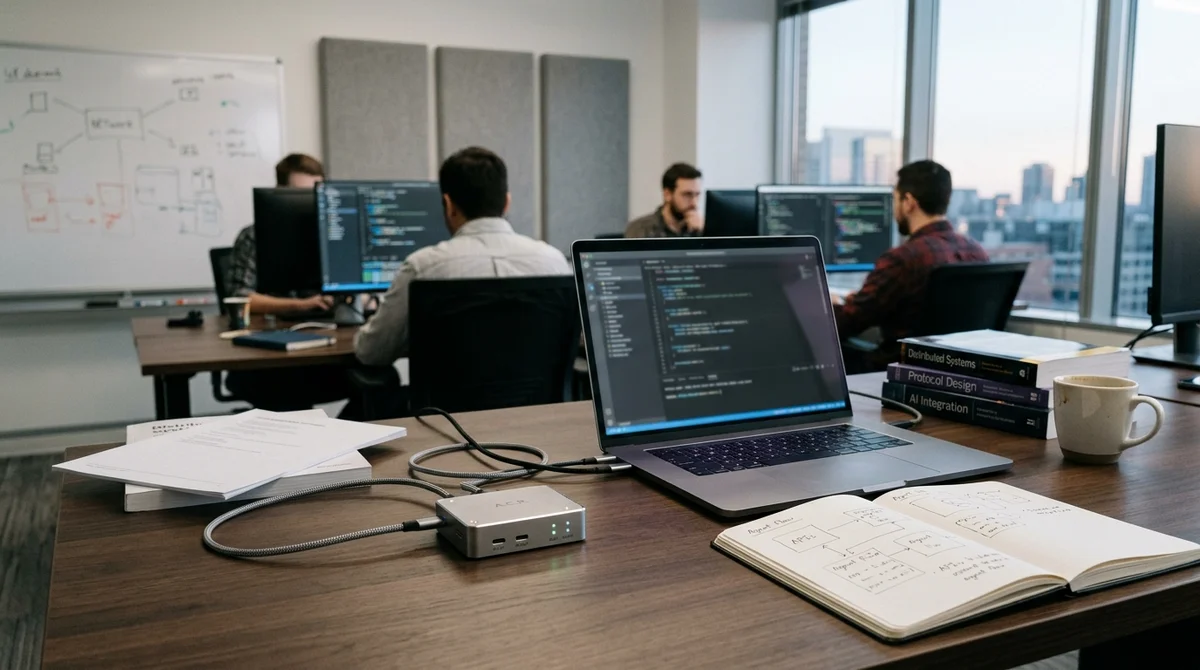
OpenIDE adds ACP: how the JetBrains and Zed protocol changes how AI agents work in IDEs
OpenIDE is preparing ACP support, an open protocol meant to simplify connecting AI agents to IDEs and remove developers' reliance on one-off integrations.

DeepSeek and Qwen tried to get through "Everlasting Summer," but got stuck in the labyrinth
An experiment with DeepSeek, Qwen, Gemma and gpt-oss showed that local LLMs can already play visual novels via Ren’Py and Ollama, but they still often get confused by choices and derail the playthrough.
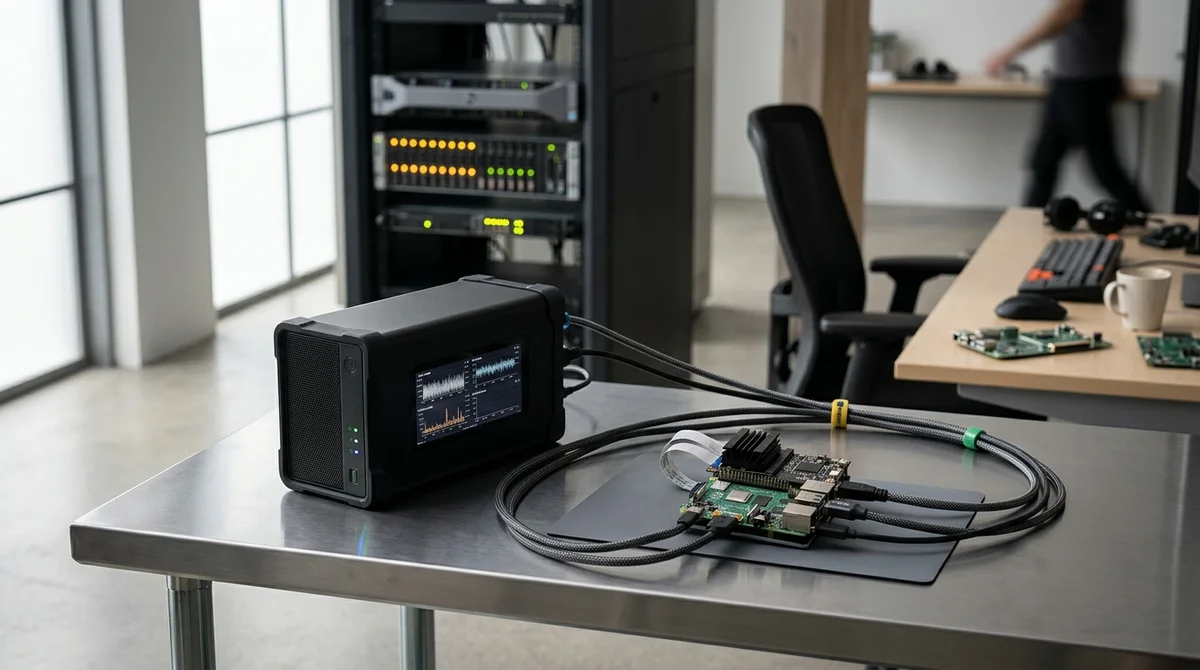
OpenClaw turned out to be a costly autonomous agent: 81 million tokens and server conflicts
Firsthand experience installing OpenClaw showed that an autonomous AI agent can quickly run into infrastructure conflicts, consume tens of millions of tokens, and require a dedicated GPU server.

Garage Eight explained how recursive metaprompting replaces prompt guesswork
Garage Eight described an approach in which the model is given not a ready-made prompt, but context and a goal so it can design the task itself, choose the steps, and reduce the number of iterations.

Matt Shumer sparked panic around AI and the labor market, but the data do not confirm a wave of layoffs
Matt Shumer’s viral post claiming that AI will hit employment harder than Covid drew 85 million views, but real-world data on model adoption still do not support a mass layoff scenario.

Habr AI described a minimalist shooter game as a testing ground for a self-learning mind
Habr AI has published the start of a project on the practical implementation of a mind: the author proposes training an artificial agent in an extremely simple game where the user plays the role of a hunter.

Nvidia Nemotron-Cascade-2 was run at home on a GeForce RTX 3090 at up to 150 tokens/s
A local LLM enthusiast tested Nemotron-Cascade-2 on a home PC with a GeForce RTX 3090 and showed that the 30B model can work as a fast assistant for coding, RAG, and complex tasks.
TAPe reached 74% accuracy on COCO and began moving away from standard transformers
The authors of the TAPe diary said that the model, trained on entirely synthetic data, reached 74% classification accuracy on COCO and is now moving away from standard transformers toward its own architecture.

PAC1 exposed a weakness in reasoning models: a hardcoded agent passed the benchmark at lower cost
The closed PAC1 benchmark showed that in tasks involving files, JSON, and security traps, a fixed algorithm can sometimes work more reliably and at lower cost than a reasoning model.

John McCarthy and the myth of “AI”: why CIP is a more accurate term for the technology
The article explains how the term “artificial intelligence,” coined by John McCarthy, created the myth of machines competing with humans, even though it is more accurate to speak of “complex information processing.”

SenseTime, Baidu, and Xiaomi showed why AI in China is seen as an assistant, not a replacement
After visits to Baidu, Xiaomi, and SenseTime, one thing became clear: in China, AI is seen not as a threat to jobs, but as a tool that strengthens teams and speeds up technology adoption.

project-graph-mcp helps AI agents see project architecture without extra tokens
The developers behind project-graph-mcp released an MCP server that builds a compressed code graph, shows dependencies, and helps AI agents understand a project without lengthy file reading.

Habr: author explained why AI should not be reduced to vibe coding alone
The author of a new column on vibe coding explains why AI should not be reduced to app generation: in many tasks, it is faster and safer to use Excel, WordPress, and other ready-made tools.

Hive, C2PA, and Intel: How Deepfake Verification Services Work and Where They Fail
Journalists tested four popular tools for checking photos, videos, and audio for deepfakes and found that even the best solutions often break down on compression, old files, and content without metadata.

QSOFT implemented a YandexGPT-based RAG bot for Boiron without Python or orchestrators
QSOFT showed how it launched a medical RAG bot for Boiron on Yandex Cloud Agent: the PHP and WordPress assistant answers 24/7, searches a large knowledge base, and reduces the load on support.

Bot setup for MAX: AI consultant and conversations with experts in one chat
A MAX case study showed how a single bot can handle common questions with AI and, in more complex cases, seamlessly pass messages to a human expert via reply and chat_id.

Sber Life Insurance: Why AI Without Processes Does Not Speed Up Product Launches
An expert at Sber Life Insurance explains why AI rarely reduces Time-to-Market on its own and starts driving speed only where processes are already in place.

Addy Osmani warned about comprehension debt in AI code generation at scale
Addy Osmani described a hidden problem in AI coding: teams write code faster than they can understand it, while tests, specs, and metrics only create an illusion of control.

Habr AI presented a prototype of a system that verifies the authenticity of references in research papers
Habr AI described a capstone project that extracts bibliographies from PDF and DOCX files, checks DOI, URL, and metadata against external databases, and flags questionable academic sources.
Google Gemma 4 31B reduced to 18.3 GB and run on free Kaggle
The author showed how to quantize Google Gemma 4 31B from 62 GB to 18.3 GB and work around free Kaggle's limit by deleting the Hugging Face cache while the script was running.