Together AI Explains Why Cloud for AI Is a Completely Different Architecture
AI-native companies like Cursor grow in weekly cycles and require infrastructure like an AI factory—not web cloud. Together AI identified four key differences of true AI cloud: continuous cycle from training to inference, access to frontier research, high-performance infrastructure, and developer tools.
AI-processed from Together AI Blog; edited by Hamidun News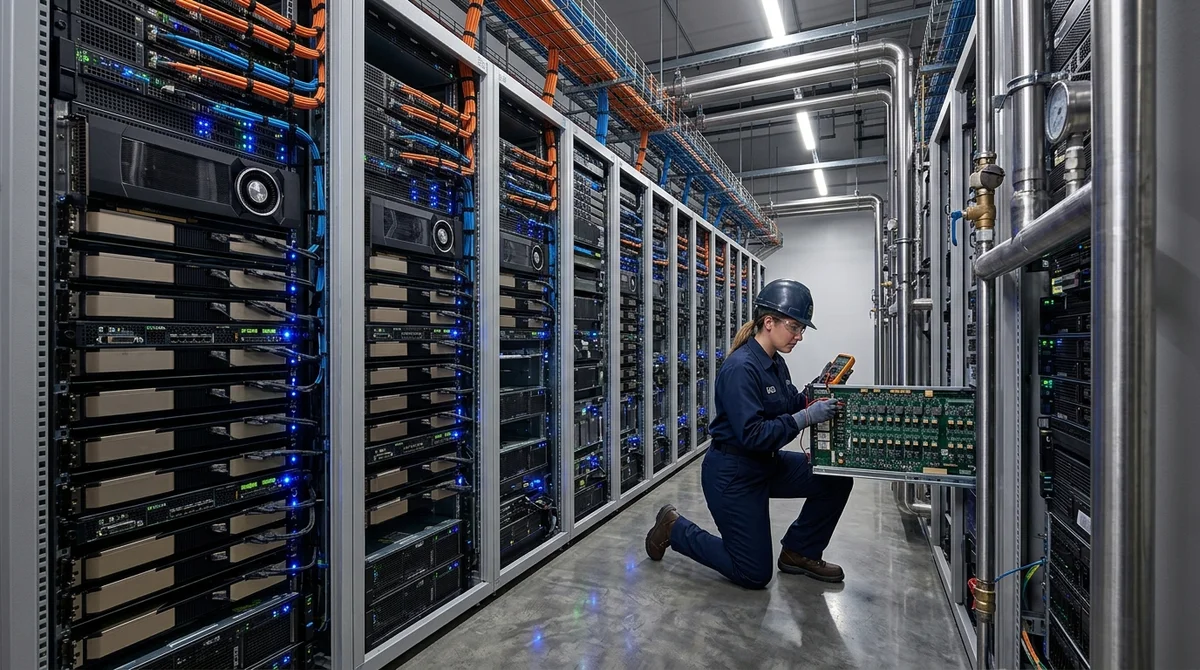
Companies built around AI models need a completely different type of cloud. While 2010s clouds optimized for web applications with stable CPU load, now we need architecture designed for weekly retraining cycles, GPU-intensive workloads, and constant pressure for experiment speed.
Why Old Clouds No Longer Fit
Startups like Cursor and Decagon don't just grow fast—they compress a decade of development into several years. Their products iterate weekly, sometimes daily. When a new research paper on a breakthrough training technique comes out, it's no longer just theory—it's tomorrow's company roadmap. AI-native companies don't add AI to existing web stacks. They build the entire stack around models. Competitive advantage is the speed of experiments and iterations. On cloud infrastructure optimized for stable traffic and CPU tasks, this speed is simply impossible.
Four Pillars of AI Cloud
Together AI identified the key differences of AI Native Cloud:
- Continuous development cycle — simultaneous work with pre-training, fine-tuning, evaluation, and inference. Old clouds separated training and serving. AI-natives work both directions at once, transitioning from research to production within days.
- Proximity to frontier research — new techniques and models emerge every month. Falling behind state-of-the-art means falling behind competitors. Cloud infrastructure must integrate new research into products within weeks, not quarters.
- Infrastructure as a factory — exponential traffic growth requires a synchronized system: GPU racks with ultra-low-latency connections, massive cooling and power supply. Classical data centers from the web app era can't handle these loads.
- Developer tools — AI teams don't want to build their own research infrastructure just to keep pace with the frontier. Cloud must provide everything necessary.
When Half the Advantage's Life Span Is Months
The difference between good and bad AI infrastructure materializes in release speed. A startup on the right cloud can release model updates once a week. On old cloud—once a month or quarter. In an era when competitive advantage lifespan is measured in months, this difference is decisive.
"Companies that win during platform shifts are those that can accelerate the cycle from idea to production and back," writes
Together AI.
For an AI-native startup, choosing cloud is not simply choosing a provider. It's choosing whether the company can compete on the frontier at all. Wrong infrastructure freezes a team in last year while competitors are already working with cutting-edge techniques.
What This Means
Cloud as a category is undergoing redefinition. In 2026, infrastructure architecture is the difference between takeoff and stagnation. Companies built on the right cloud will release faster, improve faster, adapt faster. This is the foundation of the next wave of AI business.
- Oct 28, 2026Retell Grows to 100 Million Calls a Month on OpenAI Models and Codex
- Oct 28, 2026Netflix speeds up Java AI agents: IntelliJ engine saves 20–30% on typical tasks, up to 65% at best
- Oct 28, 202614 AI models spot OLX scammers, but 37 of 42 quietly help with prepayment
- Oct 28, 2026Cloudflare Launches Auto Router: It Picks the Model So Employees Don't Have To, Saving Up to 30%
Key Questions Answered
Why Old Clouds No Longer Fit?
Startups like Cursor and Decagon don't just grow fast—they compress a decade of development into several years. Their products iterate weekly, sometimes daily. When a new research paper on a breakthrough training technique comes out, it's no longer just theory—it's tomorrow's company roadmap. AI-native companies don't add AI to existing web stacks. They build the entire stack around models. Competitive advantage is the speed of experiments and iterations. On cloud infrastructure optimized for stable traffic and CPU tasks, this speed is simply impossible.
What are the key details on Four Pillars of AI Cloud?
Together AI identified the key differences of AI Native Cloud: Continuous development cycle — simultaneous work with pre-training, fine-tuning, evaluation, and inference. Old clouds separated training and serving. AI-natives work both directions at once, transitioning from research to production within days. Proximity to frontier research — new techniques and models emerge every month. Falling behind state-of-the-art means falling behind competitors. Cloud infrastructure must integrate new research into products within weeks, not quarters. Infrastructure as a factory — expo
When Half the Advantage's Life Span Is Months?
The difference between good and bad AI infrastructure materializes in release speed. A startup on the right cloud can release model updates once a week. On old cloud—once a month or quarter. In an era when competitive advantage lifespan is measured in months, this difference is decisive. "Companies that win during platform shifts are those that can accelerate the cycle from idea to production and back," writes Together AI. For an AI-native startup, choosing cloud is not simply choosing a provider. It's choosing whether the company can compete on the frontier at all. Wrong i
Build & Ship Production AI Agents Without Boilerplate Code
Start your free 72-hour trial at Hamidun Academy (academy.hamidun.com) — interactive lessons on Claude Code & Cursor, live Tech Radar, and production agent templates.
The AI world, distilled — once a week
Seven stories that actually mattered, hand-picked. No noise, no reposts, no press releases.
Done! Check your inbox for a confirmation.