Golden Globes will allow AI in films, as long as the creative work stays human
The Golden Globes has updated its AI rules. Nominees can now use artificial intelligence, as long as it does not become the defining tool. The main contribution must remain human. It is the first step by a major film award toward adapting to the realities of the digital era.
AI-processed from 3DNews AI; edited by Hamidun News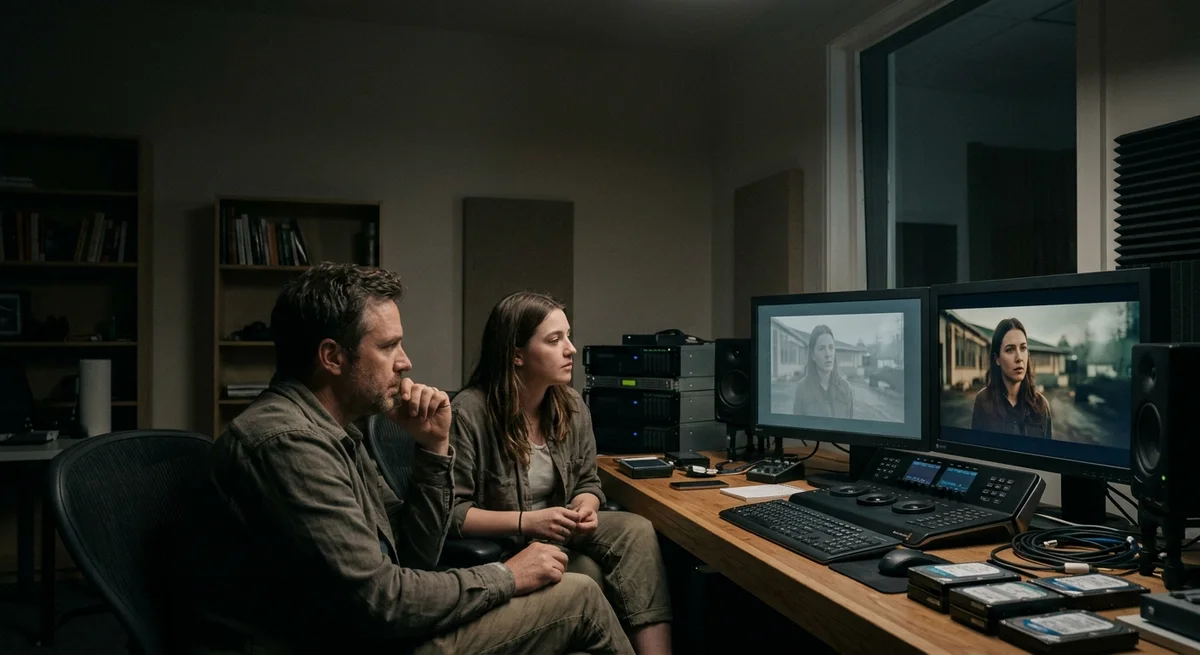
The organizers of the Golden Globes have updated their rulebook on the use of artificial intelligence. From now on, films and series made with AI will not be automatically disqualified, but only if a human remained the principal creator and AI played a supporting role.
When AI is allowed
The new rules permit AI at various stages of production. That can include visual effects, video processing, audio filtering, color grading and other technical processes traditionally handled by post-production specialists.
The philosophy is simple: if a human still makes the key creative decisions and can explain them, AI is just a more powerful tool than Photoshop or Premiere Pro.
The organizers clarify that generative AI, where a machine creates a whole scene or character from a text description, goes on the blacklist. Assistive AI, which supplements, improves or speeds up the author's work, goes on the whitelist. The line is blurry, so nominees will be required to disclose all the tools they used.
- Allowed: special effects that complement the author's vision
- Allowed: color grading, audio processing, detail enhancement
- Prohibited: using AI as the main creative mechanism
- Required: disclosure of all tools used at the time of nomination
An industry compromise
The decision is a compromise between two camps in the film industry. Actors' unions, directors and screenwriters lobbied for caution: the introduction of AI may undermine copyright and exploit creative labor. Meanwhile, producers and technical specialists are already actively building AI into their workflows, and a full ban would mean that half of the projects already in development could not compete for major awards.
The Golden Globes chose a third path: not to ban the technology, but to set clear boundaries between creativity and mechanization. It is the first major step by a mainstream award toward the AI era, and other film awards are watching it closely.
Trend or norm?
The film industry has been experimenting with AI for several years. Visual effects that were once drawn by hand are now often generated from a description. Some studios use AI to speed up storyboarding or to produce rough cuts.
The question is not whether AI will be in film, because it is already there. The question is how to regulate it without killing the industry and without ignoring the concerns of creative professionals.
What this means
The award acknowledged that AI has already changed how films are made. But copyright and human creativity still sit at the top of the hierarchy. Over time these rules will be revisited, as it becomes clear where the real line between tool and creator lies. For now, the Golden Globes has set the first marker.
- Nov 2, 2026The Verge reviewer builds a $50 Meta Muse Charm alternative with Claude Code
- Nov 2, 20268 Skills for video in Claude Code: from 244 pixel effects to rough-cut editing
- Nov 1, 2026Pika Labs releases open video model H3 Flex: 6 steps instead of 50
- Nov 1, 2026Google's StreamVibe video agent beats other models by 10.7% on response timing and quality
Key Questions Answered
Trend or norm?
The film industry has been experimenting with AI for several years. Visual effects that were once drawn by hand are now often generated from a description. Some studios use AI to speed up storyboarding or to produce rough cuts. The question is not whether AI will be in film, because it is already there. The question is how to regulate it without killing the industry and without ignoring the concerns of creative professionals.
When AI is allowed?
The new rules permit AI at various stages of production. That can include visual effects, video processing, audio filtering, color grading and other technical processes traditionally handled by post-production specialists. The philosophy is simple: if a human still makes the key creative decisions and can explain them, AI is just a more powerful tool than Photoshop or Premiere Pro. The organizers clarify that generative AI, where a machine creates a whole scene or character from a text description, goes on the blacklist. Assistive AI, which supplements, improves or speeds u
What are the key details on An industry compromise?
The decision is a compromise between two camps in the film industry. Actors' unions, directors and screenwriters lobbied for caution: the introduction of AI may undermine copyright and exploit creative labor. Meanwhile, producers and technical specialists are already actively building AI into their workflows, and a full ban would mean that half of the projects already in development could not compete for major awards. The Golden Globes chose a third path: not to ban the technology, but to set clear boundaries between creativity and mechanization. It is the first major step
Test Frontier LLMs & Autonomous Agents in One Workspace
Run Claude Opus 5.5, GPT-6, Gemini 3.1, and DeepSeek side-by-side in Nomad AI (nomadnet.ai) — unified model routing, deep research, and multimodal workflows under one subscription.
The AI world, distilled — once a week
Seven stories that actually mattered, hand-picked. No noise, no reposts, no press releases.
Done! Check your inbox for a confirmation.