Micron Bets $24 Billion on Singapore: AI Memory Won't Print Itself
While you're debating whether ChatGPT will replace programmers or when GPT-5 will finally arrive, Micron is quietly writing a $24 billion check. This money will go to Singapore over the next decade, and it's not just a gesture of goodwill or a routine office update. It's a cold, calculated response to a question that has been haunting the industry for the last two years: where to get enough memory to feed the appetites of modern neural networks. If NVIDIA makes the brain for AI, then Micron produces those very neural connections without which that brain becomes a very expensive paperweight. Context here is more important than the sum itself. We're used to thinking of chips as something unified, but the generative AI boom has exposed a critical vulnerability—a shortage of high-speed memory (HBM).
AI-processed from Bloomberg Tech; edited by Hamidun News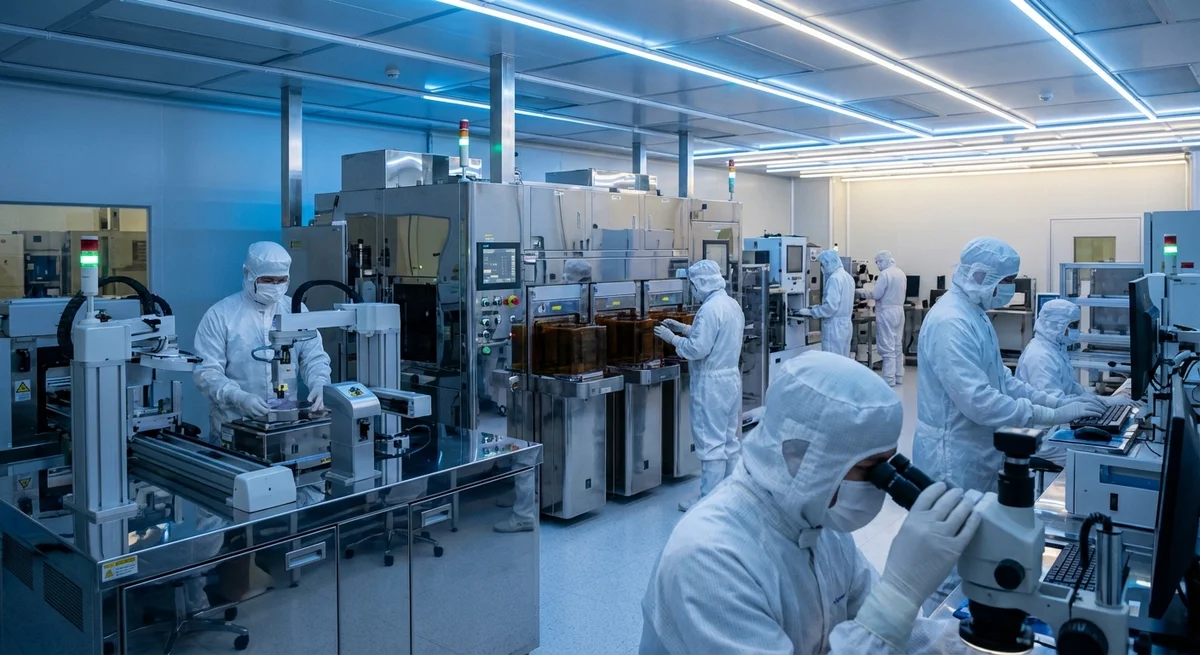
While you're debating whether ChatGPT will replace programmers or when GPT-5 will finally arrive, Micron is quietly writing a $24 billion check. This money will go to Singapore over the next decade, and it's not just a gesture of goodwill or a routine office update. It's a cold, calculated response to a question that has been haunting the industry for the last two years: where to get enough memory to feed the appetites of modern neural networks. If NVIDIA makes the brain for AI, then Micron produces those very neural connections without which that brain becomes a very expensive paperweight.
Context here is more important than the sum itself. We're used to thinking of chips as something unified, but the generative AI boom has exposed a critical vulnerability—a shortage of high-speed memory (HBM). It turns out that even the most powerful graphics processor is useless if it can't instantly receive data. Micron has long been in the shadow of Korean giants like SK Hynix, who first understood which way the wind was blowing. Now the American company is trying not just to catch up with competitors, but to rebuild its entire supply chain to meet the needs of data centers that are mushrooming.
Why Singapore specifically? The answer lies in geopolitics and money. While the USA is trying to bring manufacturing back to its land through subsidies, and Taiwan lives in a state of eternal tension, Singapore remains a quiet haven with ideal logistics and predictable rules of the game. Micron has long had roots here, and the new injection of capital only confirms that the company doesn't believe in a quick end to the "artificial boom." These $24 billion will go toward expanding existing facilities and launching new lines that will stamp out the latest generation memory chips.
The situation on the market right now resembles a classic arms race. SK Hynix has already contracted its HBM supplies a year in advance, Samsung is trying to solve problems with the yield of good crystals, and Micron is betting on aggressive scaling. For us, this means two things. First, the cost of training models is unlikely to fall in the near future—such investments need to be recouped. Second, the shortage of hardware will gradually begin to ease, which will allow more startups to gain access to the capacity that was previously reserved only for Microsoft and Google.
It's interesting to observe how Micron's rhetoric is changing. Previously they talked about smartphones and laptops, but now every report is tinged with the word "data center." The company is essentially reassembling itself on the fly, transforming from a supplier of PC components into the foundation of global AI infrastructure. This is a huge risk, because if the neural network bubble bursts, Micron will be left with giant factories in Singapore that will produce excess product. But judging by the order dynamics from NVIDIA itself, this shouldn't be a concern for the next five years.
The main point: Micron is finally moving into the top tier of AI infrastructure suppliers. Will the company manage to secure a dominant share of the HBM market before Samsung solves its technological problems?
Want to stop reading about AI and start using it?
AI News is a curated feed of AI/tech news. Hamidun Academy teaches you to use AI systematically in your work.
The AI world, distilled — once a week
Seven stories that actually mattered, hand-picked. No noise, no reposts, no press releases.
Done! Check your inbox for a confirmation.