Akamai commits $1.8 billion to AI cloud and drops the hyperscalers
Akamai announced a $1.8B investment in its AI cloud and is prepared to stop using hyperscaler services. CEO Tom Leighton explained that edge computing is critical for defending against AI-driven cyberattacks, cutting costs, and boosting performance. The move shows how companies are looking for alternatives to Big Tech.
AI-processed from Bloomberg Tech; edited by Hamidun News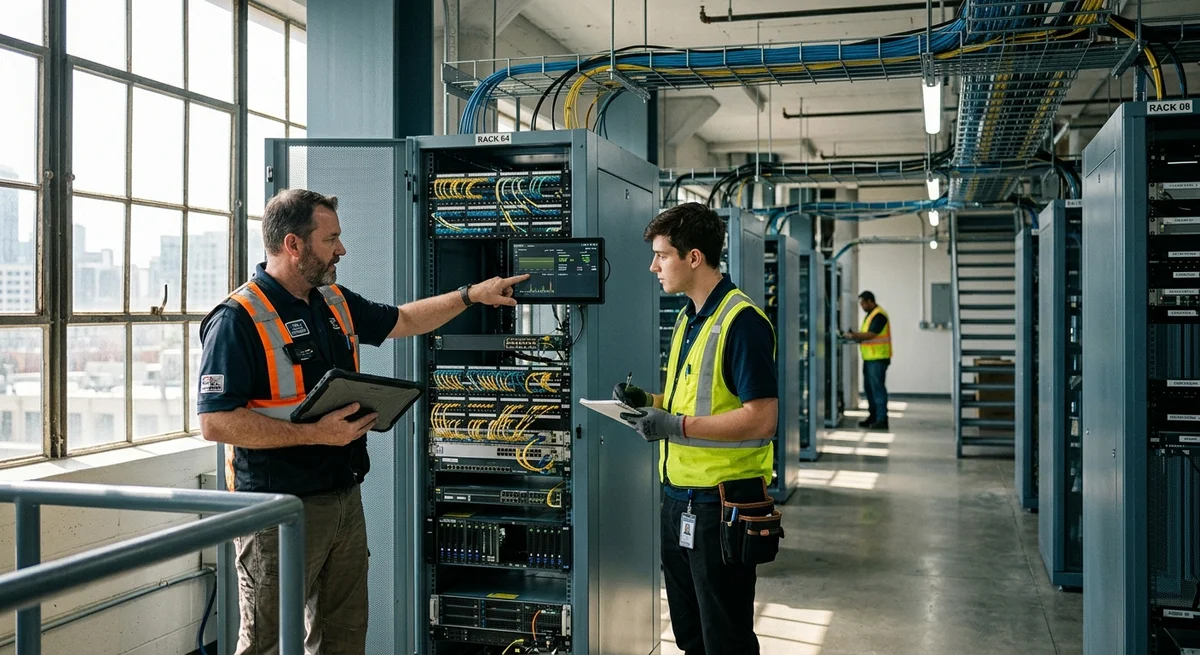
Akamai announced a $1.8 billion investment in building out its AI cloud. In an interview with Bloomberg Open Interest, CEO Tom Leighton explained in detail why this is a strategic move: the industry is shifting away from the hyperscaler model (AWS, Google Cloud, Azure) toward edge computing, which runs workloads at the edge of the network, as close to the end user as possible.
The architecture of the new cloud
Edge computing radically changes the topology. Instead of shipping data off to distant Google or Amazon data centers, processing happens locally: on telecom operators' servers, in customers' offices, in factories. For AI applications, this is critical.
First, speed. If a model runs milliseconds away from the user, latency drops from 50-100ms to 10-20ms. That means real-time responses.
Second, security and privacy. Data doesn't make round trips through the public cloud, so the risk of leaks goes down and the company stays in control.
Third, cost. If you aren't paying for egress traffic or renting GPUs from Amazon at $1/hour, bills fall by 30-50%.
Why defending against AI attacks became the priority
Leighton paid particular attention to cybersecurity. AI-powered attacks are evolving fast: tokens leak from cloud APIs, models get trained on stolen data, and generative AI makes phishing personalized.
If your model runs locally, it's harder to compromise by hitting your cloud provider. This matters most in finance, healthcare, and government, sectors where a breach is expensive.
On top of that, local compute is easier to monitor and control. There's no black box in the cloud and no surprises from API updates.
The three pillars of edge migration
Companies aren't moving to the edge for no reason. These are the main drivers:
- Protection from cyberattacks. AI-powered attacks get smarter every month. Local processing shrinks the attack surface and simplifies compliance oversight.
- Lower operating costs. You don't pay the giants for traffic and GPUs. Edge hosting is cheaper, especially if you're a large corporation with your own infrastructure.
- Data sovereignty. Healthcare companies, banks, and governments don't want their data training competitors through Google's cloud models. Edge lets them keep everything in-house.
The hyperscalers are fighting back, but too late
For AWS, Google Cloud, and Azure, this is an existential threat. The cloud used to be their monopoly. Now competitors — Akamai, Cloudflare, Oracle, Equinix — are convincing customers that edge is cheaper, faster, and more secure.
The giants are launching their own edge services (AWS Local Zones, Google Distributed Cloud, Azure Edge Zones), but the market has already recognized the shift. Investments like Akamai's $1.8B aren't just a corporate maneuver; they turn what used to be an experiment into an industry.
What it means
The cloud landscape is splitting apart before our eyes. Hyperscalers keep the big analytics workloads, model training, and archives. Edge providers are capturing everything else: real-time AI, privacy, local security.
Over the next 3-5 years, this split will become the standard. Akamai's $1.8B bet signals to the industry where the money in cloud AI is growing.
- Nov 1, 2026Google taught its StreamVibe video agent to decide when to step in on its own: +10.7%
- Nov 1, 2026OpenAI Rewrites GPT Behavior Rules: Five Values and a Chain of Command
- Nov 1, 2026Voice bots built on LLMs turn to Jev, a fast classifier, for decisions in 200–500 ms
- Nov 1, 2026Google admits AI Mode cuts search revenue, shares fall 15%
Key Questions Answered
What are the key details on The architecture of the new cloud?
Edge computing radically changes the topology. Instead of shipping data off to distant Google or Amazon data centers, processing happens locally: on telecom operators' servers, in customers' offices, in factories. For AI applications, this is critical. First, speed. If a model runs milliseconds away from the user, latency drops from 50-100ms to 10-20ms. That means real-time responses. Second, security and privacy. Data doesn't make round trips through the public cloud, so the risk of leaks goes down and the company stays in control. Third, cost. If you aren't paying for egr
Why defending against AI attacks became the priority?
Leighton paid particular attention to cybersecurity. AI-powered attacks are evolving fast: tokens leak from cloud APIs, models get trained on stolen data, and generative AI makes phishing personalized. If your model runs locally, it's harder to compromise by hitting your cloud provider. This matters most in finance, healthcare, and government, sectors where a breach is expensive. On top of that, local compute is easier to monitor and control. There's no black box in the cloud and no surprises from API updates.
What are the key details on The three pillars of edge migration?
Companies aren't moving to the edge for no reason. These are the main drivers: Protection from cyberattacks. AI-powered attacks get smarter every month. Local processing shrinks the attack surface and simplifies compliance oversight. Lower operating costs. You don't pay the giants for traffic and GPUs. Edge hosting is cheaper, especially if you're a large corporation with your own infrastructure. Data sovereignty. Healthcare companies, banks, and governments don't want their data training competitors through Google's cloud models. Edge lets them keep everything in-house.
Ship AI Faster with Founders, Engineers & Weekly Architecture Reviews
Inside Vibe Club (hamidun.com/club) — weekly live masterminds with Zhemal Khamidun, Tech Radar, full LMS access, and 370+ production Claude Code skills.
The AI world, distilled — once a week
Seven stories that actually mattered, hand-picked. No noise, no reposts, no press releases.
Done! Check your inbox for a confirmation.