Closing arguments in Musk v. Altman and OpenAI go against the plaintiff
Closing arguments in Musk v. Altman showed a stark contrast between the two sides at the decisive stage of the trial. Elon Musk's lawyer mixed up names, was corrected by the judge and never assembled a convincing legal line. OpenAI's team responded more simply and more effectively: it laid out the evidence in chronological order and showed that in court, documents carry more weight than emotion.
AI-processed from The Verge; edited by Hamidun News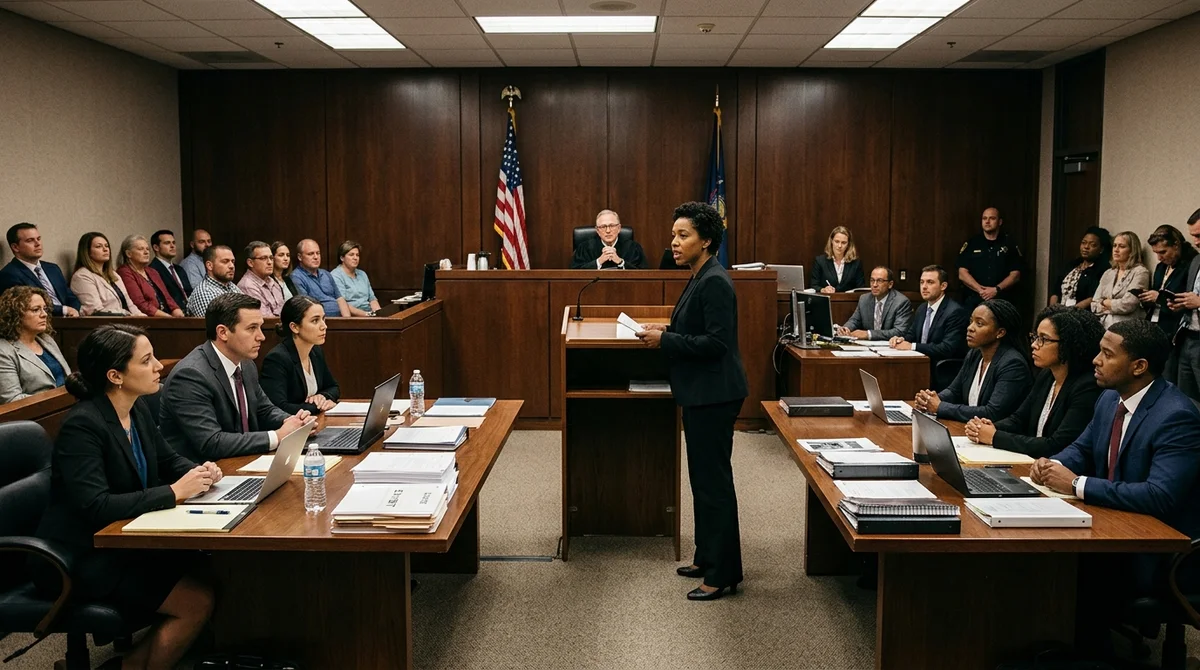
Closing arguments in Musk v. Altman showed a sharp contrast between the two sides. While Elon Musk's team leaned on drama and distrust of OpenAI's leadership, the company's lawyers bet on documents, the sequence of events and the internal logic of the dispute itself.
How the finale unfolded
The most noticeable moment of the day was not a new piece of evidence but how uneven the performance of Musk's lawyer, Steven Molo, looked. He stumbled, mixed up names and at one point called OpenAI co-founder Greg Brockman "Greg Altman." In a trial of this scale, that is more than a slip of the tongue: in closing arguments, a party normally pulls all its arguments into the tightest and most persuasive structure it can.
The judge also had to correct Molo when he wrongly stated that Musk is not seeking money. That hurt not only the rhythm of his presentation but also trust in his interpretation of the lawsuit. Instead of tying testimony, correspondence and legal claims into one firm line, Musk's side returned to general accusations of lying and of abandoning the original mission.
"We have heard a lot of lies over the past few weeks," is how
Musk's side described the course of the trial.
OpenAI's chronology
OpenAI's response looked far more grounded, and therefore stronger. Attorney Sarah Eddy did not try to shout down her opponent with loud phrasing. Instead, she arranged the evidence the company had already entered into the record in chronological order. In closing arguments this matters especially: it is easier for a court to see a cause-and-effect chain than separate emotional episodes.
This is where the main gap between the sides appeared. OpenAI's team showed how decisions, agreements and the company's structure changed over time, while Musk's team insisted more on its own moral reading of the story. In judicial logic, these are different weight classes. Outrage can set the tone, but the outcome is usually determined by how precisely a side ties its claims to documents, facts and wording.
Why it matters
At the root of the conflict is an old fault line inside the AI boom itself: whether one can talk about a mission for the benefit of humanity, build ever more expensive models and sign large commercial partnerships all at once. Musk tries to present this split as a breach of the original agreements. OpenAI, by contrast, presents the organization's evolution as a consistent process backed by records, negotiations and official decisions.
Closing arguments in a case like this are not just a ritual end to the hearings. They are the moment when each side must answer several basic questions on which the outcome depends:
- what exact promises, according to the plaintiff, were made and by whom;
- whether there are documents that confirm those promises, and not only later interpretations;
- how OpenAI's decisions on structure, partnerships and commercialization relate to the claims in the suit;
- whether the plaintiff demands money, restrictions on the company, or both;
- whether witness testimony is enough to support legal accusations, and not only reputational ones.
Against this background, the mistakes in Musk's presentation looked especially painful. When a dispute has reached its last stage, the court expects not a new spectacle but a compact, evidence-based version of the case. If one side gives the court a tidy timeline and the other offers a set of vivid but loosely connected claims, the impression of the trial inevitably shifts.
What it means
If we judge only the closing arguments, and not the entire multi-week trial, OpenAI finished this stage more confidently. For the whole AI industry, this is an important signal: disputes over mission, nonprofit roots and control of frontier models will increasingly be settled not in posts and interviews but in courts, where the winner is not the loudest narrative but the most coherent chain of evidence.
- Nov 1, 2026Local models lose to Opus and Codex: 0.21 on a MacBook versus 1.00 for Codex
- Nov 1, 2026Kimi scores 96.2% on a 1C database analytics test and emerges as a fallback if Claude access is blocked
- Nov 1, 2026OpenAI Rewrites GPT Behavior Rules: Five Values and a Chain of Command
- Nov 1, 2026Google admits AI Mode cuts search revenue, shares fall 15%
Key Questions Answered
How the finale unfolded?
The most noticeable moment of the day was not a new piece of evidence but how uneven the performance of Musk's lawyer, Steven Molo, looked. He stumbled, mixed up names and at one point called OpenAI co-founder Greg Brockman "Greg Altman." In a trial of this scale, that is more than a slip of the tongue: in closing arguments, a party normally pulls all its arguments into the tightest and most persuasive structure it can. The judge also had to correct Molo when he wrongly stated that Musk is not seeking money. That hurt not only the rhythm of his presentation but also trust i
What are the key details on OpenAI's chronology?
OpenAI's response looked far more grounded, and therefore stronger. Attorney Sarah Eddy did not try to shout down her opponent with loud phrasing. Instead, she arranged the evidence the company had already entered into the record in chronological order. In closing arguments this matters especially: it is easier for a court to see a cause-and-effect chain than separate emotional episodes. This is where the main gap between the sides appeared. OpenAI's team showed how decisions, agreements and the company's structure changed over time, while Musk's team insisted more on its o
Why it matters?
At the root of the conflict is an old fault line inside the AI boom itself: whether one can talk about a mission for the benefit of humanity, build ever more expensive models and sign large commercial partnerships all at once. Musk tries to present this split as a breach of the original agreements. OpenAI, by contrast, presents the organization's evolution as a consistent process backed by records, negotiations and official decisions. Closing arguments in a case like this are not just a ritual end to the hearings. They are the moment when each side must answer several basic
Ship AI Faster with Founders, Engineers & Weekly Architecture Reviews
Inside Vibe Club (hamidun.com/club) — weekly live masterminds with Zhemal Khamidun, Tech Radar, full LMS access, and 370+ production Claude Code skills.
The AI world, distilled — once a week
Seven stories that actually mattered, hand-picked. No noise, no reposts, no press releases.
Done! Check your inbox for a confirmation.