Saronic raises $1.75 billion to build uncrewed autonomous warships
Saronic Technologies has secured $1.75 billion to scale production of autonomous military vessels. The round ranks among the most prominent in defense tech. It also shows that investors are willing to back heavy engineering products, not just AI software. The money will go toward building more uncrewed ships, hiring, and expanding the company's manufacturing base over the next few years.
AI-processed from Bloomberg Tech; edited by Hamidun News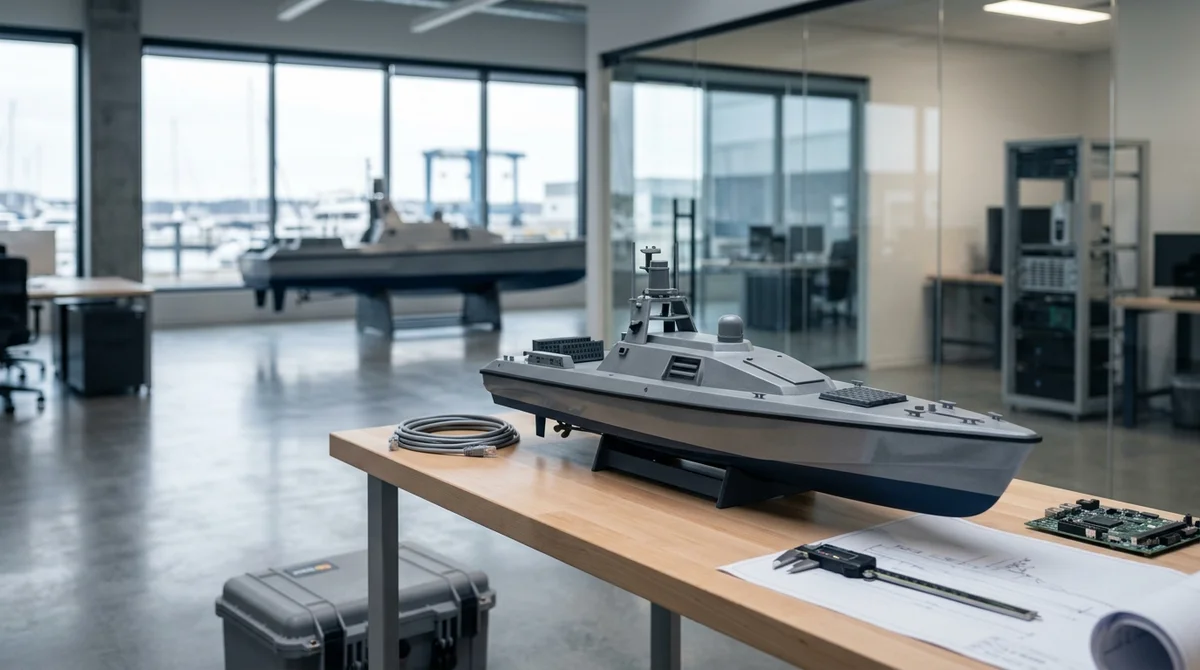
Saronic Technologies has raised $1.75 billion to develop autonomous military boats and ships that operate without a crew. The size of the round shows investors are moving into defense tech more aggressively, especially into projects where AI and autonomy are quickly turning into series production.
Why the round matters
Saronic is a startup that builds uncrewed surface vessels for military missions. The company announced it has raised $1.75 billion, one of the most prominent rounds in defense technology in recent memory. With security budgets growing and autonomous systems drawing more attention, the market is clearly ready to fund heavy engineering infrastructure, not just software. For a young company, that is a rare chance to scale faster than the usual cycle for defense contractors.
The funding matters beyond Saronic itself. It shows that investor interest is shifting from experimental demos to real platforms that can be built in batches and plugged into existing military supply chains. Autonomous vessels were once often treated as a niche story. Now they are a distinct bet on a new class of hardware: platforms that can be produced in batches, deployed faster, and operated without putting personnel directly at risk.
Where the money will go
Saronic's CEO said the new funds will help the company ramp up production of uncrewed ships. A business like this needs money not only for algorithms and electronics but also for its manufacturing base: hulls, propulsion systems, sensor integration, on-water testing, certification, and logistics. In other words, the round isn't aimed at just another prototype. It's aimed at moving to a larger industrial scale.
In practice, the capital could accelerate several areas at once:
- expanding manufacturing capacity to assemble uncrewed vessels;
- buying components and building a resilient supply chain;
- testing, refining, and improving the reliability of autonomous systems;
- hiring engineers, production teams, and defense contracting specialists.
For hardware companies in defense, production is usually the main bottleneck. Writing software or building a demonstrator is faster than setting up steady output of products that must work in harsh environments and meet military requirements. The size of the round looks like an attempt to get ahead of the most expensive stage: turning the technology into a production line where pace, reliability, the ability to fulfill large orders, and on-time delivery to the customer all matter.
Why the market believes
Defense tech investors now see autonomous platforms as one of the most pragmatic segments of the market. Uncrewed surface vessels can handle reconnaissance, patrols, mission escort, and other tasks where keeping a crew on station is either expensive or dangerous. Saronic is riding a strong trend: militaries want more autonomy, and capital is looking for teams that can get a product to delivery rather than stall at the slide-deck stage.
There's a broader context, too. Until recently, defense startups were considered a tough fit for venture capital because of long sales cycles, dependence on government, and expensive hardware. But demand for new systems, faster procurement cycles, and the success of several high-profile players are changing that logic. The closer a company is to real production and a clear customer, the easier it is to raise big money. Judging by the size of the deal, Saronic has convinced the market it has reached exactly that stage of maturity.
What it means
Saronic's round signals that autonomous military hardware is becoming an industrial category with serious funding rather than a lab curiosity. For the AI market, it's another reminder that the biggest bets are increasingly placed not only on models and software but also on systems where algorithms control physical machines in the real world. If the trend holds, the line between an AI startup and an industrial company will blur even faster.
- Nov 1, 2026Local models lose to Opus and Codex: 0.21 on a MacBook versus 1.00 for Codex
- Nov 1, 2026Adobe's EditAgent judge picks a usable edit 81.3% of the time, versus 74.8% for EditScore
- Nov 1, 202616 models tested on 7 search tools: Exa averaged 10.5 out of 14, SearXNG about 3
- Nov 1, 2026Google's StreamVibe video agent beats other models by 10.7% on response timing and quality
Key Questions Answered
Why the round matters?
Saronic is a startup that builds uncrewed surface vessels for military missions. The company announced it has raised $1.75 billion, one of the most prominent rounds in defense technology in recent memory. With security budgets growing and autonomous systems drawing more attention, the market is clearly ready to fund heavy engineering infrastructure, not just software. For a young company, that is a rare chance to scale faster than the usual cycle for defense contractors. The funding matters beyond Saronic itself. It shows that investor interest is shifting from experimental
Where the money will go?
Saronic's CEO said the new funds will help the company ramp up production of uncrewed ships. A business like this needs money not only for algorithms and electronics but also for its manufacturing base: hulls, propulsion systems, sensor integration, on-water testing, certification, and logistics. In other words, the round isn't aimed at just another prototype. It's aimed at moving to a larger industrial scale. In practice, the capital could accelerate several areas at once: expanding manufacturing capacity to assemble uncrewed vessels; buying components and building a resil
Why the market believes?
Defense tech investors now see autonomous platforms as one of the most pragmatic segments of the market. Uncrewed surface vessels can handle reconnaissance, patrols, mission escort, and other tasks where keeping a crew on station is either expensive or dangerous. Saronic is riding a strong trend: militaries want more autonomy, and capital is looking for teams that can get a product to delivery rather than stall at the slide-deck stage. There's a broader context, too. Until recently, defense startups were considered a tough fit for venture capital because of long sales cycle
Test Frontier LLMs & Autonomous Agents in One Workspace
Run Claude Opus 5.5, GPT-6, Gemini 3.1, and DeepSeek side-by-side in Nomad AI (nomadnet.ai) — unified model routing, deep research, and multimodal workflows under one subscription.
The AI world, distilled — once a week
Seven stories that actually mattered, hand-picked. No noise, no reposts, no press releases.
Done! Check your inbox for a confirmation.