Musk admits in court that xAI partly trained Grok on OpenAI models
At a hearing in his lawsuit against OpenAI, Elon Musk acknowledged that xAI used distillation of OpenAI models "partly" when training Grok. It is an important signal for the whole market: the largest labs are trying to shut this route for competitors, because it lets them build nearly comparable models more cheaply and quickly. The admission came in open court, where Musk himself is attacking OpenAI for abandoning its original mission.
AI-processed from TechCrunch; edited by Hamidun News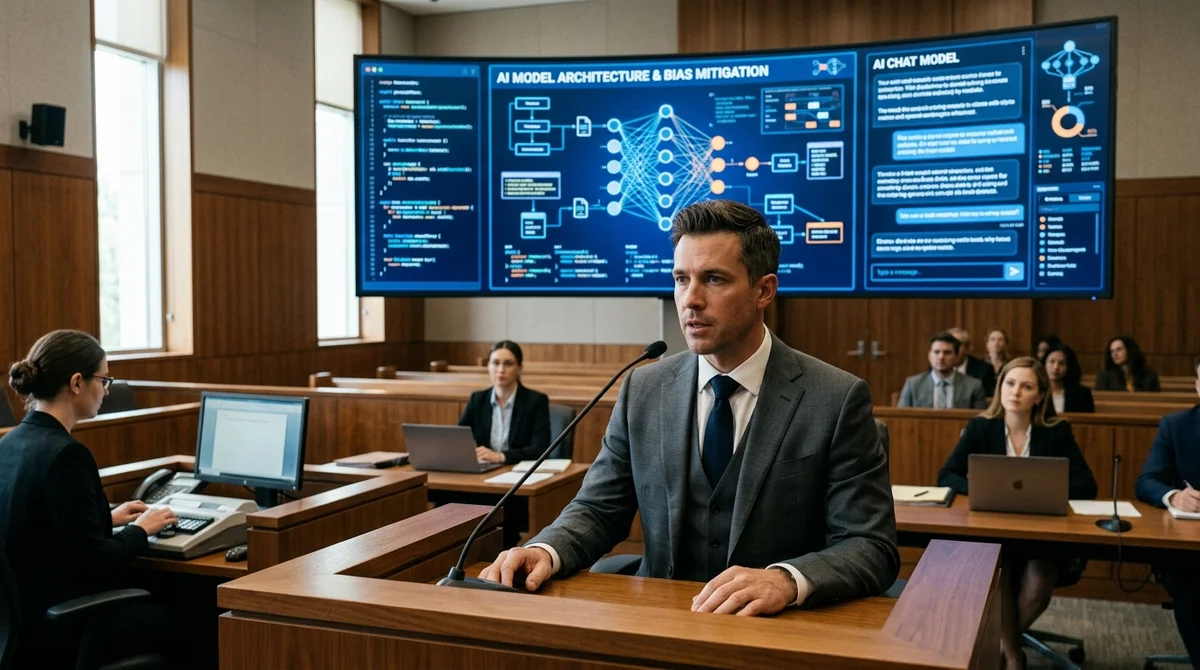
Elon Musk acknowledged at a hearing in a California federal court that xAI did use OpenAI models when training Grok. For the industry, it is one of the most awkward admissions of the year: companies publicly fight distillation, yet in practice they appear to apply it to one another as well.
An admission in court
During his testimony, Musk was asked directly whether xAI used distillation on OpenAI models to train Grok. He first answered that the practice is generally common among AI companies. When the question was narrowed and he was asked to put it simply, whether that meant "yes", Musk answered: "partly".
It is the first public acknowledgment that one of the most prominent American AI companies relied on a competitor's outputs to train its own model.
The statement was made not at an industry conference or on a podcast, but in a courtroom where Musk himself is the plaintiff against OpenAI, Sam Altman and Greg Brockman. He claims OpenAI abandoned its original nonprofit mission and shifted to a commercial structure. Against that backdrop, the Grok admission looks especially sensitive: the dispute is not only about OpenAI's values and structure, but also about how the race between labs actually works.
Why the dispute is so heated
Distillation usually means training a new model on the answers of a stronger system through a public chat or API. This approach does not yield the original weights, but it helps reproduce answer style, reasoning and some useful behavior patterns. For smaller players it is a shortcut: instead of repeating the whole expensive cycle of research and training from scratch, they take the leader's behavior as a reference and get a nearly comparable result faster.
"Partly,"
Musk said when asked whether xAI used distillation of OpenAI models to train Grok.
That is why the topic has become so toxic for market leaders. In recent months OpenAI and Anthropic have spoken more and more about protecting their models from systematic queries that competitors can use to collect large sets of answers for training. Until now the public focus was often on Chinese companies, which try to build cheaper open-weight models this way. But Musk's testimony confirms what the industry had long suspected: American labs likely use similar tricks against each other too.
What Musk said
There is an important legal detail here: distillation by itself may not be directly prohibited by law, but it can well violate a service's terms of use. This is where one of the AI market's main future conflicts lies. If the practice is not clearly illegal, big companies will have to defend themselves less through copyright lawsuits and more through API restrictions, monitoring of suspicious bulk requests and industry agreements.
A few more details help set the context:
- OpenAI, Anthropic and Google were reported to share information on fighting distillation attempts through the Frontier Model Forum.
- One defense method is tracking suspicious bulk requests to models through chat and API.
- At the time of publication, OpenAI had not responded to a request for comment on Musk's words.
- Later in the same testimony, Musk ranked Anthropic first among AI companies, followed by OpenAI, Google and Chinese open-source models.
- He described xAI as a far smaller company with a few hundred employees.
This part of the testimony matters too. On one hand, Musk effectively admits that the young xAI depended on stronger players early on. On the other, it shows how normalized the idea of "learning" from a competitor through its public product has become. For the market it is another signal: the race is not only about compute and talent, but also about who restricts access to their model's behavior better.
What this means
The Grok story shows that the dispute over distillation has long moved beyond theory and geopolitics. While big labs talk about protection against copying, the mechanics of training remain a gray zone where competitors fight each other and borrow from each other at the same time.
For users and businesses, this means the fight for AI leadership is shifting more and more from model quality to control over who can retrain models, and how.
- Nov 1, 2026Local models lose to Opus and Codex: 0.21 on a MacBook versus 1.00 for Codex
- Nov 1, 2026Kimi scores 96.2% on a 1C database analytics test and emerges as a fallback if Claude access is blocked
- Nov 1, 2026OpenAI Rewrites GPT Behavior Rules: Five Values and a Chain of Command
- Nov 1, 2026Google admits AI Mode cuts search revenue, shares fall 15%
Key Questions Answered
What are the key details on An admission in court?
During his testimony, Musk was asked directly whether xAI used distillation on OpenAI models to train Grok. He first answered that the practice is generally common among AI companies. When the question was narrowed and he was asked to put it simply, whether that meant "yes", Musk answered: "partly". It is the first public acknowledgment that one of the most prominent American AI companies relied on a competitor's outputs to train its own model. The statement was made not at an industry conference or on a podcast, but in a courtroom where Musk himself is the plaintiff agains
Why the dispute is so heated?
Distillation usually means training a new model on the answers of a stronger system through a public chat or API. This approach does not yield the original weights, but it helps reproduce answer style, reasoning and some useful behavior patterns. For smaller players it is a shortcut: instead of repeating the whole expensive cycle of research and training from scratch, they take the leader's behavior as a reference and get a nearly comparable result faster. "Partly," Musk said when asked whether xAI used distillation of OpenAI models to train Grok. That is why the topic has
What Musk said?
There is an important legal detail here: distillation by itself may not be directly prohibited by law, but it can well violate a service's terms of use. This is where one of the AI market's main future conflicts lies. If the practice is not clearly illegal, big companies will have to defend themselves less through copyright lawsuits and more through API restrictions, monitoring of suspicious bulk requests and industry agreements. A few more details help set the context: OpenAI, Anthropic and Google were reported to share information on fighting distillation attempts through
Ship AI Faster with Founders, Engineers & Weekly Architecture Reviews
Inside Vibe Club (hamidun.com/club) — weekly live masterminds with Zhemal Khamidun, Tech Radar, full LMS access, and 370+ production Claude Code skills.
The AI world, distilled — once a week
Seven stories that actually mattered, hand-picked. No noise, no reposts, no press releases.
Done! Check your inbox for a confirmation.