Elon Musk admits xAI used OpenAI models to train and improve Grok
Elon Musk confirmed in court that xAI "partly" used OpenAI models to improve Grok. The technique is distillation, in which a stronger model helps train a smaller or cheaper one. Against the backdrop of Musk's lawsuit against OpenAI, the admission is especially awkward: practices like this are increasingly a source of disputes between AI companies.
AI-processed from The Verge; edited by Hamidun News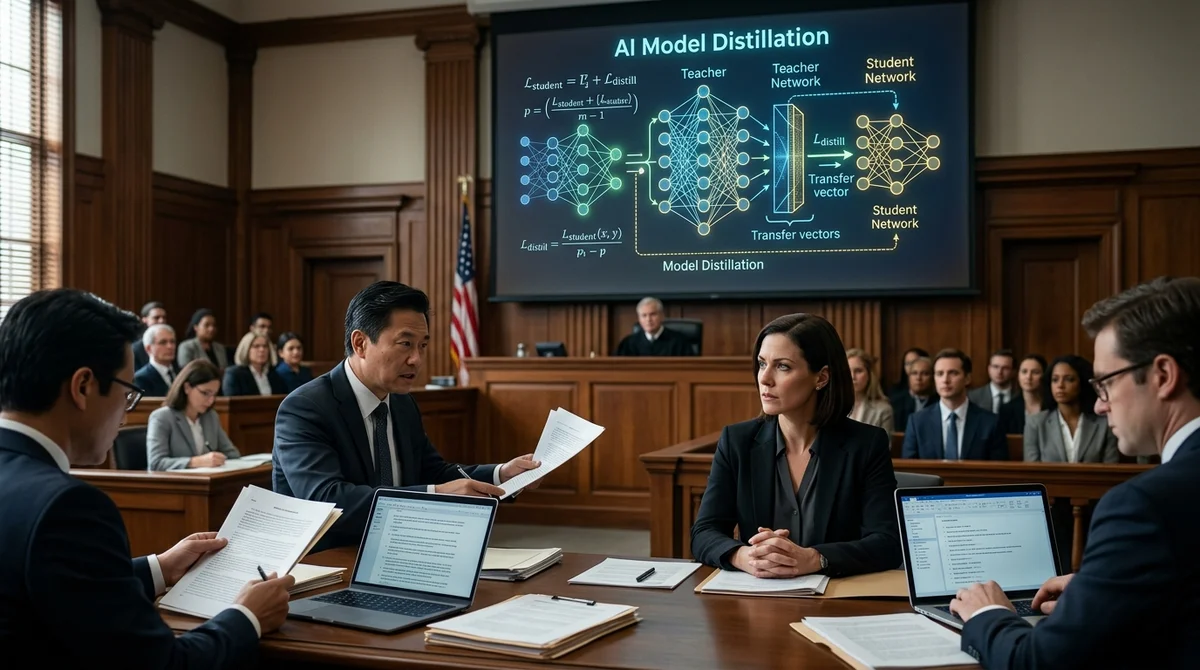
During hearings in his lawsuit against OpenAI, Elon Musk confirmed that xAI used OpenAI models to improve Grok. In court he called it only a "partial" practice, but that was enough to put one of the most contested methods of training modern AI systems in the public eye.
What Musk admitted
At a federal court hearing in California, Musk was asked whether he knew what model distillation is and whether xAI had applied that approach to OpenAI's technology. He first answered evasively, noting that "all AI companies in general" do something similar one way or another. When lawyers pressed on whether that meant "yes," Musk answered briefly: "partly."
The admission matters for more than xAI's own sake. It came in a trial in which Musk is trying to prove that OpenAI has drifted from its original mission and is acting contrary to the purpose for which he helped launch the company. Against that backdrop, admitting to the use of a competitor's models is politically and legally sensitive. In effect, it is an admission of a practice that market players themselves increasingly cite in public complaints against one another.
How distillation works
Model distillation is a scheme in which a larger, stronger system acts as the "teacher" and a smaller model as the "student." Instead of training a new model only on raw data, developers use the answers, scores or behavioral patterns of the more powerful model and pass them on to the student. This helps raise quality faster and saves computing resources.
"Using other AIs to check your own AI is standard practice."
Inside a single company, this approach has long been considered normal: labs regularly shrink their own flagship models to release cheaper, faster versions. The problem starts when a competitor's model plays the role of teacher. The question is then no longer only technical but also legal: is this fair optimization, or an attempt to cheaply copy someone else's capabilities? This is where the main line of tension runs, between development speed and the protection of intellectual advantage.
Why the dispute is growing
That is why distillation has become one of the most painful topics in the AI market. The method itself is not formally prohibited, but the limits of what is acceptable often come down to terms of service, internal policies and how exactly the training data was collected. Because of this gray area, companies increasingly accuse each other not of directly copying code but of transferring model behavior. There are few court precedents so far, so the rules of the game in this area are essentially being written in real time.
- Distillation lowers training costs and speeds up the release of new models.
- It lets smaller labs catch up with market leaders faster.
- Using an external model may violate the terms of service of its owner.
- It is very hard to prove where "validation" ends and copying of capabilities begins.
OpenAI previously expressed public concern that its models could be used for such purposes, while Anthropic separately named DeepSeek, Moonshot and MiniMax among the companies that raise questions for it. Google is also trying to defend itself against what it calls "distillation attacks" and violations of its terms of use. It now turns out that even the parties to the industry's most high-profile legal conflicts are not themselves standing aside from this practice.
What this means
The xAI episode shows that distillation has finally become a market norm, even if companies criticize it publicly when competitors do it. For the industry, this is a signal: disputes around AI will increasingly be about more than data and copyright. They will also be about whether you can "learn" from someone else's model without breaking the rules. Such cases may determine where, in the coming years, the line falls between competitive intelligence, engineering optimization and violation of platform rules.
- Nov 1, 2026Local models lose to Opus and Codex: 0.21 on a MacBook versus 1.00 for Codex
- Nov 1, 2026Kimi scores 96.2% on a 1C database analytics test and emerges as a fallback if Claude access is blocked
- Nov 1, 2026OpenAI Rewrites GPT Behavior Rules: Five Values and a Chain of Command
- Nov 1, 2026Google admits AI Mode cuts search revenue, shares fall 15%
Key Questions Answered
What Musk admitted?
At a federal court hearing in California, Musk was asked whether he knew what model distillation is and whether xAI had applied that approach to OpenAI's technology. He first answered evasively, noting that "all AI companies in general" do something similar one way or another. When lawyers pressed on whether that meant "yes," Musk answered briefly: "partly." The admission matters for more than xAI's own sake. It came in a trial in which Musk is trying to prove that OpenAI has drifted from its original mission and is acting contrary to the purpose for which he helped launch
How distillation works?
Model distillation is a scheme in which a larger, stronger system acts as the "teacher" and a smaller model as the "student." Instead of training a new model only on raw data, developers use the answers, scores or behavioral patterns of the more powerful model and pass them on to the student. This helps raise quality faster and saves computing resources. "Using other AIs to check your own AI is standard practice." Inside a single company, this approach has long been considered normal: labs regularly shrink their own flagship models to release cheaper, faster versions. The p
Why the dispute is growing?
That is why distillation has become one of the most painful topics in the AI market. The method itself is not formally prohibited, but the limits of what is acceptable often come down to terms of service, internal policies and how exactly the training data was collected. Because of this gray area, companies increasingly accuse each other not of directly copying code but of transferring model behavior. There are few court precedents so far, so the rules of the game in this area are essentially being written in real time. Distillation lowers training costs and speeds up the r
Ship AI Faster with Founders, Engineers & Weekly Architecture Reviews
Inside Vibe Club (hamidun.com/club) — weekly live masterminds with Zhemal Khamidun, Tech Radar, full LMS access, and 370+ production Claude Code skills.
The AI world, distilled — once a week
Seven stories that actually mattered, hand-picked. No noise, no reposts, no press releases.
Done! Check your inbox for a confirmation.