Musk admits under oath that xAI distilled OpenAI models to build its own systems
Elon Musk effectively confirmed under oath that xAI used OpenAI models to train its own systems through distillation. Asked by lawyers, he did not deny it and said this is standard practice in the AI industry. OpenAI's terms of use explicitly prohibit using its outputs to train competing systems. If a court rules this a violation, the precedent would affect the entire industry.
AI-processed from Wired; edited by Hamidun News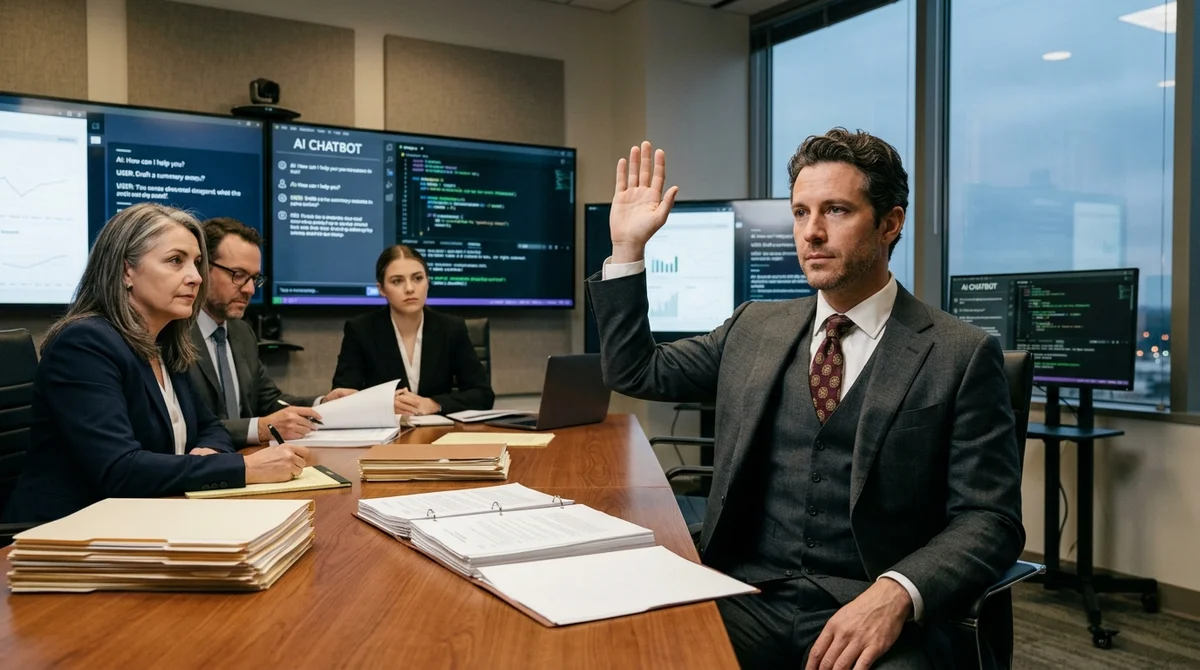
Elon Musk effectively confirmed in sworn testimony that xAI used OpenAI models for distillation when training its own systems. Asked by lawyers, he did not deny using competitors' models and said it is standard practice across the AI industry.
What happened at the deposition
Musk testified in legal proceedings tied to his long-running conflict with OpenAI. The testimony was disclosed during the case: according to the transcript, lawyers asked directly whether xAI used outputs from OpenAI models when training Grok. Musk effectively confirmed it, pointing to an industry norm.
Distillation is a neural network training technique in which one model learns to reproduce the behavior of another, larger one. It makes it possible to build compact, efficient systems without enormous compute costs. The technique is common in the industry, but its use in this case raises serious legal questions.
OpenAI's terms of use explicitly prohibit using its models' outputs to train competing AI systems. If xAI violated that clause, this is no longer a matter of industry norms but of a potential breach of contract.
The "everyone does it" argument
Musk built his defense around the claim that such practices are widespread. That is partly true: the boundaries around AI training data remain blurry, and many companies use synthetically generated data or distillation from other companies' models.
- OpenAI reportedly used YouTube data to train GPT-4, despite conflicting with the platform's terms
- Meta released Llama, whose dataset turned out to contain text generated by ChatGPT; the company later removed it at OpenAI's request
- Several Chinese AI startups were accused of distilling OpenAI models to build cheap analogues
- Synthetic data from some models has become the basic raw material for training others, and this is rarely disclosed publicly
Still, a sworn admission means one thing: Musk himself put the fact on the record for the court. OpenAI can now use his testimony to its advantage.
The Musk–OpenAI conflict
Musk is one of OpenAI's founders and put about 50 million dollars into the company at the start. In 2018 he left the board, citing a conflict of interest with Tesla. He then repeatedly attacked the company publicly and in 2024 sued it, accusing it of abandoning its original nonprofit mission.
Alongside the lawsuits, Musk founded xAI and launched Grok, a competing chatbot available to users of the X platform. Against this backdrop, the admission that Grok may have been trained on OpenAI data puts him in an awkward position: the company he is attacking in court turned out to be part of his own technology stack.
"This is standard practice for AI labs,"
Musk said during questioning.
What this means
The story raises a question that has been brewing in the AI industry for some time: are model terms of use legally binding if violations are practically impossible to verify? If a court rules that distilling competing models breaches a contract, the precedent would affect the entire industry, from large labs to startups building products on top of other companies' APIs.
*Meta has been designated an extremist organization and banned in Russia.
- Nov 1, 2026Local models lose to Opus and Codex: 0.21 on a MacBook versus 1.00 for Codex
- Nov 1, 2026Kimi scores 96.2% on a 1C database analytics test and emerges as a fallback if Claude access is blocked
- Nov 1, 2026OpenAI Rewrites GPT Behavior Rules: Five Values and a Chain of Command
- Nov 1, 2026Google admits AI Mode cuts search revenue, shares fall 15%
Key Questions Answered
What happened at the deposition?
Musk testified in legal proceedings tied to his long-running conflict with OpenAI. The testimony was disclosed during the case: according to the transcript, lawyers asked directly whether xAI used outputs from OpenAI models when training Grok. Musk effectively confirmed it, pointing to an industry norm. Distillation is a neural network training technique in which one model learns to reproduce the behavior of another, larger one. It makes it possible to build compact, efficient systems without enormous compute costs. The technique is common in the industry, but its use in th
What are the key details on The "everyone does it" argument?
Musk built his defense around the claim that such practices are widespread. That is partly true: the boundaries around AI training data remain blurry, and many companies use synthetically generated data or distillation from other companies' models. OpenAI reportedly used YouTube data to train GPT-4, despite conflicting with the platform's terms Meta released Llama, whose dataset turned out to contain text generated by ChatGPT; the company later removed it at OpenAI's request Several Chinese AI startups were accused of distilling OpenAI models to build cheap analogues Synthe
What are the key details on The Musk–OpenAI conflict?
Musk is one of OpenAI's founders and put about 50 million dollars into the company at the start. In 2018 he left the board, citing a conflict of interest with Tesla. He then repeatedly attacked the company publicly and in 2024 sued it, accusing it of abandoning its original nonprofit mission. Alongside the lawsuits, Musk founded xAI and launched Grok, a competing chatbot available to users of the X platform. Against this backdrop, the admission that Grok may have been trained on OpenAI data puts him in an awkward position: the company he is attacking in court turned out to
Test Frontier LLMs & Autonomous Agents in One Workspace
Run Claude Opus 5.5, GPT-6, Gemini 3.1, and DeepSeek side-by-side in Nomad AI (nomadnet.ai) — unified model routing, deep research, and multimodal workflows under one subscription.
The AI world, distilled — once a week
Seven stories that actually mattered, hand-picked. No noise, no reposts, no press releases.
Done! Check your inbox for a confirmation.