Murati testifies in court that Altman lied to her about AI safety standards
At the Musk v. Altman trial, the court played a video deposition of Mira Murati, OpenAI's former CTO. She testified under oath that CEO Sam Altman lied to her about safety standards for a new AI model. Altman allegedly told her that the legal department had cleared the model to skip review by the company's safety board. Asked in court whether he had been truthful, Murati answered "No."
AI-processed from The Verge; edited by Hamidun News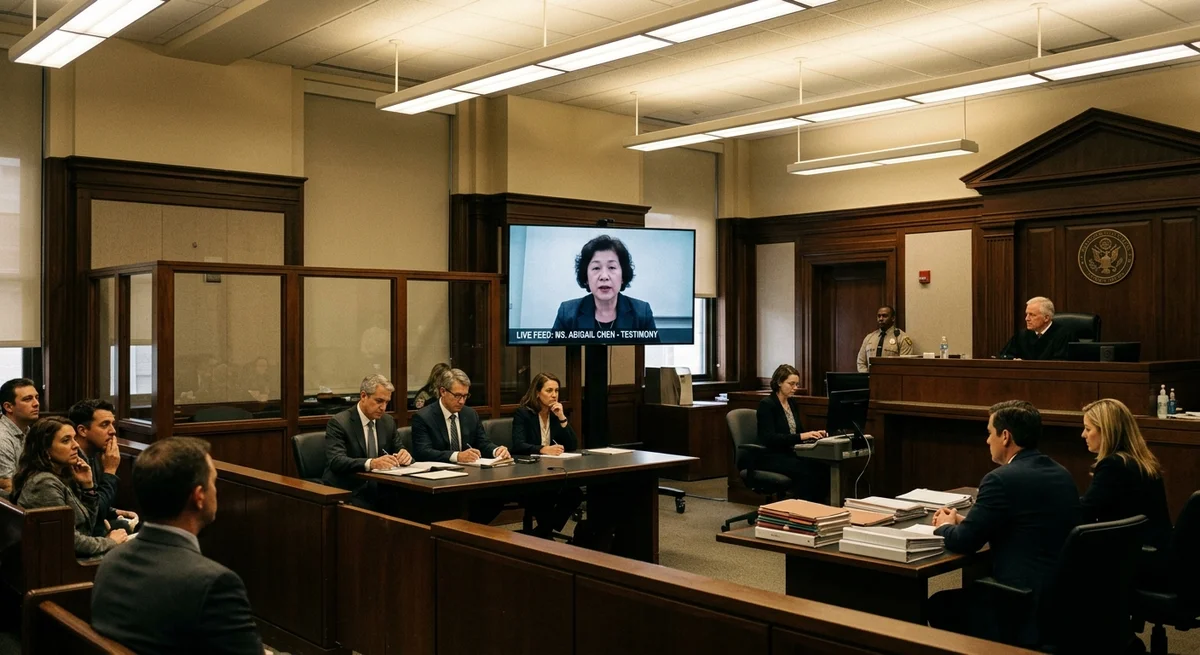
On Wednesday, the Musk v. Altman trial heard the video deposition of Mira Murati, OpenAI's former CTO. Murati testified under oath that CEO Sam Altman lied to her about safety standards for a new AI model, which could have serious consequences for the company's reputation and leadership.
Murati's testimony in court
Murati said Altman allegedly told her that OpenAI's legal department had determined the new AI model did not have to go through the company's safety board before deployment. According to Murati, that statement was false.
When the attorney asked her directly, "Was Altman truthful in that statement?", she gave a clear answer: "No." This was not merely a disagreement or a difference of interpretation, but a direct accusation that the CEO deliberately lied to a member of the company's leadership.
The video lends the testimony an air of authenticity. Murati answered clearly and without hesitation. Her testimony was played in court as part of the lawsuit brought by Elon Musk, who accuses OpenAI and Altman of abandoning the company's original nonprofit mission.
Problems in running OpenAI
Murati also described another side of the conflict: she said that during her time at OpenAI, Altman made her day-to-day management work significantly harder. Her criticism of his leadership style made her job more difficult and created a tense atmosphere.
This personal conflict between Murati and Altman is not the first rift exposed at trial. As the proceedings go on, questions keep surfacing about how OpenAI interprets its mission, whether it remains faithful to the principles of a nonprofit, and to what extent it let commercial interests outweigh charitable goals.
What the dispute is about
Musk v. Altman examines Elon Musk's claims against Sam Altman and OpenAI as a whole. Musk argues that the company departed radically from its original goals of being a nonprofit with a mission to benefit all of humanity. In his view, OpenAI has turned into an ordinary for-profit company chasing revenue.
Murati's testimony is one of the key moments of the case. The former CTO was aware of the most important decisions on AI model safety and deployment protocols. If other evidence corroborates her account, it could significantly affect the outcome of the case.
What it means
Murati's testimony that Altman lied points to deep internal tension at OpenAI over AI safety and corporate governance. If the court establishes the truth of her account, it could seriously erode trust in the company's leadership and force a rethink of its internal safety decision-making processes.
- Nov 1, 2026Local models lose to Opus and Codex: 0.21 on a MacBook versus 1.00 for Codex
- Nov 1, 2026Kimi scores 96.2% on a 1C database analytics test and emerges as a fallback if Claude access is blocked
- Nov 1, 2026OpenAI Rewrites GPT Behavior Rules: Five Values and a Chain of Command
- Nov 1, 2026Google admits AI Mode cuts search revenue, shares fall 15%
Key Questions Answered
What are the key details on Murati's testimony in court?
Murati said Altman allegedly told her that OpenAI's legal department had determined the new AI model did not have to go through the company's safety board before deployment. According to Murati, that statement was false. When the attorney asked her directly, "Was Altman truthful in that statement?", she gave a clear answer: "No." This was not merely a disagreement or a difference of interpretation, but a direct accusation that the CEO deliberately lied to a member of the company's leadership. The video lends the testimony an air of authenticity. Murati answered clearly and
What are the key details on Problems in running OpenAI?
Murati also described another side of the conflict: she said that during her time at OpenAI, Altman made her day-to-day management work significantly harder. Her criticism of his leadership style made her job more difficult and created a tense atmosphere. This personal conflict between Murati and Altman is not the first rift exposed at trial. As the proceedings go on, questions keep surfacing about how OpenAI interprets its mission, whether it remains faithful to the principles of a nonprofit, and to what extent it let commercial interests outweigh charitable goals.
What the dispute is about?
Musk v. Altman examines Elon Musk's claims against Sam Altman and OpenAI as a whole. Musk argues that the company departed radically from its original goals of being a nonprofit with a mission to benefit all of humanity. In his view, OpenAI has turned into an ordinary for-profit company chasing revenue. Murati's testimony is one of the key moments of the case. The former CTO was aware of the most important decisions on AI model safety and deployment protocols. If other evidence corroborates her account, it could significantly affect the outcome of the case.
Test Frontier LLMs & Autonomous Agents in One Workspace
Run Claude Opus 5.5, GPT-6, Gemini 3.1, and DeepSeek side-by-side in Nomad AI (nomadnet.ai) — unified model routing, deep research, and multimodal workflows under one subscription.
The AI world, distilled — once a week
Seven stories that actually mattered, hand-picked. No noise, no reposts, no press releases.
Done! Check your inbox for a confirmation.