Musk v. OpenAI: Trial Opens Over the Alleged "Theft of a Charitable Mission"
One of the year's biggest tech trials has begun in Oakland. Elon Musk accuses OpenAI and Sam Altman of turning a nonprofit project into an "enrichment machine." The defense answers that Musk simply never got control of the company. At stake: up to $134 billion, OpenAI's future structure, and a potentially powerful precedent for the entire AI industry.
AI-processed from TNW; edited by Hamidun News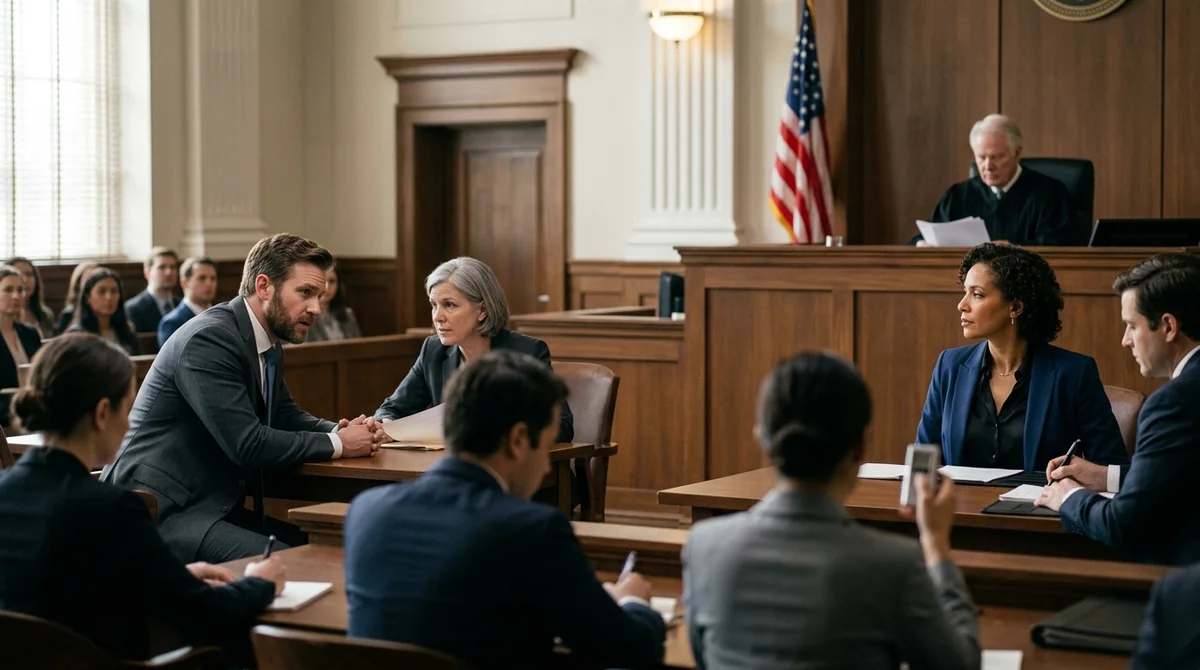
On April 28, 2026, opening statements began in a federal court in Oakland in the case of Elon Musk against OpenAI, Sam Altman, Greg Brockman and Microsoft. On day one, the two sides gave jurors two incompatible versions of the company's history: "stolen charity" versus a dispute over lost control.
Two versions of OpenAI
Musk's attorney Steven Molo reduced the dispute to a moral formula from the outset. In his telling, OpenAI was created as a nonprofit to develop artificial intelligence safely, and the company's leadership then turned it into a profit-extraction mechanism. Molo pointed to Musk's donations, which he put at roughly $38 million, and compared the situation to a museum that opened a gift shop and then began selling off its own collection. The core claim: the shift to a commercial model broke the original commitments not only to a co-founder but to the public.
"We are here because the defendants stole a charity."
OpenAI's defense responded just as sharply. Attorney William Savitt said the case is not about mission but about control: Musk allegedly tried to bring OpenAI under his own authority as early as 2017 and wanted to merge it with Tesla. When that failed, he left, predicted the project would fail, and is now contesting his former partners' success in court. To back this version, the defense showed a letter from Shivon Zilis to Musk's aide Sam Teller discussing options for a corporate restructuring with a for-profit arm. The argument is simple: Musk knew such schemes were under consideration and did not object while he still had a chance at influence.
What is at stake
Right after opening statements, Musk himself took the stand and became the first witness. He told jurors the case is not about personal gain but about a dangerous precedent: if it is possible to "loot a charity," that would hit the very logic of philanthropy. The suit now centers on two remaining claims: unjust enrichment and breach of charitable trust. Musk has dropped personal monetary claims and said any recovery should go back to OpenAI's nonprofit arm.
- Return of up to $134 billion in alleged wrongful gains to OpenAI's nonprofit foundation
- Removal of Sam Altman from the board and as CEO
- Removal of Greg Brockman as the company's president
- A possible rollback of OpenAI to its original nonprofit structure
- A separate remedies phase after May 18, 2026, if the court finds grounds for liability
The trial is split into two parts. First comes the liability phase, where the verdict of a nine-member advisory jury will serve as a recommendation to Judge Yvonne Gonzalez Rogers. Only then, if Musk's position wins support, will a separate discussion of specific remedies begin. The court has already allotted the parties limited time, and potential witnesses include Satya Nadella, Ilya Sutskever, Mira Murati, and experts on AI safety and charitable-trust law. By schedule, the proceedings could take about four weeks.
Background and stakes
The trial matters for more than the clash of two public figures. In essence, the court must answer whether an AI lab's original public mission can survive the arrival of tens of billions of dollars and a complex corporate restructuring. Musk's side sees Microsoft's $10 billion investment in January 2023 as the turning point, after which, in its telling, OpenAI finally became a "wealth machine." OpenAI builds its defense on the claim that the commercial arm was known in advance and that the current suit is driven primarily by competition and the launch of xAI.
Musk's own conduct adds tension. Before the hearings, OpenAI's lawyers complained to the judge about his social media posts, in which he called Altman a fraudster and repeated the "theft of charity" line. The judge publicly asked Musk not to make things worse with comments outside the courtroom. It is a telling detail: the dispute is not only about documents, letters and company structure, but also about trust in a man who demands limits on concentrated power in AI while being known for seeking tight control over his own companies.
What this means
If the court finds that OpenAI broke its original nonprofit mission, it will send a strong legal signal to the whole AI industry: capital and public purpose can no longer be reconciled with nice-sounding wording alone. If the defense wins, the market will draw the opposite lesson: founders and donors cannot rewrite the rules years later, once the company has grown into a giant.
- Nov 1, 2026Local models lose to Opus and Codex: 0.21 on a MacBook versus 1.00 for Codex
- Nov 1, 2026Kimi scores 96.2% on a 1C database analytics test and emerges as a fallback if Claude access is blocked
- Nov 1, 2026OpenAI Rewrites GPT Behavior Rules: Five Values and a Chain of Command
- Nov 1, 2026Google admits AI Mode cuts search revenue, shares fall 15%
Key Questions Answered
What are the key details on Two versions of OpenAI?
Musk's attorney Steven Molo reduced the dispute to a moral formula from the outset. In his telling, OpenAI was created as a nonprofit to develop artificial intelligence safely, and the company's leadership then turned it into a profit-extraction mechanism. Molo pointed to Musk's donations, which he put at roughly $38 million, and compared the situation to a museum that opened a gift shop and then began selling off its own collection. The core claim: the shift to a commercial model broke the original commitments not only to a co-founder but to the public. "We are here becaus
What is at stake?
Right after opening statements, Musk himself took the stand and became the first witness. He told jurors the case is not about personal gain but about a dangerous precedent: if it is possible to "loot a charity," that would hit the very logic of philanthropy. The suit now centers on two remaining claims: unjust enrichment and breach of charitable trust. Musk has dropped personal monetary claims and said any recovery should go back to OpenAI's nonprofit arm. Return of up to $134 billion in alleged wrongful gains to OpenAI's nonprofit foundation Removal of Sam Altman from the
What are the key details on Background and stakes?
The trial matters for more than the clash of two public figures. In essence, the court must answer whether an AI lab's original public mission can survive the arrival of tens of billions of dollars and a complex corporate restructuring. Musk's side sees Microsoft's $10 billion investment in January 2023 as the turning point, after which, in its telling, OpenAI finally became a "wealth machine." OpenAI builds its defense on the claim that the commercial arm was known in advance and that the current suit is driven primarily by competition and the launch of xAI. Musk's own con
Test Frontier LLMs & Autonomous Agents in One Workspace
Run Claude Opus 5.5, GPT-6, Gemini 3.1, and DeepSeek side-by-side in Nomad AI (nomadnet.ai) — unified model routing, deep research, and multimodal workflows under one subscription.
The AI world, distilled — once a week
Seven stories that actually mattered, hand-picked. No noise, no reposts, no press releases.
Done! Check your inbox for a confirmation.