Musk v. OpenAI Trial Begins, and the Fight Over the Company's Mission Weighs on IPO Plans
The key trial between Elon Musk and OpenAI has started in California. A jury has been seated, and the parties have moved on to arguments. Musk claims the company abandoned its nonprofit mission and effectively became a commercial AI giant. For OpenAI this is more than a reputational fight: court filings and possible structural demands could complicate its road to an IPO.
AI-processed from Bloomberg Tech; edited by Hamidun News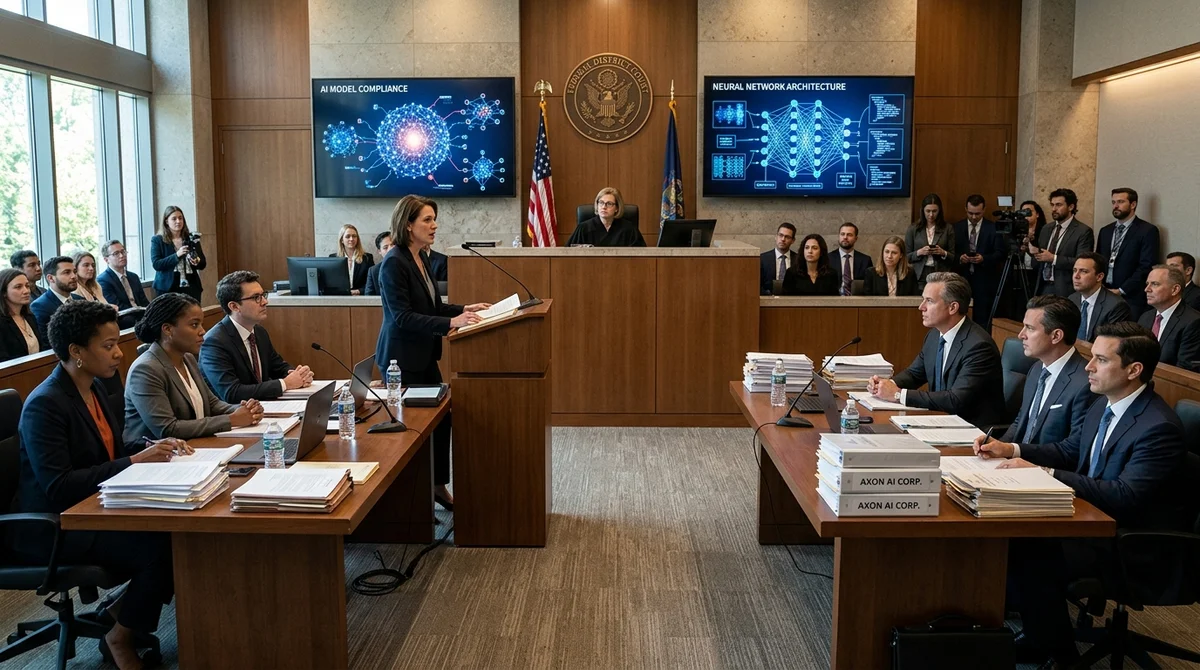
One of the most important trials for the AI market has begun in Oakland: after jury selection, the dispute between Elon Musk and OpenAI has moved into full proceedings. For the company, this is no longer just a conflict between co-founders. The outcome could affect its structure, its relationships with partners and its preparations for a possible IPO.
What the dispute is about
Elon Musk, one of OpenAI's co-founders, argues that the company has strayed too far from its original model. In his telling, the project was created as a nonprofit organization meant to develop artificial intelligence in the public interest, not to turn into a closed commercial business.
The lawsuit was filed back in 2024, but the case has now reached a jury and a public phase in which old agreements, correspondence and the motives of key figures will be discussed under oath.
Musk's side is seeking not only compensation but also tougher measures: a rethink of OpenAI's corporate logic, a return to its original mission and the removal of Sam Altman from a leadership role.
In court, Musk put his position in the starkest terms, saying this is not a complicated corporate dispute but the replacement of the basic rules on which the organization was founded. That is why the case quickly outgrew an ordinary shareholder conflict and became a dispute over the legitimacy of OpenAI's entire transformation.
"You can't just steal a charity."
OpenAI responds that Musk's claims have nothing to do with principles and everything to do with a struggle for influence in the AI race. The company's lawyers say Musk himself pushed for a more commercial format, tried to increase his control over OpenAI and wanted the structure to compete better with Google.
So the central question of the trial is this: did OpenAI breach its original mission, or is a former co-founder simply contesting a path he once supported himself?
Risks for the IPO
The main effect of the trial is not only legal. OpenAI is preparing for its next stage of corporate growth and, according to US media reports, is considering going public no earlier than the end of 2026. The court case creates an awkward backdrop.
Potential investors need a clear story about control, rights, partnerships and the durability of the structure. And this is exactly where the trial raises questions: what promises the company was built on, and how closely the current model matches what was declared at the start.
For a possible IPO, this means several risks at once:
- the company will have to disclose more internal documents and discussions than it would like to show the market;
- any decision to revise the structure could hurt the investment thesis;
- a drawn-out trial sharpens questions about the role of the nonprofit entity and the powers of management;
- a public conflict with a co-founder makes it harder to sell a story of stable governance;
- additional regulatory questions could slow preparations for the listing.
Even if OpenAI wins, the trial itself already raises the price of uncertainty. For a fast-growing company this is especially unwelcome: pre-IPO investors typically assess not only revenue and technology but also the likelihood of future court-imposed restrictions, conflicts with minority shareholders and corporate governance problems. The longer the dispute stays in the spotlight, the harder it is to convince the market that the legal footing of the business is fully predictable.
Parallel changes
The context around the case matters too. Almost simultaneously, OpenAI began rewriting the terms of its partnership with Microsoft, making the relationship less exclusive and opening more room for other distribution channels. The move looks logical: ahead of a potential IPO, it helps the company to show that it is not critically tied to a single partner and can build a more independent commercial model.
But against the backdrop of the trial, the maneuver also reads as an attempt to defuse some of the questions the market will inevitably ask about OpenAI's dependence on outside players.
As a result, the Musk case is more than a review of an old story about a startup's mission. It is turning into a public audit of OpenAI's entire evolution, from a research lab with a charitable framework to one of the most valuable players in the AI market. The court must decide where the natural transformation of a technology company ends and the violation of its original principles begins. And the answer will be heard not only by lawyers but by the whole market.
What it means
For the industry, this is a test of whether an AI company's founding mission can be rewritten without serious consequences when hundreds of billions of dollars are at stake. For OpenAI, the coming weeks matter as much as any product release: what is being decided is not only the dispute with Musk, but also how convincingly the company can explain to the market what it has become and why it can be trusted as a future public business.
The answer to that question will determine what discount the market builds into any future OpenAI listing plans.
- Nov 2, 2026Arca gives AI agents finance tasks lasting up to 10 days, but leaves the trades to humans
- Nov 2, 2026Meta's Muse assistant keeps dossiers on loved ones and gets root on Ubuntu by default
- Nov 1, 2026Local models lose to Opus and Codex: 0.21 on a MacBook versus 1.00 for Codex
- Nov 1, 2026Kimi scores 96.2% on a 1C database analytics test and emerges as a fallback if Claude access is blocked
Key Questions Answered
What the dispute is about?
Elon Musk, one of OpenAI's co-founders, argues that the company has strayed too far from its original model. In his telling, the project was created as a nonprofit organization meant to develop artificial intelligence in the public interest, not to turn into a closed commercial business. The lawsuit was filed back in 2024, but the case has now reached a jury and a public phase in which old agreements, correspondence and the motives of key figures will be discussed under oath. Musk's side is seeking not only compensation but also tougher measures: a rethink of OpenAI's corpo
What are the key details on Risks for the IPO?
The main effect of the trial is not only legal. OpenAI is preparing for its next stage of corporate growth and, according to US media reports, is considering going public no earlier than the end of 2026. The court case creates an awkward backdrop. Potential investors need a clear story about control, rights, partnerships and the durability of the structure. And this is exactly where the trial raises questions: what promises the company was built on, and how closely the current model matches what was declared at the start. For a possible IPO, this means several risks at once
What are the key details on Parallel changes?
The context around the case matters too. Almost simultaneously, OpenAI began rewriting the terms of its partnership with Microsoft, making the relationship less exclusive and opening more room for other distribution channels. The move looks logical: ahead of a potential IPO, it helps the company to show that it is not critically tied to a single partner and can build a more independent commercial model. But against the backdrop of the trial, the maneuver also reads as an attempt to defuse some of the questions the market will inevitably ask about OpenAI's dependence on outs
Ship AI Faster with Founders, Engineers & Weekly Architecture Reviews
Inside Vibe Club (hamidun.com/club) — weekly live masterminds with Zhemal Khamidun, Tech Radar, full LMS access, and 370+ production Claude Code skills.
The AI world, distilled — once a week
Seven stories that actually mattered, hand-picked. No noise, no reposts, no press releases.
Done! Check your inbox for a confirmation.