OpenAI backs Illinois bill limiting AI companies' liability for mass harm
OpenAI has backed a bill in Illinois that would limit AI labs' liability in court, including in cases where their products cause mass deaths or a financial collapse. A company representative testified in favor of the measure. Critics warn that the bill effectively hands AI companies immunity from civil liability for the gravest consequences.
AI-processed from Wired; edited by Hamidun News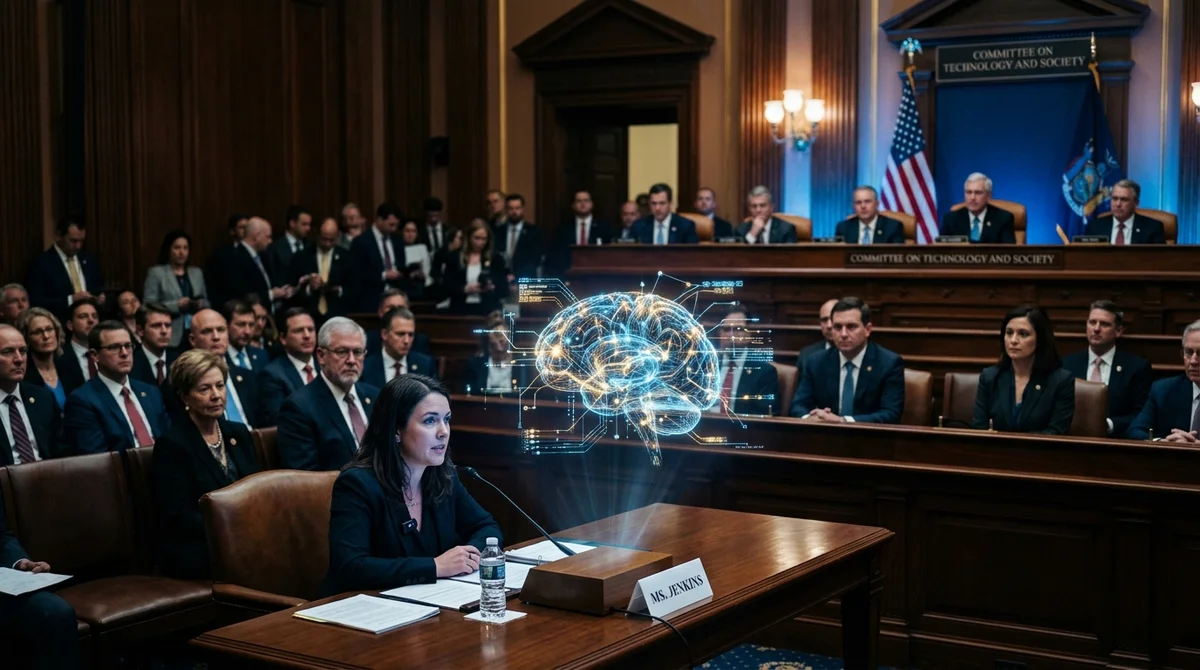
OpenAI has backed an Illinois bill that would shield AI labs from lawsuits even when their technology causes mass casualties or a financial collapse. It is the first time a major AI company has openly supported legislation of this kind, and it has already drawn a wave of criticism.
The bill, now before the Illinois legislature, introduces the concept of a "good-faith AI provider" and substantially limits that provider's civil liability to those harmed. The limits apply even to so-called "critical harm": anything from mass deaths to serious financial losses for large numbers of people.
At a hearing, an OpenAI representative testified in favor of the bill. The company's position is that AI labs should not bear unlimited liability for every possible consequence of third parties using their products. Supporters argue that without legal protection, AI companies would be forced to scale back development for fear of endless litigation.
The defenders' logic follows a pattern familiar from other industries: just as gun manufacturers are not held responsible for every use of their products, AI companies should not answer for every misuse of their models. OpenAI insists that unlimited legal liability creates asymmetric incentives and pushes companies out of jurisdictions with strict regulation.
Opponents take a fundamentally different view. In their words, the bill de facto gives AI labs an indulgence from civil liability precisely when the stakes are highest. Civil liability is one of the few legal mechanisms that actually forces corporations to think about safety before releasing a product. If a developer is legally protected even when mass casualties occur, victims are left with no tools for compensation.
Illinois is not the first state where AI companies are pushing legislation that favors them. In recent years a large-scale lobbying campaign has unfolded across the US: tech giants and startups take part in drafting state AI strategies while also seeking limits on regulators and broader legal protection for themselves. Similar debates are under way in Europe, the UK and Asia, and everywhere the industry wants roughly the same thing: to limit risks without limiting capabilities.
If the bill passes, Illinois will become one of the first states to legally protect AI companies from the consequences of "critical harm." That could set a precedent for other states and increase pressure at the federal level, where the debate over AI labs' liability is still unresolved.
The key question remains open: who is responsible if an AI system makes a mistake with catastrophic consequences?
- Nov 2, 2026Meta's Muse assistant keeps dossiers on loved ones and gets root on Ubuntu by default
- Nov 1, 2026Local models lose to Opus and Codex: 0.21 on a MacBook versus 1.00 for Codex
- Nov 1, 2026Kimi scores 96.2% on a 1C database analytics test and emerges as a fallback if Claude access is blocked
- Nov 1, 2026OpenAI Rewrites GPT Behavior Rules: Five Values and a Chain of Command
Test Frontier LLMs & Autonomous Agents in One Workspace
Run Claude Opus 5.5, GPT-6, Gemini 3.1, and DeepSeek side-by-side in Nomad AI (nomadnet.ai) — unified model routing, deep research, and multimodal workflows under one subscription.
The AI world, distilled — once a week
Seven stories that actually mattered, hand-picked. No noise, no reposts, no press releases.
Done! Check your inbox for a confirmation.