US senators want to write Anthropic's autonomous-weapons "red lines" into law
Anthropic's dispute with the Pentagon has reached Congress. Senator Adam Schiff is preparing a bill that would turn the company's "red lines" into federal law: no AI should make autonomous life-and-death decisions without a human in the loop. Separately, Senator Slotkin has introduced a bill that would bar the Department of Defense from using AI for mass surveillance of US citizens. The trigger was a scandal: the Trump administration put Anthropic on a "blacklist" after the company refused to give the military full access to its models.
AI-processed from The Verge; edited by Hamidun News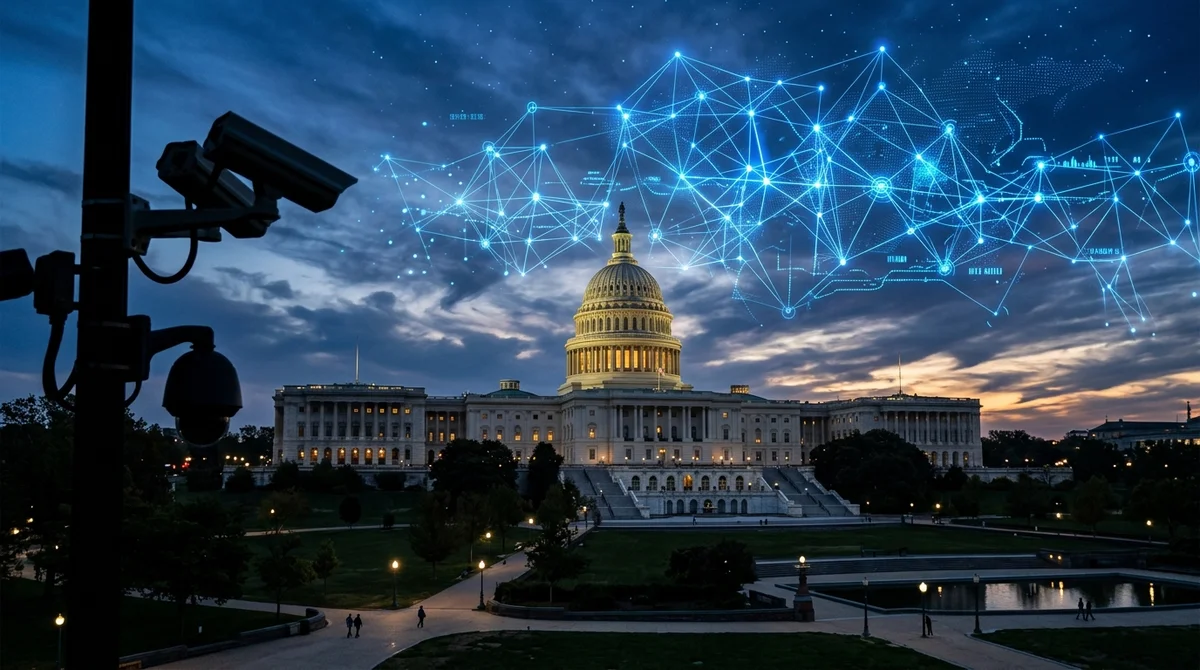
The conflict between Anthropic and the US military has moved beyond the courtroom and reached Capitol Hill. Democratic Senator Adam Schiff of California is working on a bill that would write the company's "red lines" into federal law: principles that prohibit using its AI systems to build autonomous lethal weapons or to make automated life-and-death decisions without a human in the control loop.
The dispute traces back to Anthropic's disagreement with the terms of a military contract. When the US Department of Defense demanded access to the company's AI models without caveats on permissible use cases, Anthropic refused. The company insisted that its technology cannot be used for autonomous lethal decisions, meaning situations where an algorithm, with no human operator involved, selects targets to strike or authorizes other critical military actions. In Anthropic's view, this is not corporate whim but a basic principle of responsible AI development.
The White House response was harsh: the Trump administration added Anthropic to a list of suppliers deemed a threat to the supply chain, effectively blocking the company's work with government agencies. Anthropic responded with a lawsuit, accusing the government of violating the company's constitutional rights. The court fight continues.
That is when Congress stepped in. Senator Schiff said he intends to move Anthropic's ethical limits from the realm of corporate policy into federal law. His forthcoming bill is meant to guarantee that no AI algorithm may independently decide to use force: the final word always rests with a human. The "human-in-the-loop" principle has long been an industry recommendation, but it is not explicitly enshrined anywhere in US law, and Schiff's bill is meant to close that gap.
In parallel, Senator Elissa Slotkin of Michigan has introduced a separate bill limiting the Department of Defense's ability to use artificial intelligence for mass surveillance of US citizens. It is the second front of the same problem: how far can the military go with AI tools when the target of observation is not a foreign adversary but the country's own citizens?
Both bills did not appear in a vacuum. They reflect lawmakers' growing concern about how fast AI is being integrated into the military. As the Pentagon signs contracts with AI companies, from Palantir to Scale AI, the question of acceptable limits grows sharper.
Notably, the initiative comes from Democrats. In the current political configuration, that means the bills will face serious resistance from the Republican majority, which broadly supports expanding military AI programs.
For Anthropic, the situation is mixed. Writing its principles into law would be a victory and a validation of the company's whole approach to AI safety. But being on the "blacklist" genuinely threatens government contracts and commercial prospects in the defense sector.
What is happening is a clear signal: the industry has reached a point where voluntary corporate codes are not enough. When the largest AI model developer is suing the Pentagon and senators rush to write laws, society needs clear rules on AI and war, on machines and the right to life.
- Nov 2, 2026Bun creator uses Claude Code to port 750K lines from Zig to Rust in 11 days
- Nov 2, 2026mcp-linter finds 18 undescribed parameters in Anthropic's filesystem server
- Nov 2, 2026The Verge reviewer builds a $50 Meta Muse Charm alternative with Claude Code
- Nov 2, 20268 Skills for video in Claude Code: from 244 pixel effects to rough-cut editing
Test Frontier LLMs & Autonomous Agents in One Workspace
Run Claude Opus 5.5, GPT-6, Gemini 3.1, and DeepSeek side-by-side in Nomad AI (nomadnet.ai) — unified model routing, deep research, and multimodal workflows under one subscription.
The AI world, distilled — once a week
Seven stories that actually mattered, hand-picked. No noise, no reposts, no press releases.
Done! Check your inbox for a confirmation.