From OpenAI's offices to Eli Lilly: how Chai Discovery is changing drug development
Chai Discovery, founded by OpenAI alumni, has become one of the most talked-about names in AI for pharmaceuticals. The company has drawn the attention of leading venture funds and signed a landmark agreement with Eli Lilly. The startup uses advanced neural networks to model how molecules interact, which can significantly cut the time needed to find new drug compounds. By combining deep learning with biology expertise, Chai Discovery aims to lead a new era of digital medicine, turning biological research into an engineering problem.
AI-processed from TechCrunch; edited by Hamidun News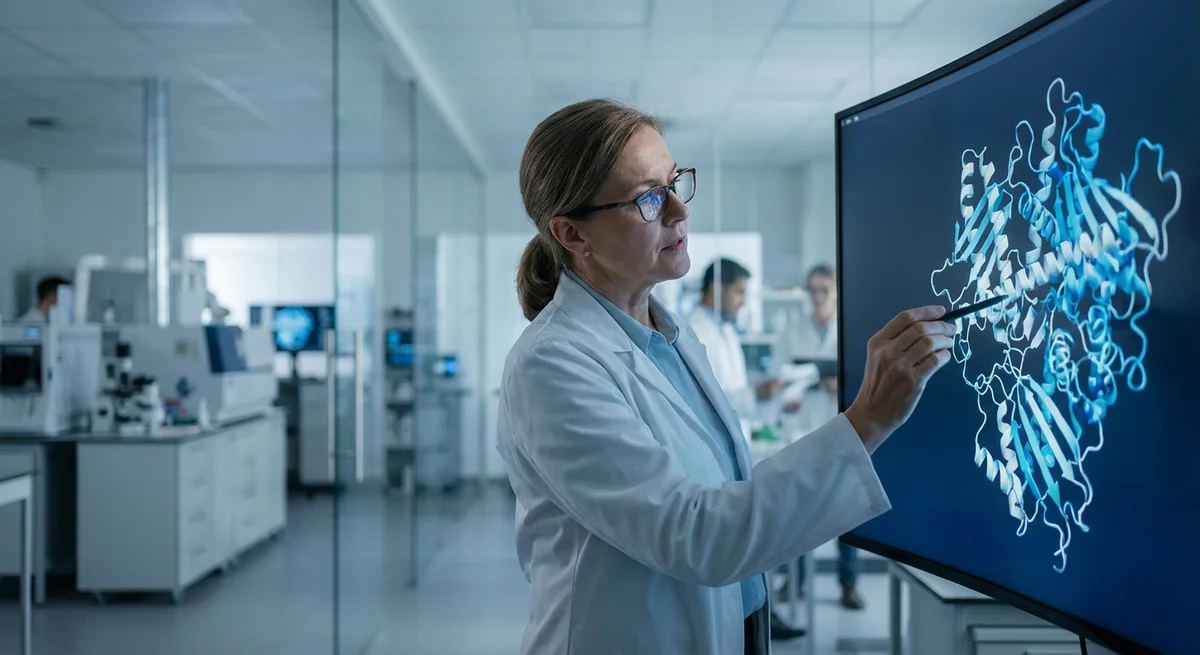
From OpenAI's offices to Eli Lilly: how Chai Discovery is changing drug development
In the fast-moving world of artificial intelligence (AI), some companies do more than build new technology: they can fundamentally reshape entire industries. One such company, drawing close attention in pharmaceuticals, is Chai Discovery. Founded by alumni of OpenAI, one of the world's leading AI developers, it has already established itself as a serious player by signing a landmark agreement with pharmaceutical giant Eli Lilly and winning backing from leading Silicon Valley venture funds. Chai Discovery promises to speed up the search for and development of new drugs, turning complex biological science into a more predictable engineering task.
Pharmaceutical R&D has always been defined by long, expensive cycles. Creating a new drug can take decades and cost billions of dollars, and the chance of success remains relatively low. Traditional methods of screening and testing molecules have improved, but they have remained labor-intensive and not always effective. This is where AI comes in, offering radical new approaches to analyzing huge volumes of data, modeling complex biological processes and predicting the properties of new compounds. Chai Discovery builds on the latest advances in deep learning, using the power of neural networks to tackle one of modern science's hardest problems: finding molecules that can effectively fight disease.
A closer look at Chai Discovery's technology shows the company is betting on a combination of advanced machine learning algorithms and deep expertise in biology and chemistry. Rather than relying solely on empirical screening, Chai Discovery develops models that can predict how different molecules will interact with specific biological targets in the human body. This substantially narrows the pool of potential candidates early in development, focusing effort on the most promising compounds.
This approach, based on modeling and prediction, differs radically from traditional methods and promises to cut the time and cost of drug development several-fold. The landmark partnership with Eli Lilly, one of the world's largest pharmaceutical companies, is a vivid confirmation of Chai Discovery's potential and of the industry's trust in its technology.
The consequences of adopting innovative approaches like Chai Discovery's for the whole healthcare industry are hard to overstate. First, they could speed up the arrival of vital drugs on the market, which may save millions of lives and improve patients' quality of life. Second, lower development costs may bring down drug prices, making medicines more affordable to broad segments of the population. Third, Chai Discovery is helping transform the very paradigm of scientific research, turning intuitive and often chance discoveries into a more systematic, engineering-oriented process. This opens the door to personalized medicine and to drugs for rare diseases that were previously economically unviable to develop.
In conclusion, Chai Discovery is a vivid example of how advanced AI can become a catalyst for progress in critical fields such as healthcare and pharmaceuticals. The company, which emerged from one of the world's leading AI centers, is already showing impressive results and ambitious plans. Its successful collaboration with Eli Lilly and the support of influential investors suggest that Chai Discovery is on the right path to becoming a leader in a new era of digital medicine, in which biological research will be closely intertwined with AI to create the drugs of the future.
- Nov 27, 2026OpenAI Physicist Spent 400 Million Tokens on Gravity Theory, Critics Found 10+ Gaps
- Nov 27, 2026Seven Open-Source Frameworks for Building a Team of AI Agents, from Langflow to Google ADK
- Nov 27, 2026Telegram for Mac Gets Dictator, an AI Agent with Three Access Modes for Chats
- Nov 27, 2026GigaChat 3.5 Omni Beats Qwen3-Omni on Video Understanding Test: 80.78 vs. 74.74 Points
Ship AI Faster with Founders, Engineers & Weekly Architecture Reviews
Inside Vibe Club (hamidun.com/club) — weekly live masterminds with Zhemal Khamidun, Tech Radar, full LMS access, and 370+ production Claude Code skills.
Daily 60-sec AI Voice Brief + Weekly Production AI Agent Playbook
Listen to a 60-second AI news brief every morning and get a weekly hands-on playbook for shipping AI agents to production — tools, MCP servers and patterns that work. Curated by Jemal Hamidun, Head of AI at Alpina Digital.
