Elon Musk Restarts Dojo3 Chip Project, This Time for Computing in Space
Elon Musk has announced that development of Dojo3, the third generation of Tesla's custom AI chips, is back on after the project was previously put on hold. What sets the new iteration apart is its purpose: instead of training self-driving algorithms on Earth, Dojo3 will be used for "space-based AI computing." The move points to Musk's push to bring Tesla technology into orbital infrastructure, probably to process data from Starlink satellites or to give future SpaceX missions greater autonomy. The project could become the foundation for powerful computing nodes beyond Earth's atmosphere.
AI-processed from TechCrunch; edited by Hamidun News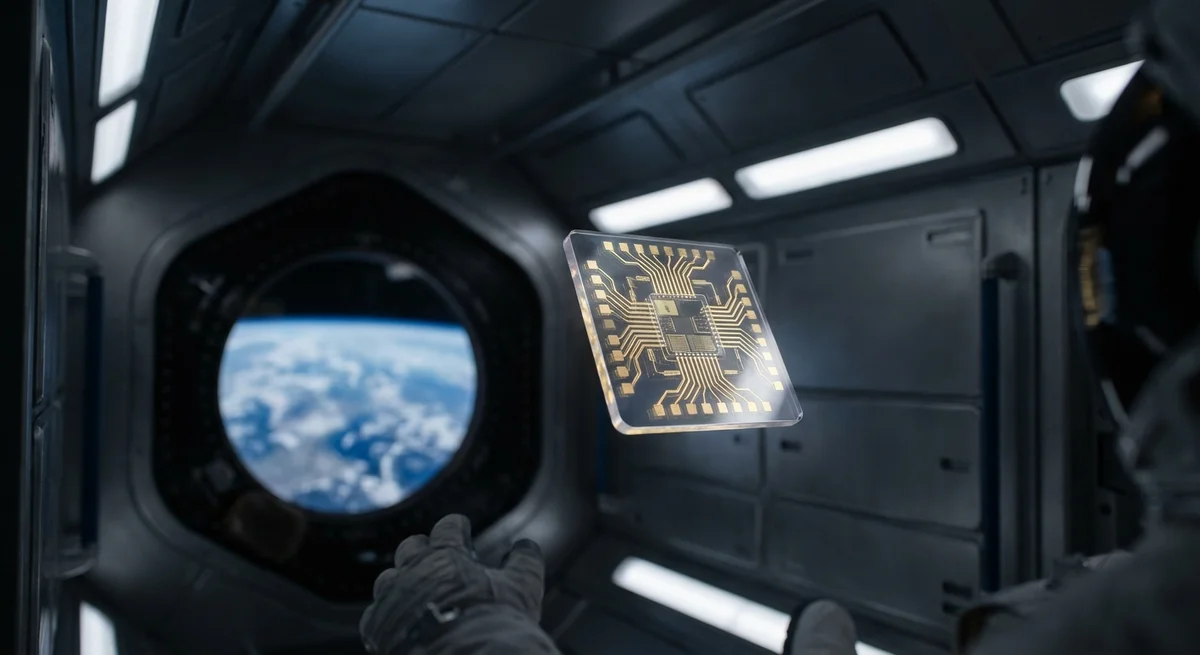
Elon Musk, known for his ambitious projects in space and artificial intelligence, has again drawn public attention by announcing the restart of Dojo3 development. It is the third generation of custom AI chips built by Tesla. The project, previously suspended, now takes on a new and even more futuristic dimension: instead of its original goal of training autonomous driving algorithms on Earth, Dojo3 will now focus on "space-based AI computing." The decision signals a strategic shift in Musk's plans, aimed at integrating Tesla's advanced technology with orbital infrastructure, which opens up intriguing prospects for the future of space exploration.
Tesla originally developed Dojo chips to tackle the demanding task of training the neural networks behind its Autopilot systems. Training such models takes enormous computing power, and Dojo was meant to deliver it as efficiently as possible. However, it appears the company ran into certain difficulties or revisited its priorities, which led to the temporary suspension of the project. Returning to Dojo3 with a new, space-oriented focus suggests that Musk's vision reaches well beyond ground-based applications.
The key difference in the new Dojo3 iteration is its intended purpose. "Space-based AI computing" is a term that has no clear definition yet, but its potential is huge. One can assume these chips will process data coming from Starlink satellites, the global satellite internet system also owned by Musk.
Processing information directly in orbit could significantly speed up data transfer and reduce the load on ground stations. Dojo3 may also become the basis for autonomy in future SpaceX missions. Picture spacecraft or research probes that can make complex decisions in real time, analyze incoming data and adapt to changing conditions without constant control from Earth.
That is critically important for long interplanetary flights or for exploration where communication is limited.
The consequences of such a step could be considerable. Deploying powerful computing nodes in space could be a real breakthrough. It would not only accelerate scientific research and the development of space technology, but also open new opportunities for commercial use of orbital space. Perhaps in the future we will see entire orbital data centers running on specialized AI chips, able to handle a wide range of tasks, from monitoring Earth to complex astrophysical calculations. Dojo3 could thus become the foundation for a new, decentralized computing infrastructure beyond Earth's atmosphere.
In conclusion, the restart of Dojo3 with a focus on space-based AI computing is a vivid sign of Musk's tireless inventiveness and his drive to push the boundaries of the possible. The move not only demonstrates synergy between Musk's various companies and projects, but also hints at a future in which artificial intelligence and space technology are inseparably linked, opening new horizons of knowledge and exploration of the Universe to humanity.
- Nov 2, 2026DeepSeek open-sources Super-agent prototype: p95 task completion time of 15.7 minutes vs. 29.5
- Nov 2, 2026Bun creator uses Claude Code to port 750K lines from Zig to Rust in 11 days
- Nov 2, 2026Microsoft releases 4B model Mage-VL-Cowork, which solves 66.0% of OSWorld-Verified tasks
- Nov 2, 2026Meta's Muse assistant keeps dossiers on loved ones and gets root on Ubuntu by default
Ship AI Faster with Founders, Engineers & Weekly Architecture Reviews
Inside Vibe Club (hamidun.com/club) — weekly live masterminds with Zhemal Khamidun, Tech Radar, full LMS access, and 370+ production Claude Code skills.
The AI world, distilled — once a week
Seven stories that actually mattered, hand-picked. No noise, no reposts, no press releases.
Done! Check your inbox for a confirmation.