SpaceX and xAI Merge as Elon Musk Moves AI Into Space
Elon Musk has decided Earth's resources are no longer enough for his ambitions. The merger of SpaceX and xAI is not just bureaucratic reshuffling but an attempt to solve the energy hunger of neural networks. In Musk's view, terrestrial power grids will not cope with AI's appetite, so the only way out is to build orbital data centers. Vertically integrating rocket technology and algorithms, he argues, will create infrastructure that planetary-scale limits cannot touch. While competitors hunt for data center sites next to nuclear power plants, Musk is literally heading into space, calling it the only logical path for the survival of consciousness.
AI-processed from 36Kr (36氪); edited by Hamidun News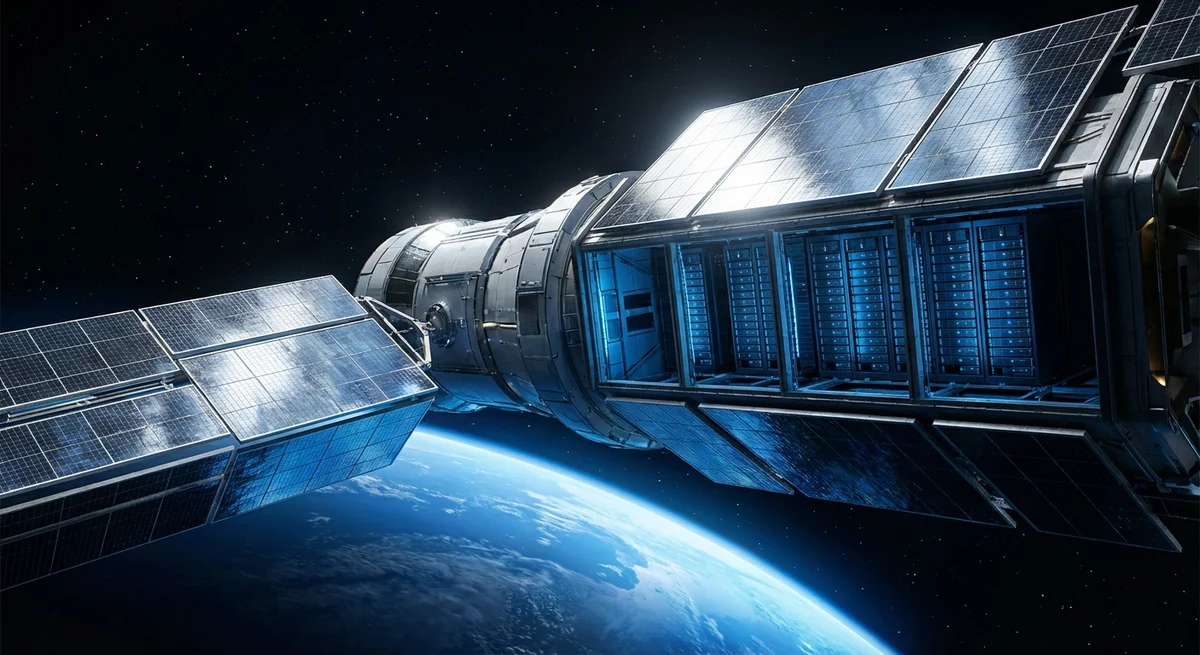
Elon Musk is doing what he does best again: making us wonder whether he is a genius or just playing a very expensive real-time strategy game. This time the stakes have reached orbital altitude. The merger of SpaceX and xAI looks like a logical, if wild, move in a world where computing power has become the new oil and electricity a scarce resource. Musk has officially confirmed the combination of the companies to create what he calls the most ambitious vertical integration engine in history.
An internal memo to SpaceX employees leaves no room for ambiguity. Musk says plainly that there is no more room for AI on Earth. More precisely, the planet lacks the cheap energy and free space needed to feed the growing appetites of models at the level of Grok 3 and beyond. While OpenAI and Microsoft discuss building terrestrial data centers costing hundreds of billions of dollars, Musk has decided it is simpler to go where there is plenty of sun and few neighbors complaining about noise and the environment.
The idea of "space data centers" long remained the province of science fiction, but for business it is turning into a hard logistical necessity. Musk has an ace no competitor has: the reusable Starship transport system. If the cost of launching a kilogram of payload falls to the promised levels, delivering server racks to orbit will stop being prohibitively expensive. Combining Starlink satellite connectivity with xAI's compute nodes turns SpaceX from merely a transport company into a global cloud that literally hangs over our heads.
Musk calls the initiative an attempt to create a "conscious sun" that will help us understand the Universe. It sounds grandiose and typical of his presentations, but there is sober calculation behind it. The AI industry is in an "arms race" phase, where the winner is whoever has more chips and steadier power. Moving computation into space could potentially solve the problem of cooling servers and provide round-the-clock access to solar energy without intermediaries such as state power grids. Questions remain about radiation protection for electronics and signal latency, of course, but for Musk these are just more engineering problems.
The merger also signals that xAI is no longer a "side project" in Tesla's shadow. It is now the core of a new empire in which AI runs everything, from Optimus robots to entire orbital clusters. Musk is building a closed ecosystem in which his own rockets launch his own servers to train his own intelligence.
The bottom line: Musk has finally stopped playing by Silicon Valley's rules. While others build fences around terrestrial data centers, he is building a new reality in which intelligence is not tied to the ground. How feasible this is technically in the next five years is a big question, but strategically it is an attempt to sidestep any earthly regulation and the physical limits of power grids.
- Nov 1, 202616 models tested on 7 search tools: Exa averaged 10.5 out of 14, SearXNG about 3
- Nov 1, 2026OpenAI Rewrites GPT Behavior Rules: Five Values and a Chain of Command
- Oct 29, 2026Gemini 4 Carbon tops independent rankings, but only cyber defenders can use it
- Oct 29, 2026Study: A Single Random Failure Makes AI Agents Abandon a Working Tool 11.6% of the Time
Test Frontier LLMs & Autonomous Agents in One Workspace
Run Claude Opus 5.5, GPT-6, Gemini 3.1, and DeepSeek side-by-side in Nomad AI (nomadnet.ai) — unified model routing, deep research, and multimodal workflows under one subscription.
The AI world, distilled — once a week
Seven stories that actually mattered, hand-picked. No noise, no reposts, no press releases.
Done! Check your inbox for a confirmation.