AI Isn't Getting Smarter: MIT Report Points to Soaring Energy Use
Researchers at the Massachusetts Institute of Technology (MIT) have published a report that questions the nature of progress in artificial intelligence. According to the data, today's flagship models, including OpenAI's GPT, advance mainly by expanding computing power on a massive scale, not through fundamental algorithmic breakthroughs. This approach sharply increases energy consumption and development costs, making AI a privilege of the largest corporations. Dependence on scaling hardware creates environmental risks and economic barriers, and points to the need for more efficient, less resource-hungry ways of training neural networks in the future.
AI-processed from ZDNet AI; edited by Hamidun News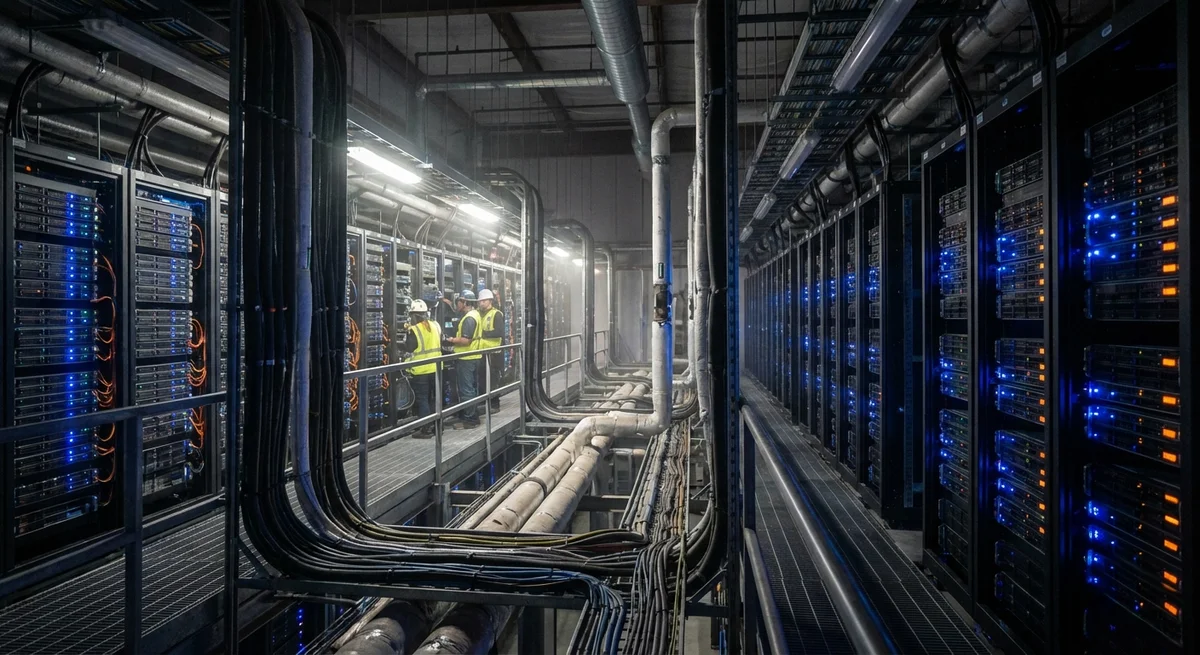
Artificial intelligence is advancing not because of smarter algorithms, but because companies are simply buying more servers. That is the conclusion reached by researchers at the Massachusetts Institute of Technology, and it upends the conventional view of progress in AI. Instead of inventing fundamentally new ways to train neural networks, industry leaders such as OpenAI have taken the path of least resistance: they simply increase the amount of computing resources spent on training models. It works, but the price keeps climbing, both literally and figuratively.
The MIT report boils down to a simple but troubling conclusion: the era of extensive AI growth is approaching its limits. When you train GPT or Claude, you are not making some magical scientific leap. The process is closer to trying to boil the ocean: the more data you push through a model, the more complex patterns it can pick up. But that takes astronomical amounts of electricity. If current trends hold, training a single frontier model could cost hundreds of millions of dollars in the coming years, and its energy use could be comparable to that of an entire city.
Why does this matter now? Because the industry has reached a critical point. The tail is wagging the dog: computing power determines what a company can do, not the other way around. That means building competitive AI is becoming the exclusive privilege of megacorporations that can afford investments of tens of billions of dollars. OpenAI, Google, Meta* and a handful of other players control the field simply because they have the money for computing power. Startups and research groups are left on the sidelines, no matter how smart their ideas are.
The environmental question is just as acute. Training modern models consumes energy on such a scale that it shows up in the electricity statistics of individual countries. The data centers that power these computations need huge amounts of water for cooling and leave a significant carbon footprint. If progress in AI is measured solely by the volume of computing resources, the planet will pay a heavy price. This is not a hypothesis or a scare scenario. It is the current reality, and it gets worse with every new generation of models.
The MIT study effectively points to the need for a change of paradigm. Instead of piling on capacity, the industry needs real algorithmic breakthroughs. It needs methods that let models learn more efficiently, and architectures that achieve better results with less data and compute. Such work does not attract the same venture-capital attention as giant models, but it is critically important for the future of AI. It is harder and requires a deeper understanding of the fundamentals of machine learning, but it is the path that actually leads to progress.
The MIT report is not just a piece of academic work; it is a wake-up call for the industry. The current model of AI development is economically unsustainable, environmentally hazardous and concentrates power in the hands of a few. The next stage of artificial intelligence should rely on smarts, not on unbridled growth in computing resources. Otherwise the world will end up with a few corporations controlling the technology of the future while the planet pays the bill.
*Meta is designated an extremist organization and banned in Russia.
- Nov 2, 2026TJ Digital: 23% of AI-cited pages open with a direct answer, versus 14% of uncited ones
- Nov 2, 2026Arca gives AI agents finance tasks lasting up to 10 days, but leaves the trades to humans
- Nov 2, 2026Meta's Muse assistant keeps dossiers on loved ones and gets root on Ubuntu by default
- Nov 1, 2026Local models lose to Opus and Codex: 0.21 on a MacBook versus 1.00 for Codex
Test Frontier LLMs & Autonomous Agents in One Workspace
Run Claude Opus 5.5, GPT-6, Gemini 3.1, and DeepSeek side-by-side in Nomad AI (nomadnet.ai) — unified model routing, deep research, and multimodal workflows under one subscription.
The AI world, distilled — once a week
Seven stories that actually mattered, hand-picked. No noise, no reposts, no press releases.
Done! Check your inbox for a confirmation.