Apple: Trillions in the Bank Won't Replace a Coherent AI Strategy
Apple is breaking revenue records again, but financial success can no longer hide its lag in the AI arms race. While Microsoft and Google reshape the industry, Tim Cook is betting on proven hardware: refreshed MacBook Pro models and the long-awaited AirTag. Even rumors of a clamshell-style foldable iPhone look like an attempt to catch up with trends from five years ago. Investors and users want more than new numbers in earnings reports. They want to know whether Apple Intelligence will become something bigger than a marketing label. The time for caution is running out; it is time to show some teeth.
AI-processed from Bloomberg Tech; edited by Hamidun News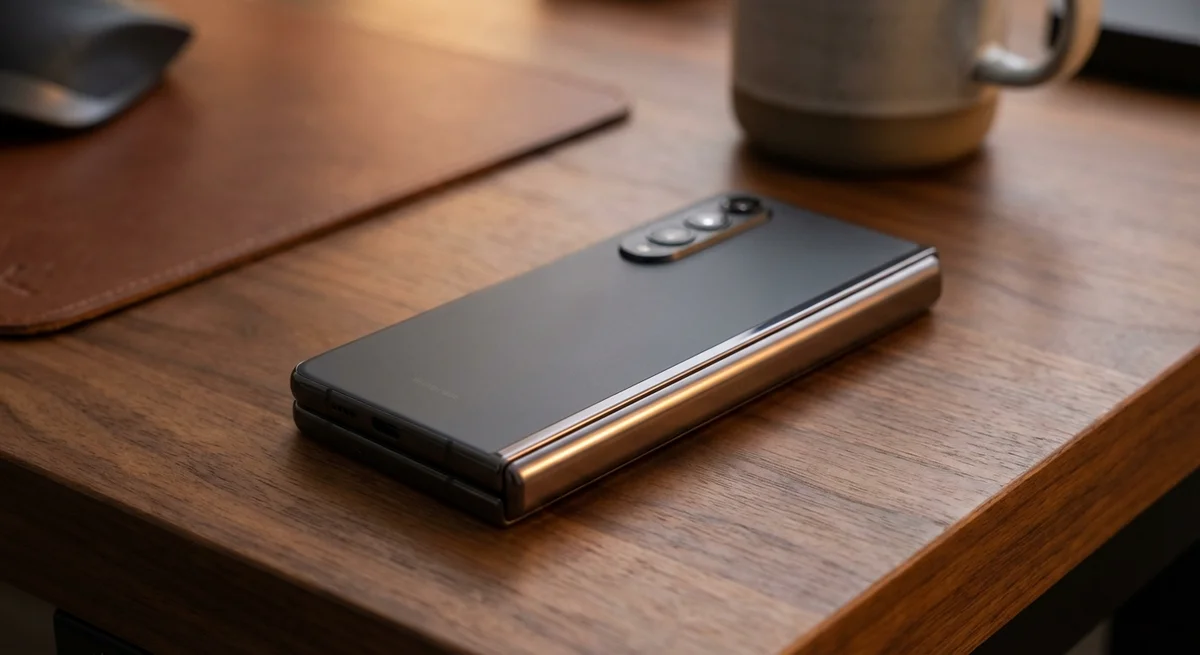
Apple has once again proven that it can print money better than any other company in the world. The holiday quarter was so strong that any talk of the empire's decline seems premature. Yet behind the facade of billions in profit lies an unsettling void, one that even the thinnest MacBook chassis cannot fill. The industry is holding its breath for Apple's "moment of truth" in artificial intelligence, and no financial report can postpone that inevitable reckoning. While Nvidia churns out chips and OpenAI rewrites the rules of how people interact with computers, Cupertino keeps playing its favorite game: waiting.
The company is not sitting idle, of course, but its activity looks odd against the tectonic shifts at its competitors. The plans include a MacBook Pro refresh as part of the macOS 26.3 cycle, which sounds like standard life support for the lineup. We will get a bit more performance and a bit lower power consumption, but will that change the rules of the game? Unlikely. Apple's problem today is not the hardware but what that hardware is supposed to do. Unless the operating system offers a radically new level of neural-network integration, the MacBook will remain just a very expensive money press with an excellent display. Users no longer want just "faster". They want "smarter".
At the same time, Apple has resumed experiments with foldable form factors. This is a "clamshell" meant to answer Samsung's Flip series. The irony is that by the time this device ships, the foldable smartphone market may have matured and perhaps even started to stagnate. Apple has often let itself arrive at the party last and still take all the attention, but in the AI era that strategy may backfire. A foldable screen is a nice bonus, but it will not replace a full digital assistant that can understand context and act autonomously. Next to the successes of GPT-4o and Gemini, a foldable iPhone looks like an attempt to solve a problem that does not exist.
The company has not forgotten small things like the AirTag, either. A tracker refresh is planned for the near future, and although it is a useful accessory, it only underlines Apple's current focus on an ecosystem of consumption rather than creation. We see a company that meticulously polishes existing products but fears stepping into the unknown. It is the classic trap of the successful player: when everything is going well, risk seems unnecessary. But the history of technology teaches us that companies most often miss the next big turn at the very moment of their greatest financial triumph. For Apple, that turn is generative AI, and the time to get on board is running out fast.
Investors are staying calm for now as they look at the financial results, but the questions on conference calls are getting sharper. What interests everyone is not the number of watches sold but the Apple Intelligence roadmap. If the company keeps feeding the market promises and minor updates to old lineups, audience loyalty may crack. We do not need foldable phones if they are no smarter than a brick. We do not need new MacBooks if Siri still cannot book a restaurant table without five follow-up questions. Apple needs to admit that the old rules no longer work.
The key question: Will the brand's magic save Apple once users realize that their iPhone is the only device in their pocket without built-in superintelligence?
- Nov 2, 2026TensorFold 1.2.0 boosts Qwen3.8-27B throughput on M3 Ultra by 44.2% at 16 streams
- Nov 1, 2026Local models lose to Opus and Codex: 0.21 on a MacBook versus 1.00 for Codex
- Oct 29, 2026Claude Code Edits Video From a Transcript: How the video-use Skill With 30 000 Stars Works
- Oct 29, 2026Stanford AI tool verifies part of Signal's code in half a day for under $500, versus five months of expert work
Test Frontier LLMs & Autonomous Agents in One Workspace
Run Claude Opus 5.5, GPT-6, Gemini 3.1, and DeepSeek side-by-side in Nomad AI (nomadnet.ai) — unified model routing, deep research, and multimodal workflows under one subscription.
The AI world, distilled — once a week
Seven stories that actually mattered, hand-picked. No noise, no reposts, no press releases.
Done! Check your inbox for a confirmation.