OpenAI Is Reportedly Building a Smartphone Where AI Agents Replace Apps
OpenAI is developing its own smartphone, in which AI agents would fully replace familiar mobile apps. Instead of icons and an App Store, users would have a single conversation with an intelligent agent that handles everything from booking a taxi to managing finances. According to sources, Jony Ive is the design partner. Analysts forecast that mass production will begin in 2028.
AI-processed from TechCrunch; edited by Hamidun News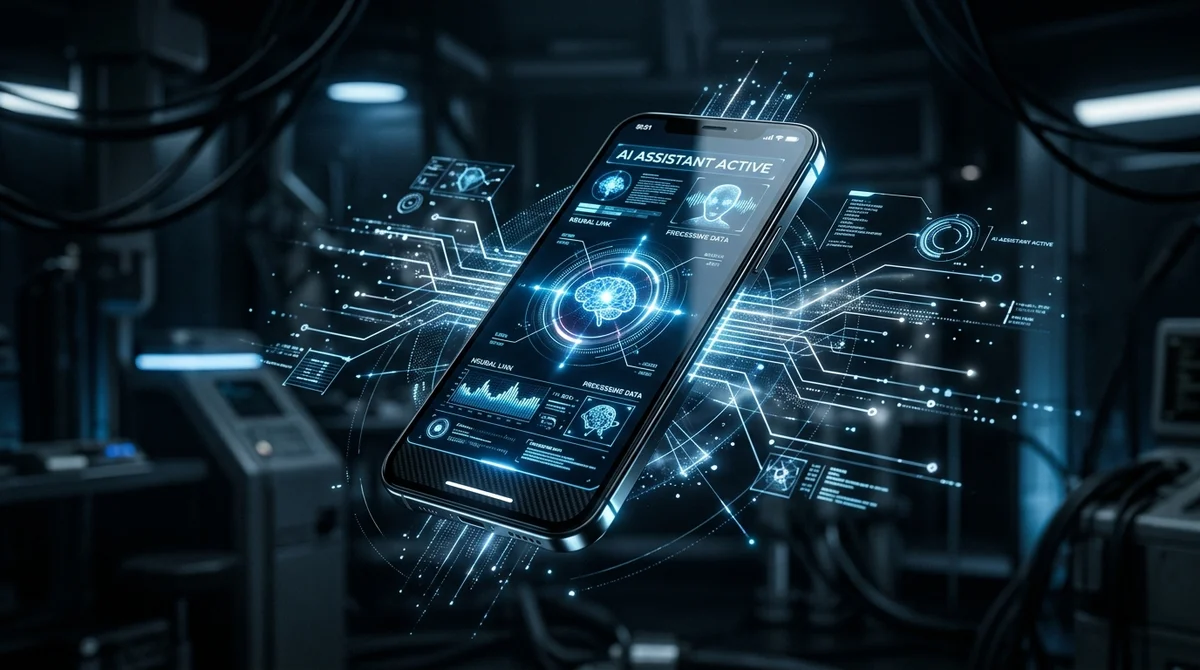
OpenAI may release its own smartphone in which artificial intelligence fully displaces familiar mobile apps. According to analysts, mass production of the device is planned for 2028, which means active development is already under way.
The idea is not accidental. OpenAI has long been moving toward building its own hardware. Sam Altman's company is in talks with the legendary designer Jony Ive, the man behind the visual language of the iPhone and MacBook at Apple. Their joint venture, reportedly, has already received funding from SoftBank and aims to develop next-generation devices where AI is not an auxiliary tool but the primary interface to the world.
OpenAI's hardware ambitions did not appear overnight. Back in 2023, the company held talks about creating a consortium to produce AI chips. By then ChatGPT had already become the fastest-growing product in the history of the technology market, and Altman understood that depending on other companies' devices is a strategic vulnerability. Its own hardware ecosystem would let the company control the entire user experience from start to finish.
The project's key idea is to replace the "one task, one app" model entirely with an agent architecture. The user states a request in natural language, and the AI agent decides how to carry it out: open the right service, place an order, find data, send a message. No icons on a home screen, no App Store, no manual updates, just a conversation with an agent that does everything for you.
There have been precedents, and they failed. Humane AI Pin and Rabbit R1 launched in 2024 and never became mainstream. The reason is simple: the agents of the time proved not smart enough, and the hardware too limited. But both gadgets appeared before GPT-4o, before Claude 3.7, before the wave of specialized agent frameworks. Within two or three years, the gap between what agents can do and what users expect may narrow dramatically. Models have become faster, cheaper and considerably more reliable.
The threat to Apple and Google is obvious. Both companies control the mobile market through their app ecosystems: the App Store and Google Play bring in tens of billions of dollars a year. If agents begin performing tasks directly, without requiring third-party software to be installed, the platforms' business models will come under serious pressure. It is no coincidence that Apple is actively integrating Apple Intelligence into iOS while Google bets on Gemini as the core of the Android ecosystem: both companies sense the threat and are preparing their defenses.
OpenAI has no hardware foothold of its own in this race yet. Partnerships with Samsung and Microsoft help promote ChatGPT through existing devices, but that is not the same as full control of a platform. Its own smartphone could become an entry point for hundreds of millions of users who land in the OpenAI ecosystem by default, with no Apple or Google as intermediaries.
2028 is a realistic deadline, though a tight one. Developing a smartphone from scratch, passing certifications and building supply chains in Asia all require several years of systematic work. If the analysts are right, development is already in full swing. The next 12–18 months should show the first prototypes, or at least official confirmation from the company itself.
We are on the threshold of a new hardware cycle in AI. After the wave of chatbots and built-in assistants, the next battle is being fought over the physical device that will become people's main interface with machine intelligence. OpenAI clearly wants to claim that position first, and 2028 may be the year the smartphone stops being just a smartphone.
- Nov 1, 2026Local models lose to Opus and Codex: 0.21 on a MacBook versus 1.00 for Codex
- Nov 1, 2026Kimi scores 96.2% on a 1C database analytics test and emerges as a fallback if Claude access is blocked
- Nov 1, 2026OpenAI Rewrites GPT Behavior Rules: Five Values and a Chain of Command
- Nov 1, 2026Google admits AI Mode cuts search revenue, shares fall 15%
Test Frontier LLMs & Autonomous Agents in One Workspace
Run Claude Opus 5.5, GPT-6, Gemini 3.1, and DeepSeek side-by-side in Nomad AI (nomadnet.ai) — unified model routing, deep research, and multimodal workflows under one subscription.
The AI world, distilled — once a week
Seven stories that actually mattered, hand-picked. No noise, no reposts, no press releases.
Done! Check your inbox for a confirmation.