The Age of Digital Illusion: How Neural Networks Erased the Line Between Real and Fake in Three Years
Over the past three to four years, generative AI has gone from experimental images to video that is practically impossible to tell from reality. Tools such as NanoBanana, Suno and Kling have radically reshaped the media landscape. Users now face an identification problem: it is hard to know whether the "talking head" on screen is a living person or a digital avatar, or whether the voice and location are genuine. This rapid progress raises serious questions about trust in information and the future of digital content, where authenticity is becoming a scarce resource.
AI-processed from Habr AI; edited by Hamidun News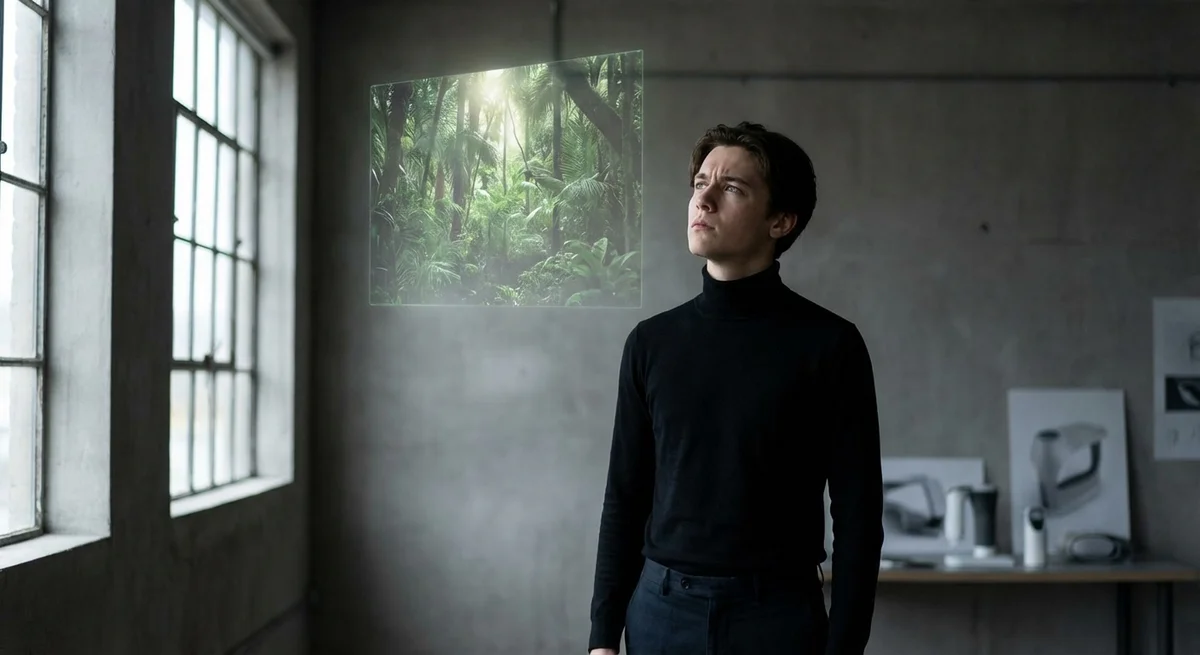
# The Age of Digital Illusion: How Neural Networks Erased the Line Between Real and Fake in Three Years
Three years ago, the idea of creating photorealistic video with a neural network seemed like science fiction. Today, tools such as NanoBanana, Suno and Kling fill social networks with content that is indistinguishable from camera footage. This is not gradual evolution but a leap that happened so fast that society has barely had time to grasp the scale of the change. Not long ago we marveled at images generated in Midjourney; now we face a far more serious challenge: being unable to tell whether we are watching a recording of reality or a digital simulation.
The pace of generative AI development outstrips technological forecasts. When experts discussed the future of video synthesis a year ago, nobody expected algorithms to improve this quickly. Today you watch a clip of a talking head, and the first thought is: is this a real person or an avatar? Does the voice match the lip movements, or is it the product of a separate neural network, Suno? Does the location in the frame exist, or is it fully synthesized? These questions are no longer hypothetical. They are the daily reality of millions of social media users.
The technical basis of this breakthrough is better diffusion and transformer methods. Generative AI once demanded enormous computing resources and produced visible artifacts; now the algorithms work quickly and unobtrusively. The tools split the job so that a video is assembled from components (face, voice, background, motion), each generated or synthesized with high precision. The result is stitched into a whole that looks convincing enough to the average viewer. Particularly worrying is availability: these tools are already openly accessible and require no expert knowledge to use.
The consequences reach well beyond the entertainment industry. If it is hard to establish whether a video is real today, tomorrow this may lead to a crisis of trust in media, politics and the justice system. Fakes will become more than a problem for social media moderators; they will challenge the very concept of visual evidence. Banks, government agencies and corporations will need new methods of identity verification. Criminal investigations will get harder once video stops being a reliable source of evidence. And for ordinary users, trust in information will become an even scarcer resource than it is now.
The question troubling analysts and politicians sounds almost rhetorical: what happens in a couple of years? At this pace, telling real content from generated content will soon require specialized detection tools. But even those tools will lag behind the ability of neural networks to improve and evade checks. We are on the threshold of an era when seeing will no longer be enough to justify saying "I saw it." Society will have to either develop new ways to verify content or accept that the boundary between reality and illusion has been blurred for good. For now, we can only watch that boundary disappear.
- Oct 25, 2026Shadow AI in the Enterprise: Why 90% of Security Officers Break Their Own Bans and How a 3-Zone Traffic Light System Works
- Oct 19, 2026Black Forest Labs: A 70-Person Team Takes On Silicon Valley's Giants
- Oct 11, 2026BBC: AI Is Devaluing Images and Raising the Price of Human-Made Work
- Oct 9, 2026Midjourney Adds Thinking Mode for V8.2 and Shared Folders in Alpha
Test Frontier LLMs & Autonomous Agents in One Workspace
Run Claude Opus 5.5, GPT-6, Gemini 3.1, and DeepSeek side-by-side in Nomad AI (nomadnet.ai) — unified model routing, deep research, and multimodal workflows under one subscription.
The AI world, distilled — once a week
Seven stories that actually mattered, hand-picked. No noise, no reposts, no press releases.
Done! Check your inbox for a confirmation.