2026 to Be the Year of Mass Robot Production, Citic Securities Forecasts
According to a new Citic Securities report, the robotics industry is on the verge of moving from technology concepts to real industrial use. Analysts forecast that 2026 will be the year of mass production, driven by government policy and financing innovations. The report frames the shift as both a technology race and a strategic contest that demands political will and an effective institutional framework.
AI-processed from 36Kr (36氪); edited by Hamidun News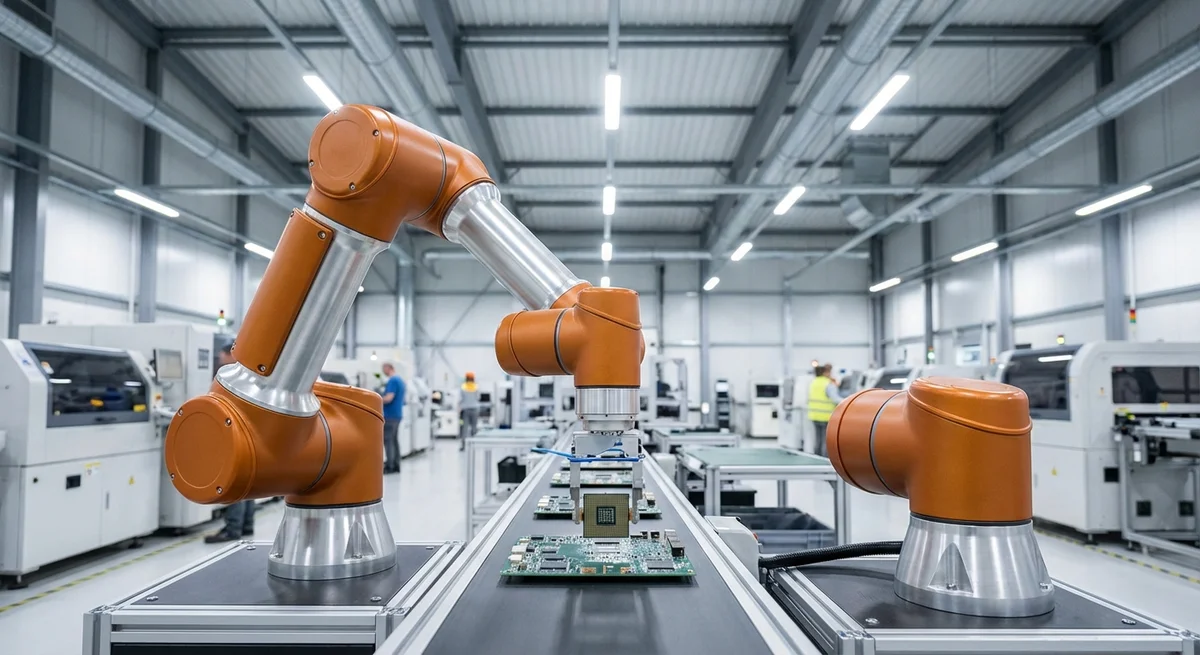
The robotics industry is on the verge of major change, moving from technology concepts to real industrial use. According to the latest Citic Securities report, 2026 may be a turning point, marking the start of mass production and commercialization of robots.
This transition is not just a technology race involving computing power, algorithms and precision manufacturing. It is also a strategic competition that requires political will and an effective institutional structure. Investment in research and development, along with a favorable regulatory environment, plays a key role in the industry's success.
Citic Securities forecasts a significant jump in robot output in 2026. Several factors will contribute, including government support: the government will use a model of "proactive regulation + competition between central and local authorities" to steer the industry. This approach should create a flexible, adaptive regulatory system that fosters innovation and growth.
Capital markets are also expected to play an important role in financing the development of the robotics industry. Innovations in IPO rules on the A-share and Hong Kong stock exchanges will allow companies in the sector to raise capital and expand operations. This, in turn, will lead to the securitization of assets across the entire value chain.
The implications for the industry and users are significant. Mass production will drive down costs, making robots more accessible to a wider range of businesses and consumers. This will lead to increased automation in various sectors, including manufacturing, logistics, healthcare, and services. It will increase productivity, improve efficiency, and create new opportunities for innovation.
However, the potential risks of widespread robot adoption must also be considered. These include employment concerns, ethical considerations, and the need to ensure the safety and reliability of robotic systems. It is important to develop appropriate strategies and policies to mitigate these risks and maximize the benefits of using robots.
In conclusion, 2026 looks like a pivotal moment for the robotics industry. Mass production and commercialization of robots will open new opportunities for economic growth and social development, but will also require careful management and strategic planning.
- Oct 31, 2026Author puts his script before an AI jury: the verdict cost 850 thousand tokens
- Oct 31, 2026SciGame Tests Five LLM Agents: Familiar Formulas Get in the Way of Finding Altered Laws
- Oct 30, 2026Agent traffic on Zocdoc is up 30x since July, and ChatGPT faces two health lawsuits
- Oct 29, 2026OvisOCR3: an 0.8B-parameter model that reads documents better than specialized systems
Test Frontier LLMs & Autonomous Agents in One Workspace
Run Claude Opus 5.5, GPT-6, Gemini 3.1, and DeepSeek side-by-side in Nomad AI (nomadnet.ai) — unified model routing, deep research, and multimodal workflows under one subscription.
The AI world, distilled — once a week
Seven stories that actually mattered, hand-picked. No noise, no reposts, no press releases.
Done! Check your inbox for a confirmation.