Elon Musk Moves Up the Timeline: Optimus Will Change the World by 2027
Elon Musk has updated the timeline for mass deployment of Tesla's Optimus humanoid robots. Responding to a forecast from ARK Invest's Cathie Wood, who predicted the robots would reshape industry only by 2028, Musk said the transformation will begin as early as 2027. According to Musk, the robots' impact will be pervasive by 2028, and by 2029 they will radically change both factory work and life at home. Building humanoids is hundreds of thousands of times harder than developing robotaxis, yet Tesla intends to stick to an aggressive schedule for bringing the technology to market.
AI-processed from 36Kr (36氪); edited by Hamidun News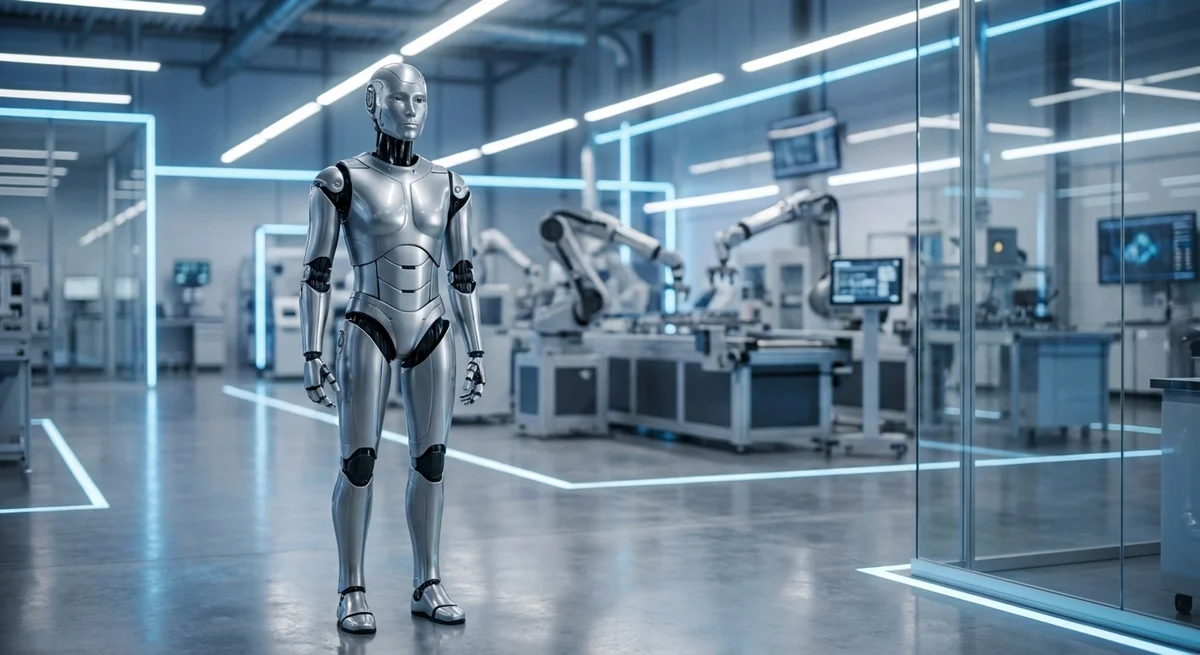
Elon Musk, known for his push to accelerate technological progress, has once again set ambitious deadlines for Optimus, Tesla's humanoid robot project. Cathie Wood, head of investment firm ARK Invest, had predicted that robots would bring significant changes to industry by 2028. Musk responded that the transformation will start as early as 2027. He said Optimus's impact will be pervasive by 2028, and by 2029 the robots will radically change both factory production and people's everyday lives at home.
The statement comes amid an ongoing debate about the future of automation and the role of artificial intelligence across different areas of life. Tesla's Optimus is one of the most ambitious humanoid robot projects. While many companies build specialized robots for industrial tasks, Tesla wants a general-purpose android that can handle a wide range of work, from routine assembly-line jobs to household help.
Cathie Wood, whose calls on technology trends have often proven prescient, pointed to the enormous difficulty of building such machines and compared it to developing robotaxis. She estimated that building humanoids is hundreds of thousands of times harder than developing autonomous cars. Even so, Musk, known for his aggressive approach to deadlines and goals, insists Tesla can hold to its own, even tighter schedule.
A closer look at Musk's statement shows how serious he is about Optimus. Moving the timeline from "2028/2029" to "2027" for the start of the changes, and to "2028" for visible impact, signals a high level of confidence and possibly significant progress by Tesla's team. Building humanoid robots is a genuinely massive engineering challenge. It requires better AI to control complex movements and make real-time decisions, as well as advanced mechanical systems capable of precise and safe manipulation. The robots will need to adapt to unstructured environments, interact with people, and perform tasks that today demand human dexterity and judgment.
Deploying Optimus this quickly could have truly revolutionary consequences. In factories, robots could take on dangerous, monotonous, or physically demanding jobs, boosting productivity and cutting costs. That could lead companies to rethink supply chains and bring more production closer to home. At home, Optimus could potentially become an indispensable assistant, handling chores and caring for elderly people or people with disabilities, freeing up time for more creative or intellectual pursuits. But a transformation this fast also raises questions about the impact on the labor market, the need for retraining, and the ethics of using robots everywhere.
Musk's claim that Optimus will start changing the world as early as 2027 is a bold challenge to existing forecasts and a reaffirmation of his faith in what Tesla can do. If the company can deliver on plans this ambitious, it could become one of the most significant technological leaps in human history, fundamentally changing how we think about work, home life, and the future in general. Despite its apparent complexity, this technology is expected to be the next breakthrough after electric vehicles and autonomous driving systems.
- Nov 1, 2026Local models lose to Opus and Codex: 0.21 on a MacBook versus 1.00 for Codex
- Nov 1, 2026Adobe's EditAgent judge picks a usable edit 81.3% of the time, versus 74.8% for EditScore
- Nov 1, 202616 models tested on 7 search tools: Exa averaged 10.5 out of 14, SearXNG about 3
- Nov 1, 2026Google's StreamVibe video agent beats other models by 10.7% on response timing and quality
Test Frontier LLMs & Autonomous Agents in One Workspace
Run Claude Opus 5.5, GPT-6, Gemini 3.1, and DeepSeek side-by-side in Nomad AI (nomadnet.ai) — unified model routing, deep research, and multimodal workflows under one subscription.
The AI world, distilled — once a week
Seven stories that actually mattered, hand-picked. No noise, no reposts, no press releases.
Done! Check your inbox for a confirmation.