China's New Health Insurance Policy Could Boost Medical Device Investment
Citic Securities says a new pricing policy from China's National Healthcare Security Administration for services involving surgical robots will speed up their adoption. The brokerage recommends investors look at the surgical robot industry and at consumables for minimally invasive surgery, orthopedics, gastroenterology, cardiology and neurology.
AI-processed from 36Kr (36氪); edited by Hamidun News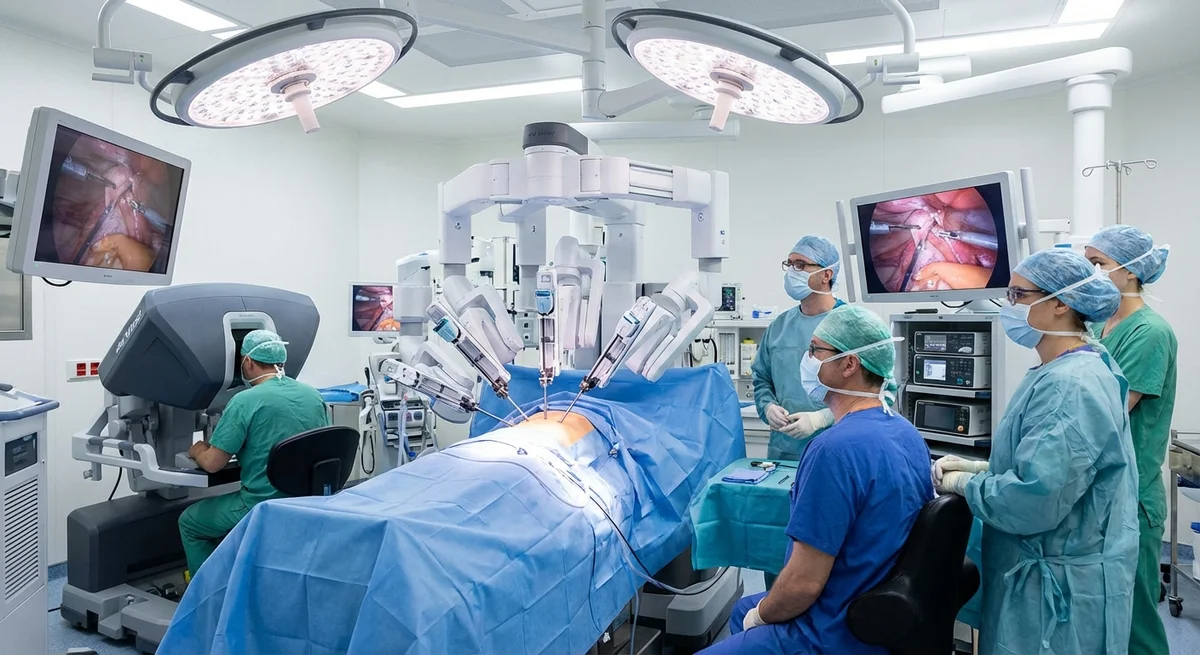
Analysts at Citic Securities believe China's medical device market is heading into a new phase of growth, driven by changes in health insurance policy. The National Healthcare Security Administration recently published new rules on pricing for services involving surgical robots and surgical consumables, opening new prospects for the sector. In particular, the pace at which surgical robots are adopted and spread across medical institutions throughout China is expected to accelerate significantly.
The new rules provide for a pricing guideline for services that use surgical robots, an important step toward wide adoption of these technologies. Previously, the high cost of robot-assisted operations often limited access to them. Now, with clear pricing rules and the prospect of including these procedures in the health insurance system, that barrier is falling. The National Healthcare Security Administration also said it plans to keep expanding the list of services covered by the guideline, which creates favorable conditions for the entire innovative medical device industry.
Citic Securities analysts recommend that investors pay close attention to investment opportunities in the medical sector, highlighting two key areas. First, the surgical robot industry and its supply chains, including laparoscopic robots, orthopedic robots and neurosurgical robots. Second, they recommend looking at high-tech consumables used in minimally invasive surgery, orthopedics, gastroenterology, cardiology and neurology.
Surgical robots not only improve the precision and efficiency of operations but also reduce the risk of complications, shorten patient recovery times and improve overall treatment outcomes. This, in turn, lowers healthcare costs in the long term. Expanding the list of medical services covered by insurance encourages innovation in medical equipment, because manufacturers gain more incentive to develop and introduce new technologies.
Thus, China's new health insurance policy creates favorable conditions for the medical equipment industry, and surgical robots in particular. Investors are advised to look at this promising area, given its growth potential and the positive changes in regulation.
- Oct 31, 2026Author puts his script before an AI jury: the verdict cost 850 thousand tokens
- Oct 31, 2026SciGame Tests Five LLM Agents: Familiar Formulas Get in the Way of Finding Altered Laws
- Oct 30, 2026Agent traffic on Zocdoc is up 30x since July, and ChatGPT faces two health lawsuits
- Oct 29, 2026OvisOCR3: an 0.8B-parameter model that reads documents better than specialized systems
Test Frontier LLMs & Autonomous Agents in One Workspace
Run Claude Opus 5.5, GPT-6, Gemini 3.1, and DeepSeek side-by-side in Nomad AI (nomadnet.ai) — unified model routing, deep research, and multimodal workflows under one subscription.
The AI world, distilled — once a week
Seven stories that actually mattered, hand-picked. No noise, no reposts, no press releases.
Done! Check your inbox for a confirmation.