Waymo World Model: Google's Self-Driving Cars Now Train in Their Own "Matrix"
Waymo has decided that 200 million miles of real-world driving is only the beginning, and has moved training into a new generation of virtual environments. Waymo World Model, built on Google DeepMind's Genie 3, generates photorealistic, physically consistent driving scenarios. Unlike older simulators, the system produces full video output from all sensors at once, so engineers can model rare and dangerous situations with no risk to human life. Training self-driving cars shifts from accumulating kilometers to generating experience without limit. The key question: how fast can competitors build something similar without DeepMind's resources?
AI-processed from MarkTechPost; edited by Hamidun News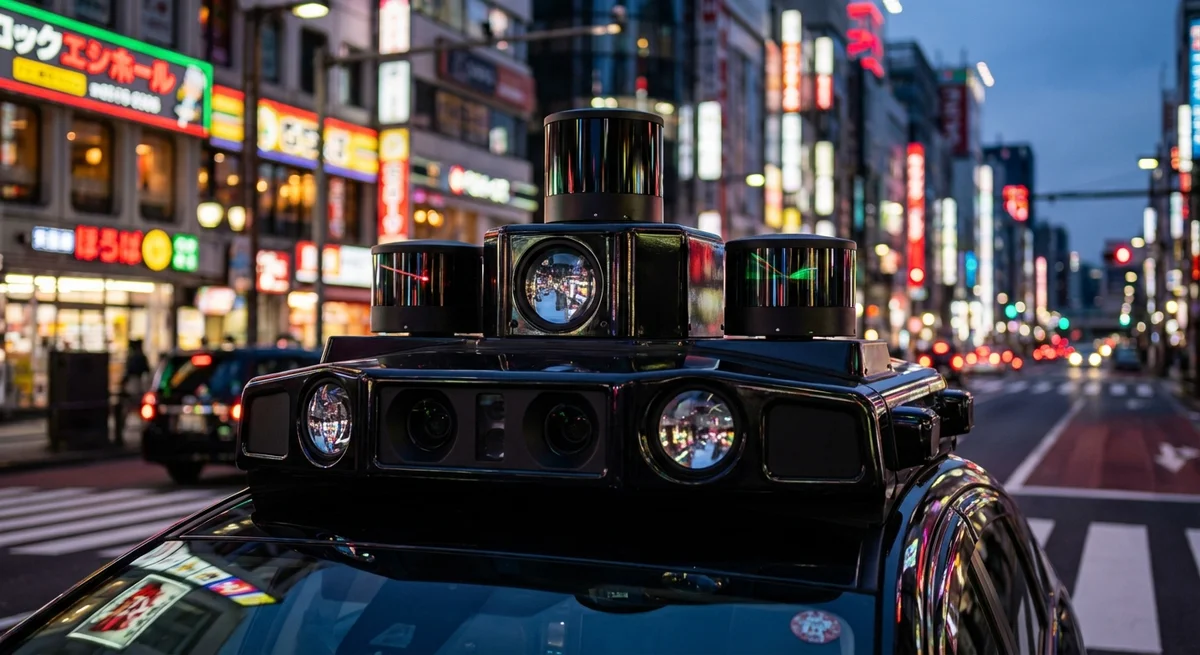
Autonomous driving has always hit the same wall: reality is too predictable 99% of the time and alarmingly chaotic in the remaining 1%. To teach a car to handle that 1%, you either drive billions of kilometers or build a perfect digital copy of the world. Waymo took the second route with Waymo World Model, a generative system that turns self-driving training into an endless viewing of hyperrealistic dreams about road traffic.
Simulators for self-driving cars used to resemble advanced video games. Developers built 3D models of trees, houses and pedestrians by hand, wrote rules for how they behave, and hoped that would be enough. But the real world is far more complex: glare on wet asphalt, odd shadows or erratic driver behavior are hard to program manually. Waymo World Model changes the rules, building on Google DeepMind's Genie 3. The system no longer assembles a scene from blocks. It generates the whole scene, grasping physics and visual nuance at a deep neural-network level.
The main feature of the new model is controllability and multi-sensor output. This is not just a generator of pretty pictures like Sora. The system produces consistent data for all of the vehicle's sensors: cameras, lidars and radars. If the virtual car hits the brakes, the entire surrounding world reacts accordingly. That lets Waymo engineers replay thousands of "what if" scenarios that could end in tragedy in reality. Want to check how the car behaves if a ball suddenly rolls out in front of it and a truck bursts from around the corner? That now takes a few seconds of generation.
Context matters more here than the technology itself. Waymo has already driven more than 200 million miles in fully autonomous mode, which makes it the undisputed industry leader. Even so, that vast experience is not enough to anticipate every "edge case". Building on DeepMind's work suggests Google has finally started to combine its divisions effectively. While other companies are just trying to survive or polish a basic autopilot, Waymo is building a synthetic-data factory that could speed up the technology's development many times over.
Notably, the shift to generative world models is an admission that classical algorithms and manual programming have hit their ceiling. We are entering an era in which one AI trains another in a virtual environment that becomes nearly indistinguishable from reality. For the industry, this means a new round of the arms race: the winner will not be whoever has more cars on the road, but whoever's neural network "hallucinates" road situations better. One question remains: how safe is it to trust a system that learned to drive in a world created by another neural network?
Bottom line: Waymo is moving self-driving development fully into the realm of pure AI, where simulation matters more than real-world mileage.
- Nov 2, 2026Bun creator uses Claude Code to port 750K lines from Zig to Rust in 11 days
- Nov 2, 2026The Verge reviewer builds a $50 Meta Muse Charm alternative with Claude Code
- Nov 1, 202616 models tested on 7 search tools: Exa averaged 10.5 out of 14, SearXNG about 3
- Nov 1, 2026Google's StreamVibe video agent beats other models by 10.7% on response timing and quality
Test Frontier LLMs & Autonomous Agents in One Workspace
Run Claude Opus 5.5, GPT-6, Gemini 3.1, and DeepSeek side-by-side in Nomad AI (nomadnet.ai) — unified model routing, deep research, and multimodal workflows under one subscription.
The AI world, distilled — once a week
Seven stories that actually mattered, hand-picked. No noise, no reposts, no press releases.
Done! Check your inbox for a confirmation.