Amazon Puts Filmmaking on an Assembly Line: AI Instead of Bloated Budgets
Amazon Prime Video is officially entering the AI cinema race. The company plans to bring generative tools into every stage of production, from storyboards to complex post-production. The goal is simple: shorten development cycles and trim budgets that have grown indecently huge in recent years. Management insists it does not plan to lay off human specialists. That sounds utopian, but in practice it is an attempt to survive in a world where content is needed yesterday and viewers have become far too picky. It looks like we will soon see even more series made with heavy involvement from algorithms.
AI-processed from 3DNews AI; edited by Hamidun News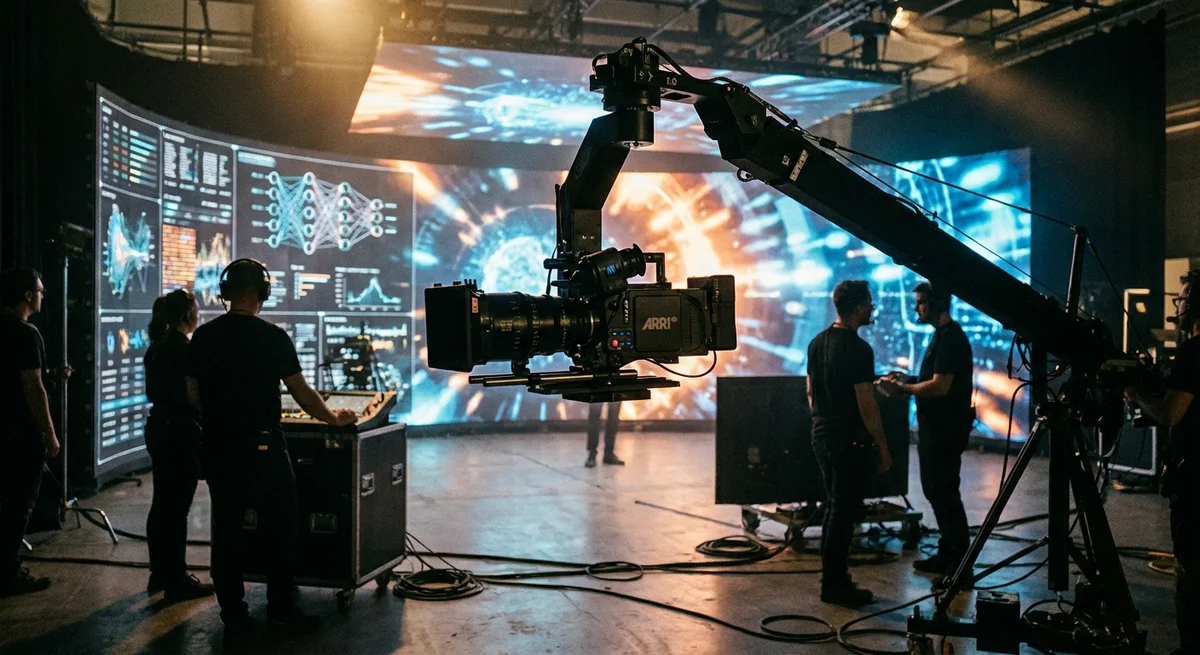
Remember when fans waited years for a new season of a favorite series, and gaps between film franchise installments stretched to half a decade? Amazon has decided that relic belongs in the past. While Hollywood recovers from prolonged strikes and argues over the ethics of using neural networks, the tech giant from Seattle is taking the bull by the horns and putting AI at the very heart of film production. This is not just an experiment but an attempt to rebuild the whole industry for new ways of consuming content.
Today's film industry is a clumsy and extremely expensive beast. Tens of millions of dollars vanish on fixing small mistakes in post-production, and shooting schedules collapse over the slightest thing, whether bad lighting or a stray object in the frame. Amazon, which owns Prime Video and the legendary MGM studio, understands perfectly well that in the streaming wars the winner is whoever delivers quality content more often, faster and cheaper. Until now, AI in film was seen either as an existential threat to screenwriters or as a toy for making deepfakes on social media. Amazon's approach is far more pragmatic and goes deeper.
The idea is not to replace an Oscar-winning director with a "black box" with a "make a masterpiece" button. The company plans to use generative AI to automate the most grueling routine work. Imagine a neural network instantly generating lighting options for a complex scene, or automatically handling rotoscoping, the process of separating an object from its background that used to take visual effects artists weeks of painstaking work. This frees up time for real creativity, or at least that is the corporation's official position. Amazon stresses that its new tools are merely a "smart brush," not an "automatic artist."
There is hard economic calculation behind the move. Producing a single episode of a top-tier series like "The Rings of Power" costs well over tens of millions of dollars. If AI can cut even 15% of that through faster rendering and editing, the savings would reach billions across the whole corporation. But there is a flip side: once the process becomes cheaper and more accessible, the value of the final product in the industry's eyes may begin to fall. We risk drowning in an ocean of "fairly good" content that algorithms will stamp out from perfectly calibrated but soulless templates.
For rank-and-file industry professionals, this message looks like a warning bell wrapped in the gift paper of an "assistant." Yes, executives say today that they are not replacing people. But let's be honest: once an algorithm learns to produce storyboards and rough cuts better and a thousand times faster than a junior assistant, market logic will seal that assistant's fate. Amazon is setting an important precedent, turning cinema from high art into a high-tech conveyor belt, where data on viewer preferences directly shapes which scenes the AI suggests keeping and which to cut at the planning stage.
Integrating AI will let Amazon not only save money but also react faster to trends. If viewers want more noir in their fantasy, neural networks can help recolor and retune the atmosphere of already shot footage many times faster than before. That changes the very concept of "production hell," since any revisions can now be made almost in real time. The only question is how far this automation will go, and whether these code-calibrated frames will leave room for that spark which cannot be described in a prompt.
Bottom line: Amazon is turning film production into an optimized cloud service. Will the content get better as a result, or are we moving for good into the era of "fast-food cinema," where quantity matters more than depth?
- Nov 2, 2026Anthropic needs to grow revenue 32% a year to cover $850 billion in contracts
- Nov 2, 2026The Verge reviewer builds a $50 Meta Muse Charm alternative with Claude Code
- Oct 31, 2026Worldwide Express hands disputed invoices to AI agents and cuts unresolved disputes by 75%
- Oct 31, 202610 million people have activated Meta's Muse agent, but Hilton and eBay barely see any orders
Test Frontier LLMs & Autonomous Agents in One Workspace
Run Claude Opus 5.5, GPT-6, Gemini 3.1, and DeepSeek side-by-side in Nomad AI (nomadnet.ai) — unified model routing, deep research, and multimodal workflows under one subscription.
The AI world, distilled — once a week
Seven stories that actually mattered, hand-picked. No noise, no reposts, no press releases.
Done! Check your inbox for a confirmation.