China's SOTA Breakthrough and OpenAI's Agents: AI Hits the Streets
This week made one thing clear: Western dominance in large language models is a myth. Chinese SOTA models show that speed and openness matter more than bloated budgets. OpenAI answered by launching the Codex app, moving AI from "answer questions" mode to "do tasks" mode. It marks the start of an era of agents that live in your smartphone and operate software. While some argue over code, robots in Moscow are already sweeping streets with brooms, and in Chile people replaced ChatGPT for a day to protest ecological damage. AI is no longer theory. It has become part of urban and digital infrastructure.
AI-processed from Habr AI; edited by Hamidun News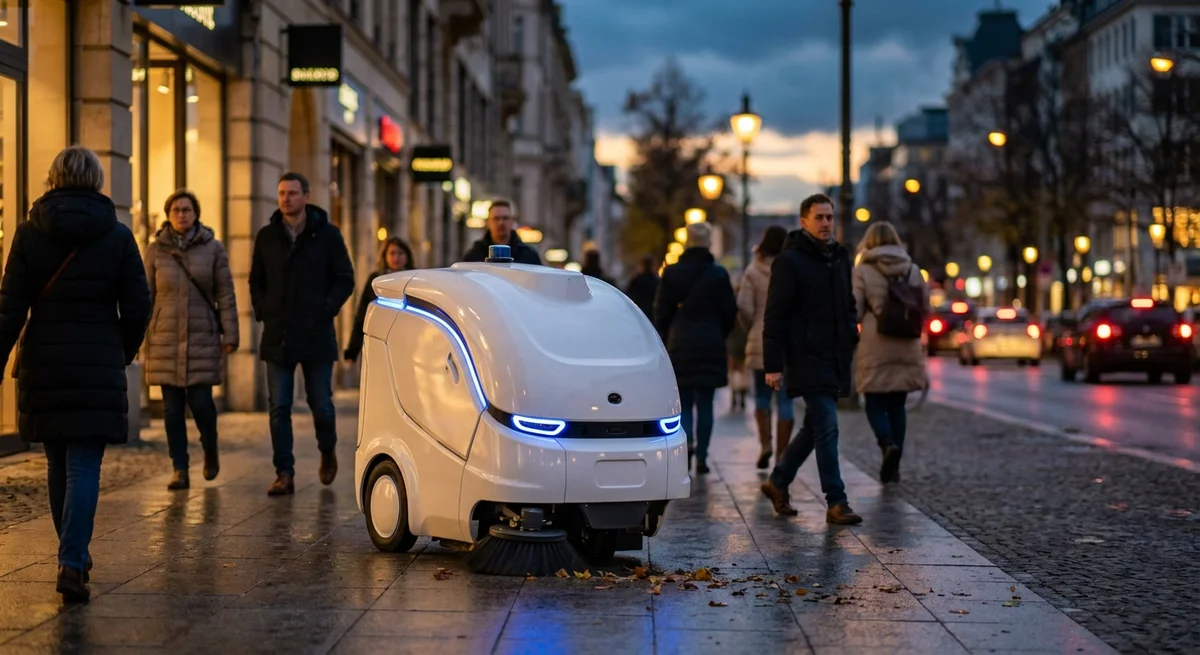
The AI world no longer resembles a closed academic conference. It has become a noisy global marketplace, and Chinese vendors are starting to shout the loudest. We used to wait breathlessly for every update from San Francisco; now news from Beijing and Shanghai has OpenAI engineers nervously rechecking their benchmarks. Chinese SOTA models have suddenly stopped being "good for their region" and have become simply the best in the world on price-to-quality. This is a fundamental shift: the era of American exceptionalism in transformer architecture is coming to an end, giving way to pragmatic, very fast copying followed by aggressive improvement.
While the East wins on scale and speed, Sam Altman and company have decided it is time to turn chatbots into full-fledged digital employees. OpenAI's Codex app is not just another interface for generating text but an attempt to release AI agents into the wild. We have long argued that neural networks should be able to press buttons and carry out tasks on their own inside an operating system, and now it is happening before our eyes. It is an important move from "ask me" to "do it for me." If Codex catches on, the line between software and user will blur for good, turning smartphones into control panels for autonomous assistants that do not merely advise but act.
The music industry and visual content have taken another punch to the gut. The arrival of free Suno alternatives shows that the barrier to entry for high-quality audio generation has collapsed for good. A year ago we marveled at clumsy melodies; today we cannot tell a generated track from a top-chart hit. Together with Lucy 2.0 real-time avatars, this creates a frighteningly realistic digital environment. The "person on the TV" or in a Zoom call window may now be a set of pixels rendered in real time with zero latency. This is no longer the future but our new working context, where trust in video calls becomes an unaffordable luxury, available only in person.
Against this technological frenzy, news from Chile looks deeply ironic. There, people literally replaced ChatGPT for one day, answering users' questions by hand. It is not just a fun performance but a harsh critique of the environmental footprint left by every generated text or image. While we enjoy new models, huge data centers devour electricity and water on the scale of small countries. The Chilean experiment reminded us that behind every "smart" answer lies a very tangible physical cost, paid by the planet. It is an important wake-up call for the industry: efficiency and sustainability will soon matter more than raw computing power.
Meanwhile, in Moscow, AI is taking on a physical form, not just a cloud-based one. Cleaning robots on the streets are no longer scenes from science fiction films but an everyday part of a big city's municipal services. While experts debate whether GPT-5 will replace programmers and lawyers, simple machines are starting to replace those who hold a broom. It shows clearly that automation is advancing from both sides at once: from above, through complex computation, and from below, through mechanics and sensors. We have ended up in a kind of sandwich between virtual agents and very real iron helpers, and it seems the right time to reconsider our place in this new ecosystem.
The key point: The era of pure "generative" AI is over; the era of action has begun. Whoever first teaches a neural network to use a browser and a broom will take the market. Are you ready for AI to become as familiar and unnoticeable as electricity from a wall socket?
- Nov 2, 2026Meta's Muse assistant keeps dossiers on loved ones and gets root on Ubuntu by default
- Nov 1, 2026Local models lose to Opus and Codex: 0.21 on a MacBook versus 1.00 for Codex
- Nov 1, 2026Kimi scores 96.2% on a 1C database analytics test and emerges as a fallback if Claude access is blocked
- Nov 1, 2026OpenAI Rewrites GPT Behavior Rules: Five Values and a Chain of Command
Build & Ship Production AI Agents Without Boilerplate Code
Start your free 72-hour trial at Hamidun Academy (academy.hamidun.com) — interactive lessons on Claude Code & Cursor, live Tech Radar, and production agent templates.
The AI world, distilled — once a week
Seven stories that actually mattered, hand-picked. No noise, no reposts, no press releases.
Done! Check your inbox for a confirmation.